Can Biochar Make Steelmaking Carbon Neutral? Emerging Trends and Innovations
Introduction
Coking is one of the majors industrial emitters of carbon dioxide (CO2), accounted for about 7-9% of global emissions of this gas. This is because, as the world consumes more steel, the need for affordable and more sustainable ways of producing the material is acquiring significant importance to fight climate change. Biochar is a type of charcoal, which is produced from plant biomass, and one possible promising plan is its usage. Looking at the recent advances and studies, biochar is being looked at as a replacement to fossil fuels in the creation of steel. But can biochar really help make steelmaking carbon neutral?
This article presents and explores what biochar is, what part it might play in mitigating steel-making emissions and the obstacles and prospects that define this hopeful technology.
What Is Biochar?
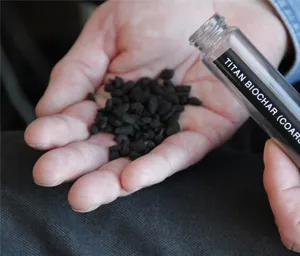
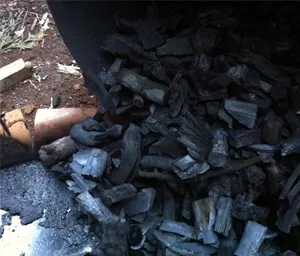
Biochar is simply charcoal that is made of timber and any other biomass such as agricultural residual, or simply that which has been subjected to pyrolysis. It is process of physically degrading biomass at high temperatures with relatively low requirement for oxygen and the product that comes out of pyrolysis is referred to as biochar. This process immobilizes carbon within the biochar and that’s why biochar can be defined as a means of Carbon storage or Carbon sequestration where carbon that could otherwise be released into the atmosphere as CO2 is contained. Apart from steel production, biochar can be applied on the farm to make the soil better, to improve the water regime, and stimulate plant growth.
The ability of biochar to sequester carbon for long-term and renewed use has been adopted as a likely solution to offset fossil fuel and minimize emissions volunteered by industrial applications.
Steelmaking and CO2 Emissions
In conventional steelmaking, there lies steps known as the reduction steps where iron is reduced that is oxygen is removed to yield iron. This process tends to utilize coke, a strongly carbonaceous fuel produced from coal to supply the high temperature for reduction and as a reductant. Nevertheless, this reaction also regenerates CO2 as one of the products also. For instance, the emission of CO2 per ton of steel is approximately 1.8 tons.
Lessening the use of CO2 in steelmaking is not easy; some processes require high temperatures, and they involve many chemical reactions. However, the current study demonstrate that biochar could be a sustainable substitute to coke for steelmaking since it supplies the requisite carbon and possesses diminished environmental footprint.
How Biochar Can Make Steelmaking Carbon Neutral
The most significant usefulness of biochar in mitigating steel emissions is that it is renewable and contributes to carbon stock. Biochar places out more or less CO2 than coke since the carbon in biochar came from absorbed CO2 in plants. While fossil fuels provides carbon that is taken out of the ground, the biochar hypothesis could hypothetically provide a carbon-free process for making steel on the theory that it is only recirculating carbon already present in the ecosystem.
For instance, carbon emitted when biochar combusts or mitigates iron ore may be sequestered by plants anew. With this cycle, the CO2 that is generated during steelmaking does not release additional CO2 into the atmosphere, and thus could make the entire process carbon-free.
Emerging Innovations in Biochar-Based Steelmaking
With such application taking root in steelmaking, the innovators and industries are seeking new ways and improving techniques to enhance the use of the biochar. Here are some of the latest innovations and trends:
1. High-Carbon Biochar Production
Biochar used in steelmaking is still a relatively new idea but as interest continues to grow new technology and more specific process developments are being researched and designed as far as biochar goes.o Different biochars are not the same thing.ing organic matter such as wood and agricultural waste or any other biomass. Pyrolysis is the process of heating biomass in an environment where there little oxygen and the final product of that process is biochar.
2. Optimization of Pyrolysis Process
The production of biochar can vary widely depending on temperature, duration, and the type of biomass used. Innovations in pyrolysis technology are helping optimize biochar quality and yield. Researchers are also focusing on achieving a stable form of biochar that doesn’t degrade during the steelmaking process, ensuring it can be used as a one-to-one replacement for coke.
3. Integration with Electric Arc Furnaces (EAF)
Electric Arc Furnace, a furnace that employs electricity and not coke is gradually moving into the steel industry to be used in recycling scrap steel. Coaching biochar with EAFs could moreover cut emissions if plants used renewable biomass as a feedstock to the electricity-hinged process. EAFs that incorporate biochar as a reducing agent are still in the experimental phase, but they show promise for low-emission steel production.
4. Hybrid Approaches with Hydrogen
Hydrogen is another prospective candidate in the invariably zero-carbon steel industry. There are some firms that are currently seeking to integrate biochar with hydrogen in the reducing of iron ore. They found that hydrogen can serve as a reducing agent, and biochar in turn as an energy source. But when both are used together, one can minimize CO2 emissions even more, as hydrogen generates water instead of CO2 as a response
5. Carbon Capture and Storage (CCS) Integration
Biochar can already incorporate carbon on the ground and some steel producers are researching how to utilize biochar with CCS to avoid other CO2 emissions as a reducing agent, while biochar as an energy source. By using both, it’s possible to reduce CO2 emissions even further, as hydrogen produces water rather than CO2 as a byproduct.
Challenges of Using Biochar in Steelmaking
Despite its promise, biochar in steelmaking is not without challenges:
1. High Production Costs
Currently, producing biochar at a scale that meets the steel industry’s needs is expensive. The pyrolysis process requires energy, and sourcing large amounts of biomass sustainably adds to costs. Further investment in technology and scaling up production facilities is needed to make biochar economically viable for steel companies.
2. Supply Chain Limitations
One big challenge is the biomass feedstock which must be in adequate quantity to generate biochar for the steel industry. Biochar production on a industrial scale has implications to the biomass feedstock which would be a competitor with agriculture, bioenergy, and other industries.
3. Performance Variability
In its raw form, biochar may not be highly effective in steelmaking because properties of the biochar depend on the feedstock and the specific conditions used during biochar manufacture. The application of biochar coke in the industry has to identify good and constant sources of timber resource for proper production.
4. Technical Adjustments in Steel Plants
Steel plants designed to use coke would need technical adjustments to use biochar effectively. From changes in furnace design to new handling processes, retrofitting plants to accommodate biochar can be costly and time-consuming.
Case Studies and Examples of Biochar Steelmaking Initiatives
Several companies and research institutions are testing biochar in steelmaking:-
a. Swedish Green Steel Projects
Sweden has been a leader in green steel initiatives. Some Swedish projects are incorporating biochar and hydrogen in pilot programs aimed at producing carbon-neutral steel. Companies such as SSAB and LKAB are testing biochar in electric arc furnaces to reduce emissions.
b. Australian Biochar Research
Australia with abundant waste biomass has ongoing study concerning the utilization of waste biomass to produce biochar for steelmaking. At present, Australian universities and steelmakers are using agriculturally generated residuals to produce biochar for potential biochar supply for the local steel industry. There has been a funding of various projects within the EU in an effort to establish the use of biochar and other bio-source materials within steel manufacturing mass that undergoes pyrolysis. Pyrolysis is a process of physically decomposing biomass at a high temperature under low demand for oxygen and the product resulting from pyrolysis is biochar.
c. European Union Funded Projects
The EU has funded multiple initiatives exploring biochar and other bio-based materials in steel production. These projects are crafted under the European Union (EU) initiatives geared at cutting down industrial emission to facilitate carbon neutrality by the year 2050.
The Future of Biochar in Carbon-Neutral Steelmaking
Seaching for low-carbon tools for the production of steel, biochar can be considered as a perspective solution, though its further utilization is to be provided by the improvements of the technology and cooperation between the industries. The above requirements make the following measures essential: The production cost of biochar needs to be minimized; there must be adequate and sustainable supplies of biomass; and the whole steelmaking process needs to be improved. If all these challenges are met, then biochar stands a good chance of providing a solution to the creation of carbon-neutral steel.
Conclusion
Biochar shows potential as a solution for green steel and more research, development and coordination effort are needed for it to become the dominant solution. They found out that what should be done includes decreasing the cost of producing biochar, making sure there is a proper source of biomass and making sure that such processes as steel making undergo the proper optimization. However, if the challenges highlighted here are tackled, then biochar could well be the solution towards developing CO2 neutral steel.
 Media Pack Download
 Newsletters
 Industrial Events