What Mill Operations Managers Need to Know About Heavy Haul Logistics for Steel
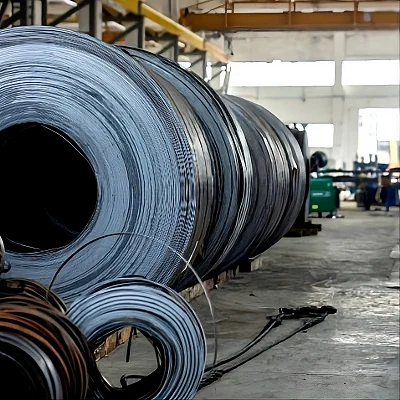
Steel moves in forms that defy ordinary trucking. Coils, plate, structural beams, billets, and finished fabrications routinely exceed the legal limits that govern standard freight, and the consequences of getting a move wrong extend well beyond a single late delivery. For mill operations managers, heavy haul transport is not a niche concern to be delegated and forgotten. It is a discipline that touches yield, safety, customer commitments, and regulatory exposure at once.
Understanding how heavy haul actually works allows operations leaders to plan production and dispatch with realistic expectations, rather than discovering a permit constraint or an axle-weight problem after a load is already staged for shipment.
What Counts as Heavy Haul
Heavy haul covers the transportation of loads that exceed the standard legal limits for width, height, length, or weight on a typical truckload move. Much of what a steel mill produces falls into this category. A single plate order or a bundle of long structural sections can push past the roughly 48,000 pound payload ceiling of a conventional flatbed, while dimensional cargo such as large fabrications can breach height and width thresholds that trigger permit requirements.
Once a load crosses those thresholds, the move requires specialised trailers, engineered securement, and formal authorisation from every jurisdiction it passes through. The equipment involved ranges from step decks and double-drop trailers to removable gooseneck and multi-axle configurations, each selected according to weight distribution, centre of gravity, and the clearances available along the route.
Why Steel Makes Heavy Haul Harder
Steel presents a combination of challenges that few other commodities share. The material is dense, so weight limits are often reached long before a trailer is physically full, which makes axle distribution a constant engineering problem. Long products flex and shift in transit, demanding securement that accounts for movement rather than assuming a static load. Coils concentrate enormous mass in a small footprint and must be cradled and restrained to prevent catastrophic movement.
These are not abstract risks. Improper securement of steel is a recognised cause of serious roadway incidents, and enforcement of load-securement rules by regulators is active and unforgiving. A mill that treats heavy haul as ordinary freight exposes itself to rejected loads, fines, and liability that dwarf any saving from a cheaper carrier.
The scale of the problem shows up in the enforcement data. During the CVSA's 2025 International Roadcheck, inspectors issued more than 18,000 violations for cargo that wasn't secured against leaking, shifting, or falling, plus another 16,000-plus for unsecured components and dunnage. Those numbers show up almost every year, which tells you securement failures aren't an occasional lapse. They're a predictable outcome when steel gets loaded and dispatched without the right expertise on the job.
Permits and Route Planning
The permitting layer is where many heavy haul moves succeed or fail. Oversized and overweight loads require permits issued by each state, and sometimes by individual counties or municipalities, along the route. Requirements vary widely, and some corridors are known to extend permit timelines considerably. Certain moves also require route surveys to confirm bridge ratings and overhead clearances, and escorts or pilot vehicles when dimensions exceed set limits.
Route planning is therefore inseparable from production scheduling. A load that could ship today on a direct route may face a multi-day delay if a bridge on that corridor cannot bear the weight, forcing a longer detour and additional permits. Operations managers who understand this dependency can build permit lead time into their shipping calendars instead of treating it as an unwelcome surprise at the dock.
That bridge-rating risk isn't theoretical. The 2025 ARTBA Bridge Report, based on Federal Highway Administration inspection data, found that 35 percent of U.S. bridges, nearly 220,300 spans, need major repair or replacement. A dispatcher who skips the route survey and assumes a corridor is clear is betting on infrastructure that, more often than not, has a known weak point somewhere along the way.
The Cost Drivers Behind a Heavy Haul Rate
Heavy haul pricing rarely reduces to a simple rate per mile. The dominant factors are total weight and dimensions, route restrictions, permit and escort requirements, the scarcity of specialised equipment, and the complexity of loading and offloading at each end. Timing matters as well, since short lead times and narrow appointment windows push costs upward.
Equipment scarcity isn't hypothetical either. ACT Research reported flatbed spot rates hit a record high in May 2026, up more than 30 percent year over year, with tighter specialised trailer capacity cited as a key driver. When step decks and RGNs are scarce, a mill that waits until a load is staged to source a carrier ends up paying a premium for whatever's left on the board.
For a mill, the practical lesson is that transparency about a load early in the process produces a more accurate rate and a smoother move. Exact dimensions, weight including axle or footprint detail, commodity description, and any site constraints allow a logistics partner to select the correct equipment and confirm a compliant route before dispatch, rather than repricing a move after a problem emerges.
Coordination Is the Real Deliverable
The most consistent failures in heavy haul come not from a lack of trucks but from a lack of coordination. Permits secured late, equipment mismatched to the load, escorts unbooked, and receiving sites unprepared for an oversized delivery each create delay and cost. A mill operations team already carries responsibility for production, quality, and safety, and rarely has the capacity to manage multi-jurisdiction permitting and specialised carrier sourcing in parallel.
This is where an orchestration model earns its place. Rather than owning trucks, a fourth-party logistics partner coordinates the specialised carriers, plans the engineered move, secures the permits and escorts, and maintains visibility from pickup through delivery. Structured heavy haul logistics brings planning, compliance, equipment selection, and execution under a single accountable process, which reduces the risk that a critical detail falls between vendors.
Alpha Zero Logistics works across a broad base of shippers in metals and heavy industry and observes the same failure patterns repeatedly. Mills that treat heavy haul as an engineered process, planned in advance and coordinated by a partner who holds the whole move accountable, ship with fewer exceptions and far less exposure than those who improvise each load.
Practical Steps for Operations Managers
Several actions help a mill bring heavy haul under control. Capturing accurate load data at the point of order, including weight distribution and dimensional detail, prevents downstream equipment errors. Building permit and route-survey lead time into the production schedule keeps compliance from becoming a bottleneck. Confirming that receiving sites can physically accept an oversized delivery avoids detention and redelivery. Above all, consolidating heavy haul under one accountable coordinator, rather than a patchwork of ad hoc carriers, turns a recurring source of risk into a managed and predictable part of the operation.
Heavy haul will always demand more planning than standard freight. For steel, where the loads are dense, dimensional, and unforgiving of error, that planning is not overhead. It is the difference between freight that arrives safely and on schedule and freight that becomes a liability the moment it leaves the mill.
 Media Pack Download
 Newsletters
 Industrial Events






Author Bio:

Mike Broeckling
Vice President of Operations, Alpha Zero Logistics
Mike Broeckling is the Director of Operations at Alpha Zero Logistics, where he brings over a decade of leadership experience in Fourth Party Logistics and managed transportation. With a background spanning carrier procurement, operational strategy, and supply chain solutions, he focuses on helping shippers with complex networks improve service reliability, reduce costs, and scale efficiently.