Advancements in Continuous Casting Technology for Steel Manufacturing
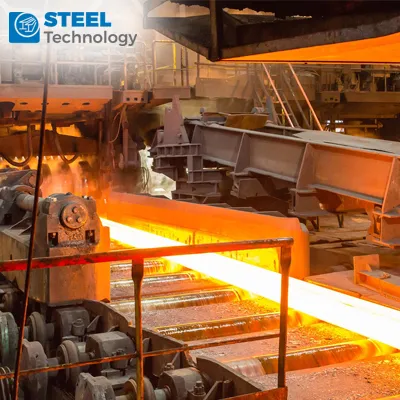
As a preliminary process in the present production of steel, continuous casting is an excellent procedure. It is a process whereby liquid steel is transferred to a mould, cooled and turned into a long product like slab, billet, bloom etc and taken to the finishing mill factory. It has influenced the steel processing industry most especially in the way steel is produced and formulated in current and improved efficient ways, therefore being environmentally friendly. Continuous casting has been through some advanced technological changes in the past decades which have made it produce products of much higher quality, in much shorter time and at much reduced rates of operation. It discusses the latest innovation in the continuous casting technology on the steel production explaining on the development that has been made in the industry.
1. The Evolution of Continuous Casting Technology
Continuous casting has more developed since the time it was invented. Primarily, steelmaking was done using the batch method that involved pouring molten steel into molds, for creation of ingot form. This method was slow, and lengthy, and called for extensive work and effort in terms of manpower. Continuous casting began in the 1950s and became the favoured method of its production. The new method was called continuous casting, in which molten steel was poured into a water-cooled mould and allowed to cool into a single continuing length of metal which could be cut into such forms as slabs or billets.
As for now, the development of this continuous casting technology is quite different. First continuous casting machines were cumbersome but as the world shifted towards more use of steel and with the introduction of advanced technologies, the forming machines became more intricate and productive. Currently, there are advanced continuous casting systems of which are characterized by enhanced improvement technologies to optimize for efficiency, improved rejection rates and superior quality of the cast products.
2. Mold Design and Cooling Systems
One of the biggest technological developments in continuous casting has been made in mold and cooling systems. Having tightly connected the space between the mold and the shell, the mold is an important factor in guaranteeing high-quality casting.
Present day molds use technical ways to ensure that proper cooling for solidification of metals takes place. This one features water-cooled copper molds with arranged channels that help in the regulation of cooling rate.
The cooling rate of steel during casting enormously influences the quality of steel produced. If it is cooled too rapidly or unevenly there will always be problems such as cracks on the surface or a rough surface while slow cooling can cause a large degree of shrinkage or internal voids. In order to prevent these problems continuous casting molds have had more advanced and effective cooling systems incorporated to it that assists the solidification in having normal temperature.
Some advanced continuous casting systems however, use not only water cooled systems but also electromagnetic stirring (EMS) technology as well. EMS employs the technology of magnetic fields to cause movement of the molten metal in the mold that leads to uniform cooling of the steel. These advanced mold designs are also better in establishing superior cooling rates and more uniform temperature distribution, the numbers of imperfections and the quality of the cast steel are further enhanced.
3. Advanced Control Systems
The second powerful improvement of the continuous casting technology is that has come with improved control systems that allow for continuous control and optimization of the casting process. Continuous casting is a challenging process, which presupposes tight control of the number of factors such as temperature, speed of casting, and state of the mold. Small changes in these parameters will result into defective products which are not quality products.
Automatic process control systems (smart casting systems) employ sensors and automated controls along with data acquisition systems for real time control of casting process. They include monitoring the temperature of molten steel, casting rate, condition of molds and the cooling rates. From this data, manufacturers can easily spot the challenges and constantly correct the process so as to achieve the best conditions.
For example, if the temperature of the molten steel is high or low then cooling rate or casting rate can be changed by control system. These automated systems minimize on human interferences and ensure that the product produced is standard and of high quality over the production period.
Also, the deals of the industry present effective and improved control system to minimize use of energy. Because process parameters can be optimized based on the demands of the operation, these systems can save energy and increase energy effectiveness in the process. This is especially the case for energy, which is one of the largest costs in steel operations.
4. Materials Used for Equipment and Casting Rolls
Continuous casting machines are in direct contact with various unfavorable conditions with regard to temperature, pressure, and abrasion forces. The materials of the equipment, especially the casting rolls, nozzles and other parts have also been advanced to easily cope with these conditions.
Formerly, only ordinary steel alloys were used in casting rolls while at the present, casting rolls are made up of high performance alloys and the body is coated by a material that enhances its wearing and rusting abilities. This forms a guarantee that the rolls will bear the mechanical Stresses in the casting operation as well as high temperatures which are inevitable in the process. Improved materials are also less likely to wear out often, and this decreases the amount of money required to replace the worn out parts and minimize the production down time.
In addition, major strides in the field of material science have seen a number of new coating systems and surface treatments proposed that enhance both the life span and productivity of casting rolls. For instance, chromium-based coatings are useful in casting rolls as it enhances its wear endurance hence they are in a good state for a long time.
5. Increased Casting Speeds and Automation
When the continuous casting was developed initially, the casting speed was not very high because it depended of the cooling rate and other similar factors. One of the pieces today ‘s advances in continuous casting technology is that the steel is now being cast at much higher speeds, substantially
Current continuous casting machines are able to cast steel at rates which were once considered impossible. This is made possible by enhanced methods in cooling systems, mold designs and enhanced casting procedures. That is, by casting speeds there can be made more demands of steel in the least possible time hence fulfilling the market demands while at the same time cutting on the costs.
However, the improved speed of continuous casting is not the only efficiency gain. Continuous casting efficiency is fundamental to improved efficiency through automation. Today’s continuous casting systems are mostly computerized hence, rarely oversighted. Through such ‘smart tools’ as sensors and robots, as well as computer-controlled programme logic, the casting processes can be immediately controlled to an optimum for efficiency, low risk of human error, and minimum cast deviations from the ideal. Cost control is also enhanced by the automated design of the process, control of consumption and other aspects of energy conservation.
6. Simulation and Modeling Technologies
When it comes to using continuous casting, simulation and modeling technologies have become hugely important. Since computer simulations could represent corrosion processes in casting, manufacturers would be capable to get precious information’s about how variations of the parameters of the casting process such as temperature, velocity and geometric structure of the mould would affect the final result. This make decision-making easier before the actual process of making the product is started.
Simulation technologies provide ideas about how the molten metal will flow through the mold, how it will solidify, and how defects will arise. The information enables the respective manufacturing company to tweak its procedures and avoid creating the flaw in the steel. Modelling also assist in the realization of possible negative impacts in the casting sequences enabling engineers to modify designs prior to a situation becoming a cost provoking matter.
7. Energy Efficiency and Environmental Impact
Energy is a critical issue in steel production since the process requires high energy. Consequently, enhancing the energy efficiency has emerged as an important objective in the progress of continuous casting processes. There is an improvement of process control, new materials, and the use of automation in process plant has make processes consume less energy than before.
One major enhancement has been the adoption of regenerative cooling systems where the heat created in the casting process used to preheat water to cool the casting system. This also means that other forms of energy input would be far from needed as much in the process hence increases on general energy efficiency. Furthermore, new continuous casting systems have good waste minimization practices and energy efficiency when compared to the available resources.
Increased use of energy efficient castings also has environmental impacts that are noteworthy to mention. Through the application of lower amounts of energy and minimized emissions, steel producers and manufacturers promote sustainability. It also notes the industry is trying to find an external power source from renewable energy to power the continuous caster to mitigate environmental effects as well.
8. Quality Improvements in Cast Steel Products
Thus, the main aim of enhancing continuous casting technology is to result in improved quality of steel products. Optimizations in model making, cooling systems, and control have gone a long way in minimizing the common vices such as crackling, porosity, and other forms of surface imperfections.
The first important advancement in quality enhancement is the facilitation of variance reduction in the chemical composition of steel. From thus controlling the cooling rate and temperature the producers can also make sure that the chemical composition of the cast steel is uniform throughout the whole range of the cast product. The coherence is vital in the manufacturing industries such as automotive manufacturing where quality and lasting steel parts are vital.
Moreover, today’s continuous casting technology has enhanced the surface quality of the steel, and most products have a polished appearance. This is important in applications to where the cosmetic aspect of the steel is crucial, as is the case in construction and ornamental steel.
Conclusion:
Revolution in the continuous casting technology has greatly affected the steel production industry. From enhanced molds and cooler to methods of control and enhanced speed of casting, these factors have endowed the continuous casting process with efficiency and sustainability.
Existing continuous casting machines offer the potential for better quality steel, at a lower cost per unit of weight, that is more defect-free and uniform. With a progressive advancement in technology, the future of continuous casting appears to be quite promising in providing the steel industry even more mechanism to overcome global demands for quality and eco-friendly steels.
 Media Pack Download
 Newsletters
 Industrial Events