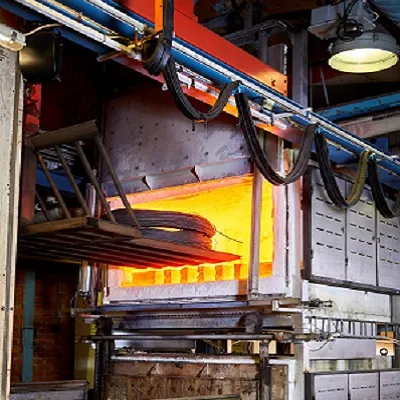
Smart Rolling Mills: How Mechatronics Is Transforming Steel Production
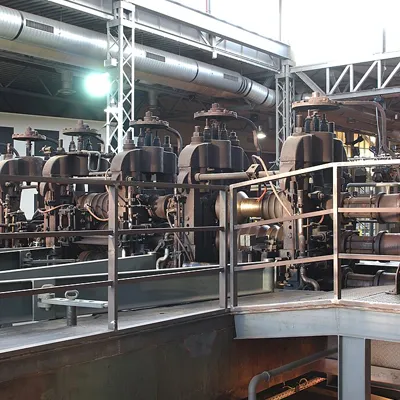
Introduction: The Digital Evolution of Steel Rolling
Steel has been the mainstay of world infrastructure, automobile industry, power generation, heavy engineering and construction. However, with the increased accuracy required in industries, reduced weight, shorter tolerance, and increased rates of production, the traditional rolling mill processes are being strained to change. Mechanical systems which rely on manual calibration and independent control loops are no longer adequate to provide modern quality, efficiency, and sustainability requirements.
This is the place where smart rolling mill technology is taking its toll. With the development of sophisticated sensors, control architectures, robotics, and data-driven decision-making, mechatronics in rolling mills is turning the production of steel into a very automated, bright and scaled process. Combining mechanical engineering, electronics, control systems, and software has formed a new breed of digitally enabled mills with ability to optimally perform and predict performance in real-time.
To B2B stakeholders - steel manufacturers, plant engineers, automation providers and industrial OEMs - this transformation is important to stay competitive.
Understanding Mechatronics in Modern Rolling Mills
Mechatronics in rolling mills is the concurrent combination of mechanical systems, electrical motors, electronic sensors, embedded computers and smart software systems, in a single control system. Integrated mechatronics in steel rolling production, unlike the situation in the legacy steel mills where both the mechanical and electrical systems were independent, the integrated mechatronics systems allow smooth coordination of performance of all the mill components.
A smart rolling mill is not just a computerized line. It represents a smart machine shop in which the information of load cells, thickness gauges, temperature sensors, vibration sensors, and speed encoders will be fed directly into the rolling mill control systems. These systems check deviations in the real time and automatically control the roll gap, torque, speed, and cooling parameters so that to achieve uniform product quality.
This reactive to a predictive and adaptive control is the essential change of automation of steel rolling mills.
The Core Architecture of Rolling Mill Automation
A multilayered control architecture is at the core of the rolling mill automation. This construction is characteristically made of field devices, control layer systems, supervisory platforms and enterprise integration modules.
Field level components include sensors, actuators, servo drives, hydraulics and motor controllers. These machines gather working information and give orders. PLC SCADA rolling mill automation systems drive the control layer and process the signals, handle sequencing and control the critical parameters, including strip thickness, roll force, and line speed.
Above this, there are higher automation systems used in the control of rolling mills that combine model-based algorithms and adaptive feedback. These systems constantly make comparisons between real time data and process models that are pre-established and, therefore, corrections can be made dynamically. On the enterprise level, data is combined with MES and production planning and traceability and performance analytics.
It has a designed but networked architecture that facilitates smooth real-time monitoring and control during smart rolling mill operation.
Real-Time Monitoring and Precision Control
The characteristic measure of a modern rolling operation is precision. Any minor change in thickness, flatness or temperature can lead to product rejection, high scrap, as well as customer dissatisfaction.
Intensive monitoring and control of smart rolling mill functionality in real time enables manufacturers to keep tolerances very narrow due to continuous feedback. Laser thickness gauges are instantaneous in measuring strip thickness. IR sensors are used to monitor heat distribution. Vibration analysis identifies the early imbalance of the roll or wear of bearings.
In the event of deviation, the rolling mill control systems automatically regulate the roll pressure, the flow of coolant, or motor speed. The system corrects itself in milliseconds as opposed to waiting to be manually inspected. This is an important capability that lowers off-spec production levels and enhances yields.
In B2B steel-makers who sell to automotive or aerospace industries, where precision to the micron level is usually the only option, this automation has a direct increase in compliance and brand image.
The Role of Industrial Mechatronics for Steel Mills
Automation is not the end of industrial mechatronics of steel mills. It involves the principles of intelligent design, which make machines more responsive, more efficient in consuming energy and predictive maintenance.
Actuators controlled by servo motors are used instead of purely hydraulic mechanisms as a means to offer quick response and more precise positioning. Variable frequency drive high efficiency motors are used to optimize energy usage depending on the conditions of the load. Constant health checks on components are done through embedded diagnostic modules.
These improvements enable automation of steel rolling mills to be run at higher rates without compromising on stability. Since production requirements may change, scalable architectures will allow the mill to add capacity without requiring a total redesign of the infrastructure.
Business wise, this would mean reduced operational cost, increased life span of the assets and increased ROI.
PLC SCADA Rolling Mill Automation: The Digital Backbone
PLC SCADA rolling mill automation systems play the role of the operator control center of smart mills. PLCs carry out time-driven control services, whereas SCADA platforms ensure visualization, recording in the form of data logs, and far-off observation services.
Centralized dashboards can show operators the trends in roll force, the variations in tumbler motor current, temperature, and throughput. Exploitative alarm systems alert the personnel when something unusual happens.
Smart rolling mill technology is also enhanced by the fact that SCADA can be integrated with cloud-based analytics platforms. Bottlenecks can be more easily identified and pass schedules can be optimized and maintenance cycles predicted through the analysis of historical data.
Multi-plant operations make it possible to apply a similar quality control to all geographically dispersed facilities through centralized monitoring.
Advanced Automation Systems for Rolling Mill Precision Control
The control strategies in modern steel production are more dependent on models and AI. High-level automating processes used to control the precision of the rolling mill include math modeling of processes in terms of the behaviors of materials subjected to different loads and temperatures.
Thickness control systems ATCs vary roll gap depending on predictive algorithms. In Flatness control systems, shape meters and actuators are employed in correcting the disproportionate stress across the strip width. Automatic gauging control guarantees the dimensional accuracy up to high speeds.
Such smart systems minimize the reliance on operator intuition and shift to shift consistency of production quality. Such reliability builds relationships between clients in B2B markets where the supply contracts require long-term supply and where loyalty is based on the consistent measurements of quality.
Integrated Mechatronics Systems in Steel Rolling Production
The Steel rolling production, integrating mechatronics systems, combine the data streams of mechanical, electrical, and digital subsystems into one common system. This merging removes silos which used to make decisions very slow.
As an example, the data of the motor drive can be compared to the vibration signals to identify the patterns of mechanical stress. The temperature sensors can be synchronized with the cooling system feedback in order to achieve homogenous metallurgical property. Predictive maintenance algorithms can utilize production data as inputs to arrange downtimes in a strategic way.
Smart rolling mill technology links formerly autonomous subsystems creating a self-conscious production space with the ability to optimize itself in an ongoing manner.
Energy Efficiency and Sustainability Benefits
One of the main costs of steel production is consumption of energy. Hot rolling processes especially the rolling processes need a lot of power.
Automation in the rolling mill boosts energy saving by dynamically controlling motor loads and heating cycles and with little idle running. Smart load balancing means that the motors are used at their most efficient levels.
The regenerative drive systems recycle braking energy and back it into the grid.
These enhancements lower the costs of operations, as well as assist steel manufacturers to achieve the sustainability goals. With the increasing environmental regulation in the world, automated energy management is a strategic position in the supply chain in B2B.
Predictive Maintenance and Asset Reliability
Scheduled failure to meet the supply commitments and operational losses can go on. This risk is reduced by smart rolling mills by use of predictive maintenance systems.
The real-time surveillance systems gather information regarding vibration, temperature, quality of lubrication, and electrical load. The machine learning models can be used to compute trends in order to identify an early indication of a bearing wear, roll misalignment, or motor wear.
Maintenance teams can also plan interventions during the planned shutdowns instead of responding to failures. This will increase the life cycle of the equipment and boost the continuity of production.
In cases of massive steel manufacturers with 24/7 operations, high reliability has a direct effect on profitability.
Business Impact for Steel Manufacturers
The change towards the automation of steel rolling mill is not just a technological modification, it is a strategic investment. The smart rolling mills will allow increased throughput, less scrap, better quality consistency, and better traceability.
The consumers are increasingly requiring electronic tracking of steel batches such as process parameters and quality certifications. Data systems that are integrated are able to deliver full-scale production documents, which bolster the law-abiding sectors like the automotive and construction industries.
In addition, scalable architectures aid in scaling of capacity and product diversification. The manufacturers are able to make adjustments to market changes without causing overhaul changes that are mechanical in nature.
Implementation Roadmap for Smart Rolling Mills
Switching to smart rolling mill is usually on a gradual basis. The initial step is the evaluation of current infrastructure and finding the automation gaps. The second stage combines sensors, PLC, and SCADA platforms. The third step comes with the integration of modern automation to control rolling mills with predictive analytics and adaptive model.
It is also important to train the personnel. Engineers and operators should learn both in digital control systems and mechanical processes so that the potential of the system is optimized.
Long-term integration and cooperative interaction with the vendors of automation and industrial mechatronics is guaranteed by strategic partnership.
Frequently Asked Questions
A shared issue that plant managers have is the possibility of retrofitting the old systems to rolling mill automation. Modular automation solutions in most cases permit incremental/partial replacements of lines without requiring wholesale replacement.
The other common question is connected with the return on investment. Although capital spending can often be substantial, scrap, downtime and energy savings often warrant the investment in a couple of years.
The third factor is cybersecurity. With mills going online, there is a need to ensure that PLC SCADA rolling mill automation systems are not exposed to outside threats through well-built network security systems.
The Future of Smart Rolling Mill Technology
In the future, the smart rolling mill technology will become more and more connected with artificial intelligence, digital twins, and cloud-based performance benchmarking. The models of digital twins will model the mill functions in virtual reality and enable engineers to test the adjustments of the processes without interruption of the production.
The edge computing devices will act on data nearer to the field equipments and thus lower the latency and also improve response times. There will be autonomous optimization systems that will keep on optimizing rolling parameters on the basis of material properties and market specifications.
With the spread of the Industry 4.0 principles into heavy industries, steel producers who invest in integrated mechatronics systems in the steel rolling production will become the leaders of global competitiveness.
Conclusion
The automation of rolling mills is a critical move towards the elimination of the presence of machineries in steel production moving forward to the use of intelligent, data-driven manufacturing. Using mechatronics in rolling mills, sophisticated control structures, and real-time monitoring applications, manufacturers are now able to deliver unparalleled accuracy, efficiency and reliability.
Smart rolling mills are no longer a vision of the future but they are quickly turning into the norm within the industry. To B2B steel manufacturers, automation vendors, and industrial players, adopting steel mills to industrial mechatronics is not merely a step to operating with a competitive edge in the global market but as a strategic move to sustainable growth.
 Media Pack Download
 Newsletters
 Industrial Events