Future of Rolling Mills: Non-Contact Measurement & Automation
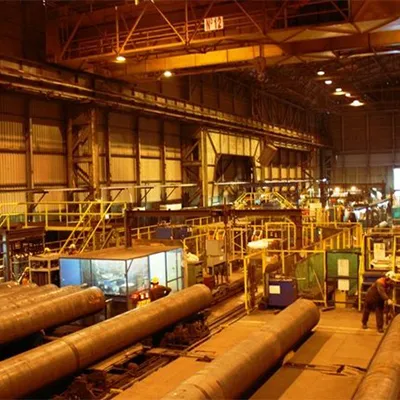
The revolution of the old form of the rolling mills into the new intelligent and automated form has ceased to be merely a trend in the fast-changing steel manufacturing world and is rather a revolution. Automation of rolling milling and the incorporation of non-contact measurement are changing the manner in which steel is processed, monitored, and controlled. Not only are these innovations increasingly improving precision control, but they are also causing new efficiency and quality levels that could never be imagined before.
With the current world demand for high-strength, lightweight, and customized steel, the industry is exploring new measurement technologies in the rolling mills in order to ensure a steady production and the elimination of material wastage. In this article, the contribution of non-contact sensors to the steel rolling, automated quality control in steel business, and real-time monitoring to the steel industry preparatory of a smarter and more sustainable future are to be discussed.
The Evolution of Rolling Mills: From Manual Oversight to Smart Automation
Rolling mills have been the mainstay of the steel production industry for decades; their purpose is to shape the raw metal into sheets, bars, and coils. The traditional ways of these operations required the heavy reliance on human intervention and mechanical gauges to ensure created desired thickness and surface quality. Nonetheless, the use of manual measurements may bring errors and delays to the overall productivity and precision.
A new level of control is being attained by manufacturers with the introduction of automation of rolling mills. Microscopic changes in the metal thickness, temperature, and surface texture can also be detected by automated systems. Human operators have changed and are no longer doing manual measurements but rather intelligent supervision-monitoring of real-time data presented by non-contact sensors during steel rolling.
The transformation is one of the landmark moments in the industry as the automation and digital transformation converge to form a complete interconnected production ecosystem.
The Science Behind Non-Contact Measurement
Non-contact measurement is a term used to describe the use of optical, laser, or electromagnetic measurements to measure the dimensional size of materials without touching them. In steel production, this implies that hot and rapid sheets of steel may be accurately measured without disturbing the production process.
Steel rolling non-contact sensors are based on laser triangulation, optical interferometry, and electromagnetic induction. These sensors give feedback to the rolling mill automation system in milliseconds and make sure that the product is within a specified tolerance level.
The problem of non-contact measurement that is so revolutionary is the fact that it is able to work in extreme conditions of heat, vibration, and speed. In these conditions, traditional contact-based gauges usually wear out or distort, but modern measurement technologies installed in rolling mills do not distort the measurement, even when the rolling mills move faster than 1000 meters a minute.
Contact-to-non-contact conversion is not a mere technical improvement, but rather a strategic measure that reduces downtime, improves the quality, and aids in the automated quality control systems along the production line.
How Laser and Optical Systems Enhance Rolling Mill Precision
Laser and optical systems are one of the most revolutionary innovations used in the automation of the rolling mills. These systems are redefining the control of precision in the steel production process and provide a high-resolution and continuous evaluation of the material properties.
But how do laser and optical systems increase the rolling mill accuracy? The solution is that they can be used to measure surface data with sub-micron precision. Laser sensors are high-speed devices that project the beams onto the rolling metal, which are then interpreted by the optical detectors to measure the thickness, flatness, and surface defects. This information is immediately entered into the live automation system of the rolling mill, which is modified to change the roller pressure, cooling rates, and feed speed.
The advantages are two-fold; there is an improved uniformity in the products made by manufacturers and a reduced manual inspection by a large margin. Additionally, non-contact, non-contact-based automated quality control systems can anticipate the occurrence of faults and can be used to prevent faults, which may be rectified in advance, instead of responding to them.
The Role of Automated Quality Control Systems in Modern Mills
Automated quality control systems take center stage in ensuring that there is consistency in output in the smart factories that are in operation today. These systems combine non-contact sensors with the steel rolling process with AI-driven analytics to judge each millisecond of production information.
Think of the situation in which thousands of data points - thickness variations, temperature variations, imperfections on the surface, and others - are collected and processed with machine learning algorithms. These algorithms identify the outliers quicker than human eyes and launch instant corrective measures using the rolling mill automation platform.
Non-contact measurement and automated quality control systems synergy can remove human error, increase the control of precision, and help with predictive manufacturing strategies. This contributes to increased yield rates, energy saving, and sustainability - the ambitions of any steel manufacturing plant on its way to net-zero operations.
Benefits of Real-Time Monitoring in Automated Steel Mills
Another significant advance in the automation process is the implementation of real-time monitoring technologies. The advantages of real-time monitoring in the automated steel mills are far beyond mere quality checks.
Live dashboards that can be operated by Industrial and IoT (IIoT) systems have allowed operators to see the entire production line. These systems gather and show sensor data of various non-contact measurement systems located across the rolling line. A milliseconds response is caused whenever there is any deviation in pressure, temperature, or dimension.
Less waste, better allocation of resources, and better predictive maintenance schedules are also the benefits of real-time monitoring of automated steel mills. In conjunction with the automation of rolling mills, such technology results in an ecosystem of production based on feedback, where all variables are operated with scientific precision.
Innovations Driving Digital Transformation in Rolling Mill Control
Digital transformation in the steel industry is on the rise, owing to a number of innovations that are promoting digital transformation in the rolling mill control. Next-level rolling mill automation has never been viewed as futuristic before, but artificial intelligence, machine vision, and edge computing are making it feasible.
Automated quality control systems are implemented with the use of AI to examine previous production data to enhance predictability in the process. Digital twins will be used to define the physical rolling environments of an object in a virtual form, which will enable the engineers to simulate the conditions before actual application. These digital models are fed by real-time data delivered by non-contact sensors in steel rolling, and therefore, the simulated outcomes are the same as the actual.
In the meantime, cloud-based surveillance and edge analytics would enable the processing of data nearer to the production floor, which would lead to decreased latency and enhanced control of precision. The combination of these systems heralds a change to self-learning mills that can make independent decisions.
Market Insights: Global Adoption of Automated Rolling Mills
The world market in rolling mill automation and non-contact measurement technologies is expected to expand significantly in business within the next few years. Recent researches have reported that manufacturers of steel in Asia-Pacific, Europe and North America have been reported to be investing more in advanced measurement technologies in their rolling mills as a form of competing.
| Region | Key Trend | Expected Growth (2025-2030) |
| Asia-Pacific | High adoption of non-contact sensors in steel rolling and digital twins | 8.2% CAGR |
| Europe | Focus on automated quality control systems for sustainable manufacturing | 7.5% CAGR |
| North America | Integration of real-time monitoring in automated steel mills with AI platforms | 6.9% CAGR |
The trend of increasing demand for precision control is not only in steel manufacturing but also in aluminum, copper, and specialty metal rolling. This growth has been instigated by the combination of laser-based measurement and automation in the rolling mill, which allows the producers to deliver high-specification products to the customers at lower costs.
Case in Focus: How Non-Contact Measurement Transforms Steel Manufacturing
A real-world example to illustrate the consequences of the situation is to refer to a major steel-making company that substituted its old contact gauges with non-contact sensors in the steel rolling process. The change meant that there was an increase of 25 percent in product dimensional accuracy, and the downtime was reduced by 15 percent.
With the high-level measurement technologies in rolling mills, the company was able to consistently keep real-time measurement of the product thickness even at the very high rolling mill speeds. Predictive adjustments could be made in real time with the integration of automated quality control systems. This increased consistency, besides increasing the life span of rolling equipment, results in decreased mechanical wear.
The case is the perfect example of how laser and optical systems can improve the accuracy of the rolling mill, which can provide specific operational and financial advantages.
Overcoming Challenges in Automation and Measurement
Although it is evidently advantageous, rolling mill automation with non-contact measurement involves challenges such as the high cost of installation, sensor calibration, and data integration complications. These initial hurdles are, however, much overshadowed by the long-term advantages of real-time monitoring in automated steel mills, which include scrap rate reduction and improved utilization of resources.
These challenges are being countered by the increasing ecosystem of vendors dealing with non-contact sensors in steel rolling and automated quality control systems with plug-and-play and standardized interfaces. The adoption barriers will keep on reducing as these technologies continue to mature.
The Road Ahead: Intelligent, Sustainable Steel Production
Moving forward, the future of the rolling mills is going towards complete digitalization, in which non-contact measurements, automation of the rolling mills, and AI analytics intersect to produce a fully autonomous system. Such intelligent mills will not only ensure consistency in control, but they will also help in the sustainability targets through reducing energy use and wastage of raw materials.
The digital transformation with innovations applied to the digital control in rolling mills will soon allow the mills to auto-calibrate, forecast maintenance, and even auto-optimize the production schedule based on the global demand trends. The following stage of the steel-making process will hence be an aspect of intelligence more than metallurgy.
Conclusion
This merging of non-contact measurement with rolling mill automation is a giant step toward advancement in the steel manufacturing trade. Combining accuracy control, high measurement technologies in the rolling mills, and automatic quality control systems is making the manufacturers rewrite the rules of efficiency, quality, and sustainability.
With the further proliferation of laser and optical systems in the precision of rolling mills, the advantages of real-time monitoring in automated steel mills will simply keep on increasing. The technological advances that have led to the digital transformation in the control of rolling mills are not just technological advances but the outline of the future of industrial excellence.
The age of smart, self-optimizing rolling mills has arrived - and the future of a smarter, cleaner, and efficient world of steel production.
 Media Pack Download
 Newsletters
 Industrial Events