Infrastructure of the future with Advanced Coated and Pre-Painted Steel.
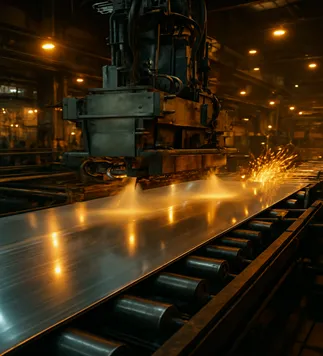
The steel industry has reached out to a defining era- the era where longevity, beauty and sustainability meet. Among numerous innovations that have influenced this development, the coated and pre-painted steel has become a revolution in the infrastructure of today. These improved materials are carrying with them an improved level of performance and durability, be it installations of renewable energy or smart cities, automotive, or housing projects.
An Infrastructure Steel New Age
Mass and scale is no longer the key to the global infrastructure boom, but it is all about being intelligent, efficient and resilient to the environment. Although still being basic, it is now competing with steel that is being enhanced with coated and pre-painted steel that is able to withstand rough weather, with corrosion resistance and providing an aesthetic appeal to the users over a long term.
The emergence of pre-painted steel is an indicator of the change of the design philosophy: the manufacturers require material that can be both engineering-strength and surface-decorated. In the meantime, bridges, pipelines, power plants and transport hubs are based on coated steel in which endurance dictates life-cycle costs.
| Type | Primary Function | Key Applications | Performance Benefits |
| Zinc-Coated Steel (Galvanized) | Corrosion resistance | Roofing, pipelines, structural members | Increases lifetime 24x longer than untreated steel |
| Pre-Painted Steel | Aesthetic + surface protection | Architecture, cladding, appliances | UV resistance, low maintenance |
| Al-Zn Coated Steel | oxidation resistance, Heat resistance | Energy, automotive | Improved temperature stability |
| Polymer-Coated Steel | Surface durability | Facades, roofing, marine | High chemical resistance |
Science of Advanced Steel Coatings
Contemporary steel finishes are not merely a paint, but are in fact engineered through multi-layered systems which are applied to provide protection, to add and extend the useful properties of steel.
They are usually coated and pre-painted steels, which are surface treated, metallic (zinc, aluminum, magnesium alloys) given, primed, and top-coated. Each of the layers is important:
- Base Metal: Makes it mechanically strong and ductile.
- Metallic Layer: Coats the surface in order to protect against corrosion.
- Conversion Coating: Incorporates high adhesion of paint.
- Primer & Top Coat: It is color, UV protection, and design versatile.
Corrosion resistance standards are being redefined by new technological advances such as magnesium-aluminum- zinc finishes (ZM, ZAM) that are now being applied to coastal or industrial conditions. These surface finishes have self-healing characteristics- when a surface is scratched, compounds that carry with them alloying elements move to fix the exposed surface and increase the life of the surface remarkably.
Performance Meets Sustainability
The trend in the world towards de-carbonization and the development of the circular economy has catalyzed the creation of eco-friendly coating systems. The major manufacturers are shifting to lower emission and recyclable coatings and volatile organic compounds (VOCs) instead of chromium-based ones.
- Water-borne paints also substituting solvent-based systems which cut VOC emissions by more than 60.
- Organic coatings based on bio-resins are also attracting interest as a green building material.
- Recyclability Coated steel is very recyclable because the steel is not lost by the coating even after end life dismantling.
Simply, more sustainable steel finishes are now available to allow longer life cycles at reduced carbon footprints, which is just in line with the objectives of sustainability in the construction and energy sectors.
Flexibility in Design and Ascetic Excellence
Pre-painted steel has now been the favorite material of a designer in modern structures and urban construction. It is simple because it provides both functionality and design.
- It is in matte, gloss, textured and metallic.
- Provides color match ability on large construction such as airports or stadiums.
- Is capable of emulating the natural materials, like stone, copper, or wood, but preserving the performance characteristics of steel.
The use of pre-painted steel panels on high-rise facade, bridges, and transport terminals is becoming a standard specification of pre-painted metal by architects due to their aesthetics and performance.
Durability, energy efficiency, and freedom of design are a few reasons that make coated steel irreplaceable in the city of the next generation.
Advances in Technology in Surface Engineering of Steel
The latest developments in the technologies of steel coating show how the manufacturing lines are being changed by the material science and digitalization.
- Coating Thickness Control AI-Driven: The automated inspection systems can guarantee consistency in the material and reduce the wastage of materials.
- Smart Coating Formulations: Coating lines can be simulated and optimized to achieve better outcomes in curing, drying and layering.
- Digital Twins in Coating Lines: Allow simulation and optimization of curing, drying, and layering processes.
- Systems of inline quality sensors: Attack micro-defects at too early a stage.
It is also a direction whereby the industry is adopting coating-on-demand systems whereby formulations can be optimized in real-time to meet the needs of particular projects to reduce inventory and enhance flexibility.
Applications that are Shaping the Future
1. Building and Infrastructure
Pre-painted steel is the backbone of intelligent building systems, and it is seen in cladding systems and roofing panels, modular housing units, etc. It offers very high thermal reflectivity, which lowers the use of energy in climate sensitive areas.
2. Renewable Energy
Painted steels are also being applied in wind turbines, solar panel frames and hydropower installations where extreme humidity and salinity are common. They have a higher fatigue limit which ensures that they have little downtimes and maintenance.
3. Automotive & Transportation
Coated steel is used in the automotive industry in two functions, lightweighting and corrosion protection. The heavier and less robust materials are being replaced with al-Zn and polymer-coated steels, which help in achieving goals of fuel-efficiency and EV designs.
4. Consumer Appliances
The pre-painted steel is appreciated in the household appliance industry because of its smooth surface and longevity. It is so stable to color in heat and also under the UV rays, thus making it ideal in the kitchen and outdoor use.
Regional Intelligence: Who Leads the Revolution?
| Region/Country | Key Developments |
| China | Al-Zn and color-coated steel Massive construction and renewable mass production |
| Japan | Winner of eco-friendly coating resins and intelligent inspection technologies. |
| India | Increasing investments in coated steel lines in cheap housing and solar infrastructure. |
| Europe | The shift to VOC-free and chromium-free coats was in line with the objectives of Green Deal. |
| United States | Infrastructure renewal with durable and corrosion-resistant steel composites. |
This localized diversification represents that the world is not only increasing in its demand of coated steel, but also shifting to more sustainable, intelligent, and flexible solutions.
Market Prospects: Information and estimates
It is assumed that the world coated and pre-painted steel market is going to reach USD 50 billion by 2030 with a CAGR of more than 5%.
Key growth drivers include:
- Blistering urbanization and smart city development.
- Infrastructure improvement in the developing world.
- Transition to green building materials.
- The installation of renewable energy in large numbers.
The analysts foresee that Asia-Pacific would be the biggest consumer with almost 60 percent of the total demand with Europe taking the lead in the shift to sustainable coating formulations.
Challenges on the Road Ahead
The coated steel industry has a number of challenges regardless of its swift development:
- Elevating fluctuating prices of raw materials (zinc, aluminum, and pigments).
- Expensive capital equipment to do the advanced coating lines.
- Strict environmental standards, which demand the regular revision of processes.
- Threat of substitutes and alternative materials.
However, innovation is also the outcome of these problems. Companies who have made investments in R&D, digital transformation and sustainable chemistries of coating are well placed to lead this new market.
Future Prospectus: Smart, Clean and Flexible Steel
In the future, intelligent recyclable, and connected to the digital ecosystem will characterize next-generation coated steel. The self-cleaning, energy-reflective and sensor-integrated surfaces will change the interaction between infrastructure and the environment.
There will be more than mere steel in tomorrow bridges, skyscrapers and transport systems, they will need it to be as well as to provide data, economical of energy and blend into the landscape.
| New Coating Developments | Advantages |
| Coatings Photo catalytic | Self-cleaning and degradation of pollutants |
| Thermo-reflective Paints | Energy-saving on buildings |
| Bio-resin Formulations | Reduced carbon footprint |
| Nano ceramic Conversion Layers | Improved resistance to corrosion |
Conclusion
The development of the increased coated and pre-painted steel demonstrates the way in which the innovation in the material world and sustainability can exist simultaneously. With the world industries striving to construct more intelligent, durable, and eco-friendly infrastructure, these next-generation steel products are coming out as the drivers of change.
Powering down a wind farm, environments around a city skyline or even the way mobility will look like tomorrow, the coated steel is no longer merely a defense; it is a development itself.
 Media Pack Download
 Newsletters
 Industrial Events