Material Handling Systems in Steel Plants: Equipment Selection, Process Integration and Operational Efficiency
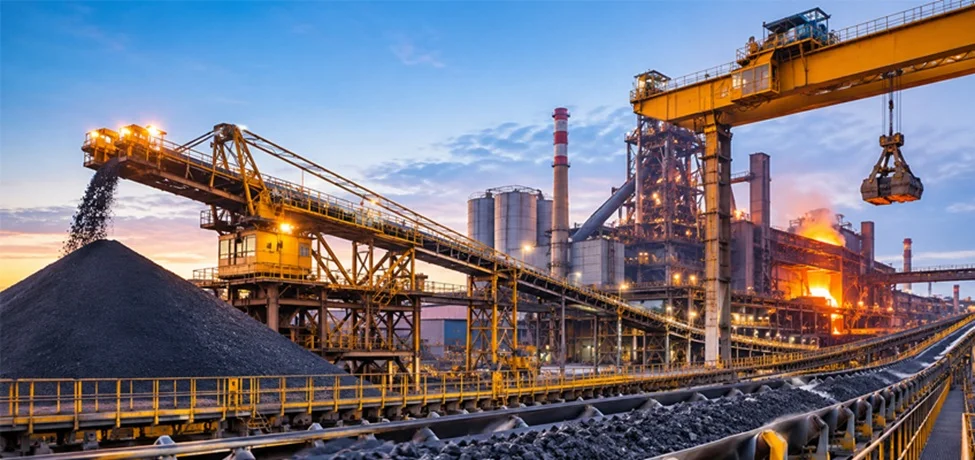
Material handling systems decide how smoothly a steel plant runs, from raw material yards to finished coils. This article explains the main equipment types, how to select the right solution, and how integrated handling cuts downtime, energy use and cost, with practical guidance for plant engineers and managers.
Why Material Handling Is the Hidden Backbone of a Steel Plant
A modern integrated steel plant moves roughly 1.6 tonnes of iron ore, about 0.8 tonnes of coal, and significant quantities of limestone, scrap and alloys for every tonne of crude steel it makes. Add slag, dust, hot metal, slabs and coils, and a single plant may shift tens of millions of tonnes a year.
That is why material handling systems matter. When a conveyor trips, a stacker stalls or a crane queue builds up, the blast furnace, converter or rolling mill feels it within hours. In most plants, handling is not the glamorous part of steelmaking. It is the part that quietly decides whether the glamorous parts get fed on time.
This guide covers what steel plant material handling involves, which equipment is used where, how to choose it, and how to get more from what you already have.
What Are Material Handling Systems in a Steel Plant?
Material handling systems in steel plants are the combined equipment, controls and layouts that receive, store, transport, feed and dispatch raw materials, intermediates, by-products and finished steel across the facility.
They fall into three broad zones:
1. Raw material handling: iron ore, coal, coke, limestone, dolomite, scrap and fluxes
2. In-process handling: sinter, pellets, hot metal, slabs, billets, blooms
3. Finished product and by-product handling: coils, plates, bars, slag, dust and sludge
Each zone has different demands. Bulk material handling is about volume and continuity. In-process handling is about heat, timing and safety. Finished product handling is about surface protection and accurate dispatch.
Types of Material Handling Systems Used in Modern Steel Plants
1. Belt conveyors
Belt conveyors are the workhorse of industrial material movement. They carry ore, coal, coke and sinter over long distances at low cost per tonne. Troughed, pipe, steep-angle and cable-belt variants suit different terrain and dust conditions.
2. Stackers, reclaimers and stacker-reclaimers
These build and recover stockpiles in the raw material yard. Blending beds, created by stacking in layers and reclaiming across them, keep feed chemistry consistent, which directly improves furnace stability.
3. Wagon tipplers and track hoppers
Wagon tipplers unload rail wagons quickly and, in a well-designed yard, keep rake turnaround times low. Demurrage savings alone can justify upgrades here.
4. Ship unloaders and port handling systems
Coastal plants rely on grab unloaders and continuous unloaders to move imported ore and coal from vessels to the yard.
5. Overhead cranes
EOT cranes handle ladles, slabs, coils and heavy maintenance loads. Ladle cranes in steel melt shops are among the most safety-critical machines in the plant.
6. Apron feeders, vibrating feeders and screens
They regulate the flow from bunkers and hoppers into crushers, screens and conveyors so downstream equipment sees a steady load.
7. Hot metal and slab transfer systems
Torpedo ladle cars, transfer cars, roller tables and walking beam furnaces move hot material between process stages with minimal temperature loss.
8. Pneumatic and slurry transport
Used for fine materials such as pulverized coal, lime, fly ash and dust, where closed pipelines control emissions and spillage.
9. AGVs, forklifts and coil handling equipment
Coil tongs, C-hooks, coil cars and automated guided vehicles manage the finishing end, where handling damage turns directly into rejected product.
Quick comparison
|
Equipment |
Best for |
Key advantage |
Watch out for |
|
Belt conveyor |
High-volume bulk movement |
Low operating cost per tonne |
Spillage, belt wear, dust |
|
Stacker-reclaimer |
Yard storage and blending |
Consistent feed quality |
High capital cost |
|
Wagon tippler |
Rail unloading |
Fast turnaround |
Wagon compatibility |
|
EOT crane |
Heavy and hot loads |
Flexibility |
Safety and duty cycle |
|
Pneumatic system |
Fine powders |
Enclosed, clean |
Higher energy use, line wear |
|
AGV |
Finished goods |
Flexible routing |
Needs good layout and software |
How to Select Material Handling Equipment for Steel Manufacturing Facilities
This is the question that costs plants the most money when answered badly. Here is a practical framework.
Step 1: Define the material, not just the tonnage
Know the bulk density, particle size, moisture, abrasiveness, stickiness and temperature. Wet, sticky ore behaves nothing like dry sinter, and a conveyor chute that works for one can clog on the other.
Step 2: Size for peak demand, then add realistic headroom
Design for peak throughput, not average. Then consider expansion plans. Adding 15 to 20 percent capacity at design stage is far cheaper than retrofitting later.
Step 3: Map the route and the terrain
Distance, gradient, turns, transfer points and available space determine whether you need a straight conveyor, a pipe conveyor or a different approach entirely. Every transfer point is a potential source of dust, spillage and wear, so fewer is better.
Step 4: Consider the environment
Heat, dust, corrosion, rain and explosive atmospheres all affect equipment choice. Coal handling needs dust suppression and explosion protection. Coastal sites need corrosion-resistant coatings.
Step 5: Calculate total cost of ownership
The cheapest quote is rarely the cheapest system. Compare energy consumption, spares, maintenance hours and expected life over 15 to 20 years, not just purchase price.
Step 6: Check integration and automation readiness
Will the equipment talk to your existing PLC, SCADA or MES? Open protocols and sensor-ready designs save significant commissioning pain.
Step 7: Build in safety and compliance
Guarding, interlocks, emergency stops, dust control and environmental norms should be designed in from day one, not added after an audit.
Step 8: Evaluate the supplier
Look for steel-sector references, local service support, spare parts availability and realistic commissioning timelines.
Process Integration: Where the Real Gains Are
Most plants buy good individual machines. Fewer manage them as one connected system. That gap is where efficiency is lost.
Integrated material handling means treating the plant as a continuous flow rather than a series of separate departments. In practice, that looks like:
- Linked yard and furnace scheduling: stockpile reclaim plans tied directly to blast furnace or sinter plant demand
- Real-time tracking: weighbridges, belt scales and RFID tags feeding a central dashboard
- Buffer design: bunkers and intermediate storage sized to absorb short upsets without stopping the process
- Coordinated crane and transfer logistics: reducing ladle waiting time and hot-metal temperature loss between the blast furnace and the converter
- One data layer: maintenance, production and logistics teams working from the same numbers
A plant that treats conveyors, cranes and yards as isolated assets will always be fighting local fires. A plant that sees them as one flow can predict problems before they appear.
Improving Operational Efficiency Through Integrated Material Handling Systems
Here are the levers that consistently deliver results.
1. Predictive maintenance. Vibration, temperature and current sensors on idlers, gearboxes and motors flag failures weeks ahead. Unplanned conveyor downtime is one of the most expensive interruptions in a plant, so catching a failing bearing early pays for itself quickly.
2. Energy optimization. Variable frequency drives, high-efficiency motors and load-based conveyor sequencing cut power use. Running empty belts is surprisingly common and entirely avoidable.
3. Dust and spillage control. Enclosed transfer points, water fogging and proper skirting reduce material loss, cleaning labour and environmental risk. Spilled raw material is lost money.
4. Automation of yard operations. Automated stacker-reclaimers with 3D scanning improve stockpile accuracy and reduce operator dependency.
5. Digital twins and simulation. Simulating material flow before changing layouts helps identify bottlenecks without disrupting live production.
6. Standardized spares and training. Fewer equipment variants simplify stocking, and well-trained operators prevent a large share of avoidable breakdowns.
7. Safety-led design. Fewer manual interventions near moving equipment means fewer incidents and less downtime from investigations.
Typical results plants report after systematic integration efforts include lower unplanned downtime, reduced energy per tonne handled, tighter inventory control and more stable furnace feed. Exact numbers vary by plant, so benchmark your own baseline first.
Common Mistakes to Avoid
- Selecting equipment on capital cost alone
- Ignoring material variability when designing chutes and hoppers
- Treating automation as an add-on rather than part of the design
- Underinvesting in maintenance access and spares
- Failing to plan for future capacity
Frequently Asked Questions
What is the most common material handling equipment in steel plants?
Belt conveyors, because they move large volumes of bulk material continuously at low operating cost.
What is bulk material handling in steel manufacturing?
It is the movement, storage and feeding of loose materials such as ore, coal, coke and limestone in large quantities, typically by conveyors, stackers, reclaimers and feeders.
How does material handling affect steel quality?
Inconsistent or contaminated feed changes furnace chemistry and temperature. Good blending and controlled handling produce a more stable, predictable process.
How can a steel plant reduce material handling costs?
Focus on fewer transfer points, predictive maintenance, energy-efficient drives, spillage control and integrated scheduling.
What is the future of steel mill handling systems?
Greater automation, AI-based scheduling, digital twins, electrified and autonomous vehicles, and tighter links to decarbonization goals.
Final Thoughts
Steel is made at the furnace, but it is delivered by the handling system. Choosing the right material handling equipment, connecting it into one coordinated flow and maintaining it intelligently can improve output, reduce cost and make the entire plant safer. The best starting point is rarely a big purchase. It is a clear view of where material currently waits, spills or stops.
 Media Pack Download
 Newsletters
 Industrial Events