A Complete Guide to Spring Steel Grades and Their Uses
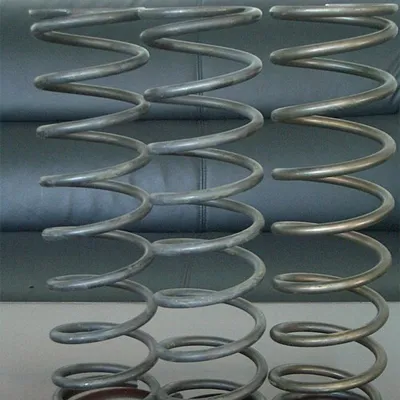
The engineering and manufacturing world values spring steel as a principal material because it displays remarkable resilience alongside great durability coupled with strong elastic properties. Spring steel stands as an essential component in both automotive suspension frameworks and medical tools since it provides essential strength and flexible properties. The complete reference will provide all essential information about spring steel including its chemical components and mechanical attributes as well as multiple industrial applications.
What is Spring Steel?
Spring steel denotes a group of steels which demonstrate strong yield strength to let them bend or twist into new shapes while keeping their initial form even after deformation. They prove to be perfect choices for situations that require high elasticity and strong tensile properties and excellent resistance to fatigue.
You can transform low-alloy and medium- to high-carbon steels or high-alloy steels into spring steel by quenching and tempering them to acquire their desirable properties.
Characteristics of Spring Steel
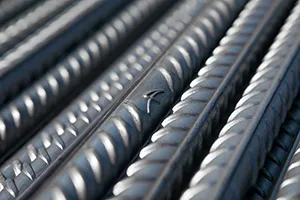
Spring steel demonstrates several specific properties which become essential to understand before studying various grades.
- High Yield Strength: The material has the ability to handle major deflections along with high forces without suffering permanent structural changes.
- Excellent Elasticity: The steel material exhibits the ability to regain its initial form following bending stretching or any twist applied to it.
- Fatigue Resistance: The material maintains operational integrity throughout continuous multiple loading events.
- Hardenability: Heat treatment methods such as hardening and tempering produce favorable reactions in this material.
- Wear and Abrasion Resistance: Offers long service life in dynamic environments.
- Corrosion Resistance (for certain grades): Stainless spring steel grades show both resistance against corrosion and rust.
Composition of Spring Steel
Spring steel typically consists of:
- Carbon: This steel composition varies between 0.5% to 1.0% based on intended mechanical properties.
- Silicon : Improves strength and elasticity.
- Manganese: Enhances toughness and hardenability.
- Chromium, Vanadium, Molybdenum (in alloy steels): Specific properties are combined in this material base to provide increased strength along with fatigue resistance and corrosion protection.
Common Spring Steel Grades
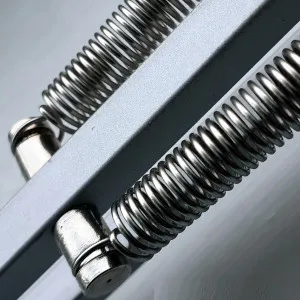
Different standardized grades of spring steel exist for commercial applications. The classification system groups these grades according to their chemical content and their reaction to heat treatment and their final performance capabilities. Multiple grades of spring steel have become the most commonly utilized grades across
1. AISI 1074 / 1075 (High Carbon Spring Steel)
Composition:
- Carbon: 0.70%–0.80%
- Manganese: 0.40%–0.70%
Features:
- Excellent hardness and tensile strength after heat treatment.
- Cost-effective and widely available.
Applications:
- Agricultural tools
- Flat springs and washers
- Industrial cutting tools
2. AISI 1095 (High Carbon Steel)
Composition:
- Carbon: 0.90%–1.03%
- Manganese: 0.30%–0.50%
Features:
- Superior hardness and wear resistance.
- Less ductile compared to lower-carbon grades.
Applications:
- Clock springs
- Knives and blades
- Saws and scrapers
3. SAE 5160 (Alloy Spring Steel)
Composition:
- Carbon: 0.56%–0.64%
- Chromium: 0.70%–0.90%
- Manganese: 0.75%–1.00%
Features:
- Excellent toughness and fatigue resistance.
- Good performance in heavy-duty applications.
Applications:
- Automotive suspension systems (leaf and coil springs)
- Heavy-duty springs
- Axle shafts
4. AISI 6150 (Chromium-Vanadium Steel)
Composition:
- Carbon: 0.48%–0.53%
- Chromium: 0.80%–1.10%
- Vanadium: 0.15% max
Features:
- Excellent impact resistance and toughness.
- Higher resistance to fatigue failure.
Applications:
- Aircraft landing gear components
- Industrial machinery springs
- Automotive parts
5. AISI 9260 (Silicon-Manganese Spring Steel)
Composition:
- Carbon: 0.56%–0.64%
- Silicon: 1.80%–2.20%
- Manganese: 0.75%–1.00%
Features:
- High elasticity and toughness.
- Excellent performance under repeated stress.
Applications:
- Leaf springs
- Torsion bars
- Automotive and rail applications
6. 17-7PH Stainless Spring Steel
Composition:
- Chromium: 16%–18%
- Nickel: 6.5%–7.75%
- Aluminum: 0.75%–1.5%
Features:
- Precipitation-hardened stainless steel.
- High strength, corrosion resistance, and formability.
Applications:
- Aerospace components
- Medical instruments
- Precision springs
7. 301 Stainless Steel
Composition:
- Chromium: 16%–18%
- Nickel: 6%–8%
Features:
- Moderate corrosion resistance.
- Excellent fatigue strength and formability.
Applications:
- Coil and wave springs
- Metal stampings
- Clips and fasteners
8. 302 Stainless Steel
Composition:
- Chromium: 17%–19%
- Nickel: 8%–10%
Features:
- Similar to 304 but with slightly higher carbon content.
- Strong, non-magnetic in annealed condition.
Applications:
- Electronic connectors
- Retaining rings
- Springs in corrosive environments
Heat Treatment of Spring Steel
Heat treatment of spring steel completely determines performance because it enhances both hardness and tensile strength and elasticity.
Common Heat Treatments:
- Annealing: The heat treatment process reduces steel's hardness thus enabling better machine work and minimizing material tension.
- Hardening: Rapid quenching following heating process enables spring steel to achieve higher levels of hardness.
- Tempering: The purpose of this procedure occurs following hardening operations to minimize material brittleness while enhancing mechanical toughness.
- Austempering: Heat treatment measures enable the control of cooling rates to improve both toughness and fatigue strength.
The heat treatment requirements for each spring steel grade must be selected according to the application needs to reach optimal performance levels.
Forms of Spring Steel
Manufacturers offer spring steel in various product forms that fulfill requirements of different fabrication applications.
- Flat Bars and Strips: Common in leaf springs and flat washers.
- Round Bars and Rods: The substance finds application in coil springs together with torsion bars.
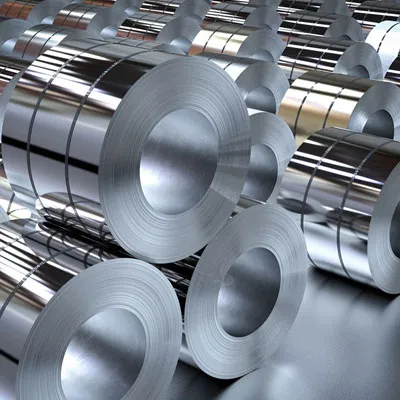
- Sheets and Coils: The material finds its applications in both stamped products and automotive features.
- Wires: Extension springs tension springs and clips represent applications for which this fabricating material is appropriate.
Applications of Spring Steel by Industry
Spring steel adapts perfectly to numerous sectors where it plays an indispensable role.
1. Automotive Industry
- Suspension systems (coil and leaf springs)
- Valve springs
- Clutch and brake springs
- Retainers and clips
2. Aerospace and Aviation
- High-load aircraft springs
- Retractable landing gear springs
- Precision components for structural resilience
3. Industrial Machinery
- Die and tool manufacturing
- Agricultural equipment springs
- High-wear mechanical components
4. Electronics and Electrical
- Contact springs
- Battery holders
- Switches and connectors
5. Consumer Goods
- Hand tools (saws, scrapers)
- Knives and scissors
- Sporting equipment (archery, fencing blades)
6. Medical Devices
- Surgical clamps and scissors
- Orthopedic implants
- Diagnostic tool components
Choosing the Right Spring Steel Grade
Manufacturers base their selection of spring steel grades on the combination of mechanical requirements and environmental factors along with manufacturing restrictions. Here are some considerations:
| Factor | Consideration |
| Strength Requirement | Roughly 1095 steel demonstrates powerful strength properties but alloy grade 6150 maintains both strength and toughness equilibrium. |
| Corrosion Resistance | Use stainless grades like 17-7PH or 302 for moist or chemically aggressive environments. |
| Formability | Grades with lower carbon and high silicon content are easier to form. |
| Fatigue Life | 9260 and 5160 offer excellent performance under cyclic loading. |
| Heat Treatment Capabilities | Ensure compatibility of steel grade with intended heat treatment method. |
Standards and Specifications
Spring steel grades conform to standards from bodies like:
ASTM (American Society for Testing and Materials) — e.g., ASTM A228 (music wire), A684.
SAE (Society of Automotive Engineers) — for alloy composition classification.
DIN/EN (European Norms) — e.g., 55Cr3, 60SiCr7.
JIS (Japanese Industrial Standards) — e.g., SUP10, SUP9A.
Conclusion
Modern engineering solutions rely on spring steel as their foundation because this material provides exceptional characteristics of strength alongside flexibility and durability. Stable mechanical performance makes it an essential material for all kinds of industrial applications to power precise medical equipment and robust vehicles and machinery.
Manufacturers and engineers need to comprehend the distinct features together with chemical makeup and suitable applications for different grades of spring steel for achieving reliable and efficient products with extended lifespans. Ongoing developments in metallic science and heat processing have established spring steel into a material which demonstrates enhanced durability and adaptability than previously possible.
 Media Pack Download
 Newsletters
 Industrial Events