Steel Coil Handling and Storage Solutions: Rack Design, Load Capacity and Safe Industrial Warehousing
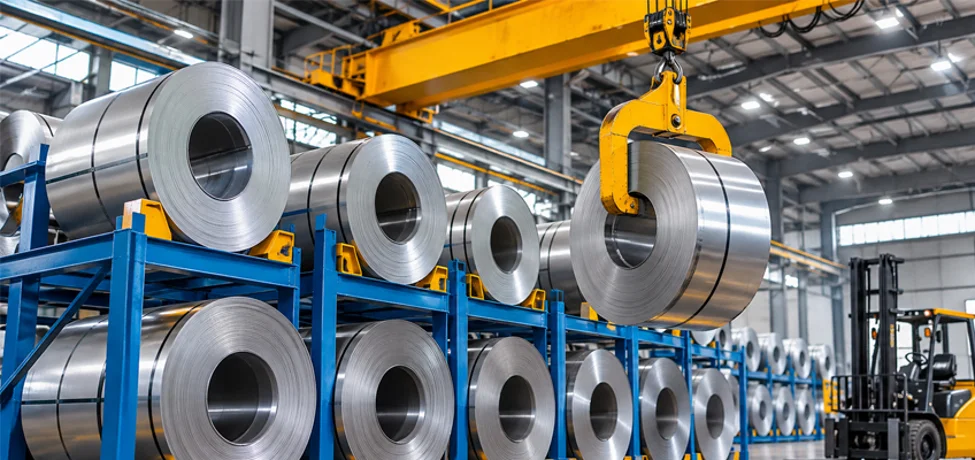
A single steel coil can weigh as much as a small truck. It’s round, so it wants to roll. It’s tightly wound, so it can spring loose. And it’s expensive, so one scratched edge can turn into a rejected batch. That’s why steel coil handling looks simple until something goes wrong.
Most coil accidents and damage claims don’t come from exotic failures. They come from small decisions: a rack rated slightly too low, a lifter that doesn’t suit the coil’s inner diameter, or a “temporary” stack that stayed for three weeks. This guide covers the practical side of steel coil storage, from rack types to load calculations to daily safety habits, so you can make those decisions with confidence.
What Does Good Coil Storage Actually Look Like?
Good coil storage comes down to four things working together: racks matched to coil weight and size with a safety margin built in, handling equipment sized for your heaviest coil rather than your average one, a floor that can carry concentrated loads, and clear rules for stacking, chocking, inspection and traffic flow. If one of these is missing, the other three can’t fully protect your people or your inventory.
Why Are Steel Coils Harder to Store Than Other Materials?
Boxed goods on pallets are forgiving. Coils are not.
The weight is concentrated. A 15-tonne coil rests on a small contact area, so it puts enormous pressure on whatever sits beneath it. The shape adds risk too, because a coil on a flat surface can roll or shift with very little provocation. Then there’s surface quality.
Cold-rolled and coated coils scratch, dent and rust easily, and edge damage alone can make a coil unusable. Finally, coils vary in width, outer diameter, inner diameter and weight, so one rack design rarely suits everything you handle.
Treat coils as their own category, not as “heavy pallets.” Everything else in this guide follows from that.
What Are the Different Types of Steel Coil Storage Racks Used in Industrial Warehouses?
There’s no single best option. The right choice depends on how many coils you store, how often you need to reach them and how much floor space you have. These are the main coil storage racks you’ll come across.
Floor-level cradles and saddles are V-shaped or curved supports that hold a coil in place on the ground. They’re simple, affordable and a good fit for low volumes. The downside is poor space use, since you can’t build upward.
Multi-level coil cradle racks are steel frames with built-in cradles that let you store coils in tiers. They use space far better and keep coils separated, which protects surfaces. They suit operations that handle a steady mix of coil sizes.
Cantilever-style racks use arms extending from a central upright. They’re often chosen for coils on mandrels or for strip steel stored with the eye horizontal. Access is easy, but arm length and loading need careful engineering.
Drive-in and drive-through systems work for high-density storage of similar coils, with forklifts entering the rack lanes. They save a lot of space but reduce selectivity, so they work best when you can follow a first-in, last-out pattern.
Orientation matters as much as rack type. In eye-to-sky storage, the coil axis is vertical, which is stable and compact and common for heavy, wide coils. It usually calls for a lifting method that grips the inner diameter, such as a C-hook. In eye-to-wall storage, the axis is horizontal. That’s common for narrower coils or when feeding a processing line, and it needs cradles or chocks to stop rolling, along with closer attention to securing.
These options together make up the core of modern steel warehouse storage systems. When comparing heavy-duty coil racks, ask suppliers for the rated capacity per cradle, per level and per bay. Those three numbers tell you far more than a “heavy-duty” label ever will.
How Do You Get Rack Design and Load Capacity Right?
Rack design is where safety turns into math, and a few checks make the biggest difference.
Start with your real maximum coil weight. Don’t design around the average. Use the heaviest coil you expect to receive over the next few years, then add a margin.
Next, check capacity at every level. Ratings are generally given per beam level and per bay, so a rack that safely carries a coil on the bottom tier may not be rated for the same coil higher up. Read the load plate, and make sure one is actually posted.
Look at point loading, not just total weight. Coils load cradles and beams in a concentrated way, and the rack should be engineered for that pattern rather than for an evenly spread load.
Don’t forget the floor either. A perfectly rated rack can still fail if the slab can’t take the base-plate loads. Confirm slab thickness, reinforcement and condition, and involve a structural engineer for heavy installations.
Finally, plan for dynamic forces. Setting down a coil isn’t gentle. Impact, forklift contact and, where relevant, seismic or wind loads all add stress, and local codes may require designs to account for them.
A practical test: if a supplier can’t explain how they arrived at a rack’s rated capacity, keep looking.
How to Select Steel Coil Handling Equipment Based on Load Capacity
Choosing steel coil handling equipment is easier when you work through it in order.
Begin by listing your coil specifications: maximum weight, outer and inner diameter, width and surface finish. Everything else depends on these.
Then match the equipment to the task. Overhead cranes with coil tongs or C-hooks are the standard for heavy coils inside production bays. Forklifts fitted with coil rams or booms suit mid-weight coils and flexible movement, but you must check the truck’s rated capacity at the load center the attachment creates. This is the step people skip most often, and it’s behind a lot of near-misses. Coil lifters, including vacuum or magnetic types, can suit particular materials, though each has its own limits and surface considerations. Coil cars and transfer carts handle movement between processing points, especially along production lines.
Next, apply a safety margin. Pick equipment rated comfortably above your heaviest coil, not right at the limit. Attachments reduce a forklift’s usable capacity, so always read the derated figure rather than the nameplate figure.
Think about the whole route as well. Aisle width, ramp gradients, door heights and floor condition all decide whether a machine can do the job safely. And confirm that the equipment meets the standards that apply in your region and that operators are trained and authorized for that specific machine.
If you remember one thing from this section, make it this: capacity belongs to the whole system, not a single component. The crane, hook, slings and coil attachment all count, and the weakest link sets your real limit. That principle sits at the core of sound industrial coil handling.
What Are the Safe Storage Practices for Heavy Steel Coils in Manufacturing Facilities?
Good hardware helps, but daily habits do the real protecting. The safe storage practices for heavy steel coils in manufacturing facilities that matter most fall into a few themes.
Keep coils from moving. Never leave coils on an open, flat floor where they can roll. Use cradles, chocks or purpose-built supports every time, even for short-term storage. Only stack coils when the coil type, packaging and rack design explicitly allow it, and never beyond the limits set by your engineer. Keep strapping and packaging intact too, because banding holds the coil’s tension. If a strap is cut or damaged, treat that coil as a hazard until it’s properly dealt with.
Keep the structure sound. Inspect racks regularly for bent uprights, damaged beams, loose anchors and missing load plates, and pull damaged components out of service promptly. A rack that has been struck by a forklift should be checked before anyone loads it again, even if the damage looks minor.
Keep people away from moving loads. Mark exclusion zones, define clear travel paths and keep pedestrians out of the lifting area. Most serious injuries happen when someone is standing where they shouldn’t be while a load is in motion.
Protect the steel itself. Store coils in a dry, ventilated space and avoid conditions that cause condensation. Use protective wrap or covers where appropriate to limit corrosion. Clear labeling and tracking also cut down on unnecessary handling, and fewer touches means fewer chances for damage.
Keep training fresh. Short, regular refreshers on lifting, signaling and hazard awareness do far more good than a thick manual nobody opens.
Which Mistakes Cost Plants the Most Money?
A few errors show up again and again. Plants buy racks on price alone and assume “heavy-duty” means enough. They forget that a forklift’s capacity drops as the load center moves forward. They ignore the condition of the slab under the racks, let small rack damage go unrepaired, or put mixed coil sizes on cradles that weren’t designed for them. Each of these is cheap to fix before an incident and very expensive afterward.
Frequently Asked Questions
What is the best way to store steel coils?
It depends on volume, coil size and how often you need access. For most warehouses, purpose-built coil cradle racks offer the best balance of safety, space use and surface protection.
How much weight can a coil storage rack hold?
Capacity varies by design. Heavy-duty coil racks can be engineered for very large coils, but always rely on the manufacturer’s posted rating per cradle, level and bay rather than a general claim.
What equipment is used to handle steel coils?
Common choices include overhead cranes with coil tongs or C-hooks, forklifts with coil rams or booms, coil lifters and coil transfer cars. The right one depends on coil weight, dimensions and how far the coil needs to travel.
Can steel coils be stacked?
Sometimes, but only when the coil type, packaging and racking allow it and a qualified engineer has approved it. Unsupported stacking is a leading cause of rolling and collapse incidents.
How often should coil racks be inspected?
Regular visual checks by trained staff, plus periodic formal inspections by a qualified person, are standard good practice. Inspect immediately after any impact.
Final Thoughts
Storing and moving coils safely isn’t about owning the biggest rack or the strongest crane. It’s about matching every part of the system to the real coil, the real floor and the real people working around it. Get the numbers right, choose equipment with margin to spare, and build habits that don’t depend on anyone’s memory.
If you’re planning a new layout or upgrading an old one, start by writing down your heaviest coil, your daily handling pattern and your floor limits. Everything else gets easier from there.
 Media Pack Download
 Newsletters
 Industrial Events