The Impact of Electric Arc Furnaces on Modern Steel Production
Over the past few years Electric Arc Furnace (EAF) has therefore emerged as one of the most significant innovations that define steel making industry. Before, the most common operation of steel production utilized blast furnaces that utilized iron ore and coal. But then with advancement of EAF technology steel making has become more environment friendly and compatible to current world requirements.
I. What is an Electric Arc Furnace (EAF)?
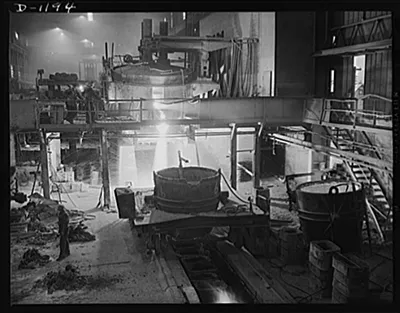
An Electric Arc Furnace (EAF) – Now a furnace is being used where electric arcs are used for melting of scrap steel or direct reduced iron (D.R.I.) In contrast to the blast furnaces that the raw materials steel and operation using materials like iron ore, the EAF mainly uses scrap metal therefore are eco-friendly. The furnace works where electrodes are created to give the electric arc that supply heat required to melt the steel.
II. Advantages of EAF in Modern Steel Production
The use of EAF technology presents some benefits in comparison with conventional techniques. This brings out the fact that its usage is environmentally friendly, which will be discussed below. Because EAFs lean heavily on scrap steel, they do not require mining of raw materials such as iron as is expected of conventional furnaces. Further, EAFs generate half the carbon emissions due to the lack of use of coke a carbonaceous solid fuel used in blast furnaces. This makes EAFs a superior choice in the struggle against climate change.
A further strength is that they are flexible. Such systems can be started and stopped quickly, and for this reason, the EAFs are useful for making steels in a smaller amount at a time. This proves particularly helpful in operations whose market demand is not steady throughout the year. Moreover, EAFs can handle a variety of steel grades; this means that they are suitable for production of all types of products, from construction to automotive high-strength steel.
III. Energy Efficiency
This article looks into one of the areas that makes EAFs unique – energy efficiency. Blast furnaces on the other hand depend on a constant supply of energy and raw materials, on the other hand EAF’s only require electricity to operate. This leads to lesser use of energy, which in turn lowers overhead cost of the production process.
Where EAFs are located in areas that have access to renewable energy such as wind, solar or hydroelectric power, EAFs could get an added bonus by using this kind of energy to power the furnace.
IV. Impact on the Global Steel Industry
In recent years, the use of EAFs has experience a great deal of increase. The US and several European nations have shifted their focus to EAF technology because of global environmental policies and rising demand for environmentally sustainable steel. Today, EAF-based steel making is reported to contribute nearly 30% of the world steel production and this is expected to increase as more nations turn to cleaner processes.
With the change to EAFs, mini-mill emerged, diversified steel making companies less than 500 employees with major emphasis on scrap metal and EAFs. Mini-mills are better than the tradition steel mills for the production of steel as it bring down its cost thereby making the product easily accessible to the developing nations or to smaller industries where resources of production are scarce but demand for the steel is very high.
V. Challenges Faced by EAF Technology
Absolutely, EAFs have plenty of benefits, and still, they have not remained without challenges. The quality of scrap steel is one of the main points that can affect stainless steel production, and the presence of high-quality scrap steel can help to solve this problem. EAFs used more DRI when scrap metal is limited in quality, increasing the price in turn which can be unfavorable. Further, the implementation cost of EAF technology is high which may not go well with some companies, especially in the regions where competition from low cost labour and traditional blast furnaces exist.
The other is on the quality of steel that is produced in the production line. Although EAFs prove to be effective in this line of production, it is sometimes challenging to achieve the high level of quality needed in products that need to meet high standards of some industries such as the aerospace industry or the automotive industry. Desulphurization and removal of phosphorus in EAF steel may require higher level of purification methods to make EAF steel rival the purity of steel from blast furnaces.
VI. The Future of EAF in Steel Production
With the global growth trend toward lowering carbon emissions in the production of steel, EAFs will become a critical part of modern steelmaking.
As there is more demand from governments and consumers for lower carbon emissions the number of steel producers adopting EAF technology is increasing. Relative to other processes, continuous advancements in specific configurations like the electrodes and automation systems applied to the EAFs will further enhance efficiency and lower costs. However, green hydrogen as an energy source can also be developed for EAFs in near the future which may enhance its sustainability. If hydrogen is being used to make direct reduced iron (DRI) which can then be charged to an EAF, steelmaking becomes nearly zero emission.
Conclusion
Modern steelmaking has been transformed by Electric Arc Furnaces through offering cleaner, more flexible and efficient method than the traditional techniques. They are also able to recycle scrap steel and minimize the amount of carbon emission they produce thus being able to meet the global trends for green industries. The present situation does not completely eliminate barriers to converting more EAFs for steel production in the future as more technology and concrete ideas regarding environmental concerns are implemented.
 Media Pack Download
 Newsletters
 Industrial Events