Additive Manufacturing with Steel: Possibilities and Challenges
Introduction to Additive Manufacturing with Steel
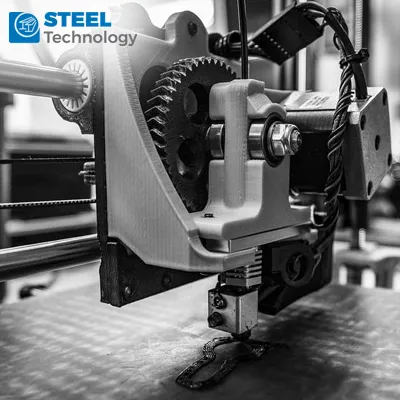
3D printing also known as additive manufacturing is transforming the way things and products are made. Next refers to construction in which an item is developed on the next layer from the ground all the way up to the completion. This approach has inherent advantage in complexity where they can almost uniquely create intricate shapes and structures that cannot be manufactured with conventional techniques. When it comes to stainless steel application in additive manufacturing, there is a wide variety of opportunities, but also opportunities for an even wider variety of issues. Steel is a strong and resilient material widely used in various industries such as automotive, aerospace industries, and construction sectors to mention, and thus make it suitable for bulk additive manufacturing. However, applying steel in 3D printing is faced with various technical, economic and ecological challenges that must be solved.
Advantages of Using Steel in Additive Manufacturing
The fact that steel is a tough material it can be used to create equally strong parts and structures for various uses. In high-performance industries such as aerospace, automotive, and oil and gas industries the commodity that offers a surety solution is steel. Steel can be 3D printed, and this opens a number of advantages for designers such as the production of thin-walled structures with system of channels, for example hollow structures that is not possible using casting or machining. Such adaptability makes it simpler to enhancing factors of components by losing weight, gaining strength and enhancing functionality.
The other major benefit that can be attributed to the use of additive manufacturing with steel is flexibility of production. Since the process is digital, the manufacturers are in a position to modify the designs to address the various requirements without having to modify the tools and/or molds. This is especially so in applications such as manufacturing of medical implants or other custom instruments that have to fit a specific application very tightly. Additive manufacturing with steel also has the advantage of using just the required amount of steel in building each layer of the structure. This makes the process even more sustainable and cheaper when compared to standard service delivery procedures.
Types of Steel Used in Additive Manufacturing
Additive manufacturing can use several types of steel, all of which have characteristics that require their use in a specific industry. For example, Stainless steel is popular for use because of its good performance in corrosion and high tensile strength as required in several challenging conditions. Another type of steel that is used frequently is tool steel because of its hard wearing properties; that is ideal for applications such as manufacturing parts that experiences high stresses or which are frequently used. There is also maraging steel which is employed for their high levels of toughness and flexibility in heat treatment enhancing the properties of the finished printed part.
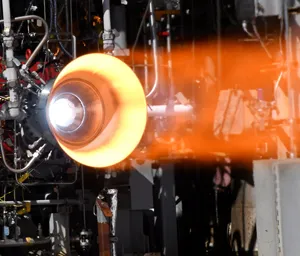
Nevertheless, not all kinds of steel can be utilized for 3D printing because of their structural properties. Certain alloys possess high thermal and mechanical properties and may not be suitable for the additive process. Currently, scientists continue to explore different steel alloys that can be suitable for the additive manufacturing technique required properties of strength, durability, and printability provided by the material.
Additive Manufacturing Techniques with Steel
Some of the common approaches of AM applicable on steel include and their strengths and weaknesses are discussed below. Based on the literature, the most used techniques are Selective Laser Melting (SLM) and Direct Metal Laser Sintering (DMLS) in which a laser is used to fuse metal powder progressively. It can produce very detailed and complex structures, but it is a slow method and demands exact control of the actual printing conditions to avoid troubles such as deformation or other imperfections on the final product.
Another technique is Binder Jetting where binder is applied to steel powder to form a consolidated shape that is sintered in a furnace. The Binder Jetting process is relatively cheaper and shorter than SLM or DMLS, however, it results into relative weaker parts which also require enhanced polymerization to acquire the same strength as desired. The last one is Wire Arc Additive Manufacturing (WAAM) where steel wire is melted under the welding arc. WAAM is fast but most effective when creating large parts in comparison with other methods it does not allow fine detail and complex geometries.
Applications of Steel Additive Manufacturing
The opportunities for using steel for additive manufacturing are numerous and moreover diversified. It is applied in aerospace production to manufacture light and robust parts suitable for operation in harsh environments. For instance, through the use of steel, 3D printed engine parts have been created that are lighter hence making it easier to improve the fuel consumption hence making aircrafts economical and less of a burden to the environment. Within automotive, additive manufacturing is also useful in creating prototypes of components, a process done more quickly and with less money required via additive manufacturing.
Within the medical industry, additive manufacturing with the material steel to forms implants, surgical equipment and even prosthetic limbs. Manufacturers can therefore rely in the use of steel in these applications since the end products will be strong and will last longer. It is most illuminating in orthopedics where implant should be carved out according to the anatomic size and shape of the patient for the best results. Oil and gas industry is also commonly involved using additive manufacturing since small or complex valued-added parts such as drill key, drive shafts, valve, and others that require high strength and can work in high pressure area.
Challenges in Additive Manufacturing with Steel
However, as seen from the above examples, the additive manufacturing with steel is not without several difficulties. Among them, high cost of steel powders, which are used in almost all approaches of 3D printing, stands out. Iron and steel powders can only be produced to very fine particle size and require to be stored in special clean atmosphere thus; costing more. Furthermore, the equipment as well as the assembly for involvement into the process of AM, especially with regard to the working with steel, the laser based technologies for AM are expensive and need servicing.
Another technical challenge is achieving consistent quality in 3D-printed steel parts. Steel is a complex material with unique thermal and mechanical properties, and when it is exposed to the high heat of a laser, it can lead to issues like thermal distortion or residual stresses in the final product. Such concerns can adversely affect the structural capability of the part, and potentially cause expensive failures. In-situ and post-processing methods are required to seal and repair defective areas on the printed parts in order to achieve the quality of the end product, adding to the cost of production.
Additional post-processing is also a major concern in the AM of steel parts. Subsequently, some steel components may need further process such as heat treatment, or mechanical work, and/or surface coatings and treatments in order to reach for the required properties or visual outcomes. These post processing steps are often lengthy and costly compared to traditional manufacturing methods and may hence not allow for competition on cost and efficiency.
Environmental Considerations
This synthesis of using steel through additive manufacturing has advantages and disadvantages concerning the environment. First, the method reduces waste by incorporating only the required material into the design while in other methods material is often added and then trimmed off. This can make steel additive manufacturing a more sustainable option; they were pointing to the fact that through adopting this technology, the need for purchasing of steel can be greatly reduced since the desired shape of the steel to be used is created directly through additive manufacturing which somehow makes the technology sustainable. Nevertheless, some type of 3D printing, including those that use lasers, are quite energy demanding and some criticism concerns the negative effects on the environment. Possible solutions include adopting renewable power sources and boosting machine effectiveness regarding those concerns.
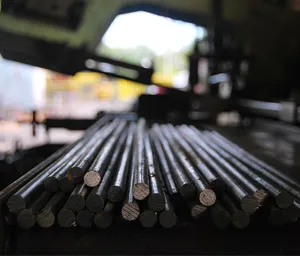
Also, managing and recycling of steel powder are also concerns to the environment as well as other implications. Manufacturing small steel powder is sometimes dangerous if not handled well, and recycling of the powder for reuse is many times challenging because of contamination issues. The increasing market for the use of steel through additive manufacturing will therefore require sustainable approaches in the production, utilization and recycling of steel powder.
Future Outlook and Developments
Additive manufacturing with steel has a bright future, new solutions and improvements for future development continue to be explored at the moment. That is why one of the main directions is to create new steel alloys for 3D printing. These alloys could potentially provide better thermal properties that would improve part strength, and make it simpler to print high quality parts. Furthermore, it is understood that upgrades in machine technologies for example faster and more correct lasers could enhance the standard of steel additive manufacturing while lowering its cost.
Another exciting area is hybrid manufacturing which consists of both additive and subtraction techniques. For instance, a component for example could be 3D printed half and the other half could be machined to the final required shape and smoothness. This approach enhances some of the weaknesses of additive manufacturing like the rough surface finishes and dimensional imprecisions making it much appropriate for high stakes applications.
Conclusion
AM with steel is an interesting concept, especially for aerospace, automotive, medical, and oil and gas segments. Because of its ability to manufacture intricate, specifically tailored, and strong parts, AM is a useful technology in contemporary industry. Nevertheless, there is still essential obstacles to overcome these are consisting of cost, product quality and the environment. Over time, as technology grows and new forms and types of solutions come to the fore, technologies employing steel through additive manufacturing will become more affordable and friendly on the environment, hence the potential for greater applications in manufacturing.
 Media Pack Download
 Newsletters
 Industrial Events