Hydrogen Steelmaking: Mapping the Road to a Decarbonized Future
Hydrogen Steelmaking: Mapping the Road to a Decarbonized Future
Against the backdrop of growing climate insistence, the industrialized world has an epic problem: how can it make peace with progress, and the salvaging of the planet? There is no better place to feel this tension than in steelmaking - an industry that is at the core of modern life but generates around 8% of the world carbon dioxide emissions. With the world demanding revolutionary solutions, hydrogen steelmaking is not just another technical breakthrough, but it is the forerunner of a decarbonized steelmaking age. Is this the silver bullet that will drive the industry to reasonable climate goals in the steel industry?
Rethinking Steel: Why Change is Necessary
The conventional steelmaking, especially through the blast furnace-basic oxygen furnace (BF-BOF) method, is highly dependent on coking coal, which is a fossil fuel that produces tremendous amounts of CO2. The production of one ton of steel releases over two tons of CO2.. These numbers cannot be reconciled with the global desired goal of keeping temperature increase to less than 1.5C. And thus, how hydrogen can mitigate CO2 in steelmaking depends on not only innovation but survival. To fully understand how hydrogen reduces CO2 in steelmaking, one must examine the chemical substitution that occurs in the process - a shift from carbon to hydrogen that fundamentally alters emissions.
Enter Hydrogen Steelmaking
Hydrogen steelmaking is at its most basic a substitute of carbon with hydrogen as the main reducing agent in the Direct Reduced Iron (DRI) procedure. Rather than generating carbon dioxide as a by-product, hydrogen combines with iron ore to give off water vapour - an emission leap that reinvents green metallurgy. This innovation is central to transitioning to hydrogen-based steel production, a shift that has far-reaching implications.
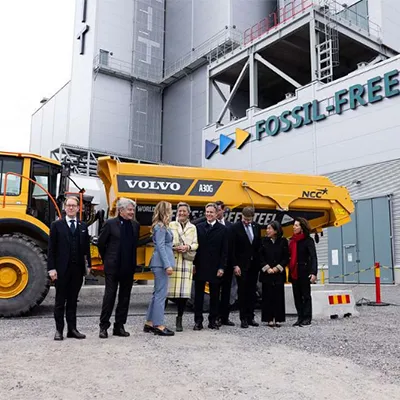
The idea has taken off considerably within Europe, with pilot projects such as HYBRIT in Sweden and H2 Green Steel projects aiming to commence commercial production through hydrogen steelmaking by 2025. These are not experimental trials but a plan to shift to hydrogen-based steelmaking in the whole world.
The Promise of Green Steel Production
The outcome of this shift is green steel manufacturing - steel produced with little to no carbon emission. The potential of green steel is enormous, not only in terms of environmental influence, but also in terms of transforming market conditions. Even the biggest automakers, construction firms, and electronics producers are already indicating a transition in demand of low-carbon materials to satisfy customer and shareholder requirements.
The question further escalates: What are the advantages of green hydrogen to steel plants other than CO2 decrease?
When electrolysis is used to produce green hydrogen by using renewable energy, it makes all aspects of the steel making process clean. It decreases the reliance on imported coal, strengths the local renewable energy ecosystems, and facilitates circular economies of energy and materials. It also places the companies before the emerging regulations and carbon tax which promises to penalize the traditional emitters. These are only a few of the many benefits of green hydrogen for steel plants, illustrating why it's at the core of future industrial strategies.
Understanding the Technology Shift
In order to see the future, we first need to understand how hydrogen lowers CO2 in steelmaking on a technical level.
| Process | Traditional BF-BOF | Hydrogen-Based DRI |
| Reductant | Coke (Carbon) | Hydrogen |
| Main Byproduct | CO2 | H2O (Water Vapor) |
| Energy Source | Fossil Fuels | Renewable Electricity |
| Emissions | High | Near-Zero (If H2 is Green) |
It is this contrast that makes H2 steelmaking is the future more than a tagline - it is an engineering fact.
Challenges in Hydrogen Steelmaking Technology
Nevertheless, it is not a trip without obstacles. Hydrogen steelmaking technology challenges are multi-dimensional, that is, economic, infrastructural, and technological.
The currently available methods of producing green hydrogen are still costly, typically doubling or tripling the price of natural gas (grey hydrogen)-derived hydrogen. The expansion of electrolyzers, the maintenance of around-the-clock renewable electricity, and the modification of existing steel mills require billions of investment costs. The global supply chain for green hydrogen, which includes storage and transportation, is still in its early stages.
In addition, hydrogen steelmaking creates novel process sensitivities. Reactivity and diffusivity of hydrogen demand materials, which are resistant to embrittlement, and safety at high temperatures. The R&D labs in Europe and Asia are still working on creating such robust elements.
Governments and industries are however undeterred by these challenges. By flooding the market with pilot projects and infrastructure, the European Union's Hydrogen Strategy and the United States' Inflation Reduction Act are making transitioning to hydrogen-based steel production by 2025 more likely than not.
Market Signals: Who is leading the Transition?
The global steel behemoths are already having an impact.
ArcelorMittal, SSAB, and Thyssenkrupp are some of the companies that are spending billions to shift to hydrogen-based steelmaking. Even India and China, the largest steelmakers in the world, are looking into pilot programs as pressure mounts to achieve climate goals in steelmaking.
Even in those regions that have a lot of solar or wind power, hydrogen steelmaking is becoming increasingly popular. Australia, which has a grid dominated by renewables, is looking at green steel as a future export. Middle East, the oil-rich region is investing in green hydrogen corridors, in an attempt to diversify their energy economies.
The Business Case for Green Steel
What is it about this technology that is so challenged yet would a company want to invest in such a technology?
Since green steel manufacturing is rapidly turning into a source of competitive advantage. Automakers, real estate developers, and other global buyers are going net-zero on their supply chains. Green premium on sustainable materials is not only possible but is already being paid in a number of high income markets.
With ESG regulation increasing and consumers calling to account brands, green steel is a climate measure, and a brand differentiator. As companies decarbonize in the steel sector, in line with climate ambitions, they minimize operational risks in the long-term and open up new sources of revenues, such as green finance.
What Will 2025 Look Like?
With the current speed, 2025 will mark a major turning point in the development of hydrogen steelmaking.
A number of pilot plants will scale up by 2025, increasing hundreds of kilotons to possibly 1-2 million tons per year. Simultaneously, the cost curves of green hydrogen will likely undergo downward bending because of the efficiency increase in electrolyzers and the expanded use of
International Energy Agency (IEA) estimates that green hydrogen may be economically competitive in locations with low-cost renewables by 2030. That would speed up the path to decarbonized steelmaking, not only in Europe but worldwide.
The Broader Climate Equation
The steel industry cannot be decarbonized in a vacuum.
There must be cross-sectoral collaboration - among energy providers, policymakers, investors and manufacturers. Hydrogen pipeline infrastructure, port logistics and certification standards will be important enablers.
However, the uniqueness of hydrogen steelmaking is that it turns one of the most difficult-to-abate industries into a climate solution. The ripple effects - reduced emissions, creation of jobs in the green sectors, less dependency on fossil - are in total agreement with national and global climate goals in the steel industry.
Final Thoughts: Is H2 Steelmaking the Future?
As we move slowly towards the half-way point of this decade, one fact that is becoming more and more apparent is that H2 steelmaking is the way forward. Not just out of need, but also because it's feasible.
The chance to redesign one of the oldest industries in the world according to the perspective of sustainability, innovation, and resilience is terrifying and exciting. Indeed, there are obstacles associated with the technology of hydrogen steel production. Yet the advantages of green hydrogen to steel plants - advantages which echo well beyond the factory floor - are but so as well.
The change is not fictional. It is already taking place. And with the clock ticking to hydrogen steelmaking 2025, that is the question that is facing the industry, as much as it is facing investors and policymakers: will we drive the transition or will the transition pass us by?
Hydrogen steelmaking is not just a technical shift - it is a wake-up call of industrial dimensions, which traces the path towards a decarbonized steelmaking future.
 Media Pack Download
 Newsletters
 Industrial Events