Mining in the Steel Industry: Iron Ore, Mineral Processing, Technologies and Applications
Steel touches almost everything we build, drive, or live in — bridges, cars, appliances, skyscrapers. But before any of that steel takes shape, it starts as rock pulled out of the ground. Mining in the steel industry is the foundation of the entire value chain, and without it, modern manufacturing simply wouldn't exist. In this article, we'll break down how iron ore mining works, why mineral processing matters, which technologies are changing the game, and how all of this feeds into the steel we use every day.
Why Mining Matters to the Steel Industry
Steel is made primarily from iron, and iron doesn't come pre-packaged — it has to be extracted, refined, and transformed. This is where the mining industry plays its most critical role. Iron ore, along with coal (used to produce coke) and limestone, forms the backbone of raw materials that steelmakers depend on.
The role of mining in the steel industry goes beyond simply digging up rocks. It involves geological surveys, resource estimation, extraction planning, ore processing, and logistics — all coordinated to ensure a steady, cost-effective supply of raw material to steel plants. Any disruption in mining output, whether from regulatory changes, equipment failure, or resource depletion, directly affects steel prices and availability worldwide.
Understanding Iron Ore Mining
Iron ore mining is the process of extracting rock and minerals containing iron oxide, which is then converted into usable iron and eventually steel. Iron ore deposits are typically found in two main forms:
- Hematite – the most commonly mined iron ore, valued for its high iron content
- Magnetite – slightly lower in iron content but easier to concentrate using magnetic separation
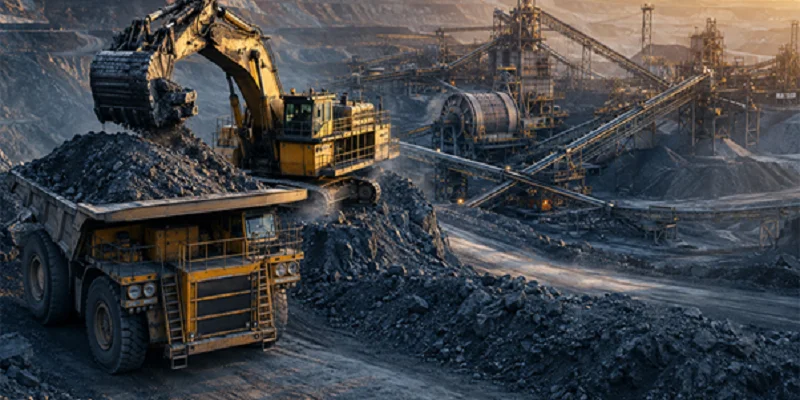
Iron ore mining generally happens through open-pit mining, since most iron ore deposits are located close to the surface. This method is more cost-effective and allows for large-scale extraction compared to underground mining.
The Iron Ore Mining Process
- Exploration and Drilling – Geologists identify ore deposits using drilling, sampling, and geophysical surveys.
- Blasting and Excavation – Once a viable deposit is confirmed, controlled blasting breaks up the rock, and heavy machinery excavates it.
- Transportation – Ore is transported via haul trucks, conveyor belts, or rail to processing facilities.
- Crushing and Screening – Large rocks are crushed into smaller, manageable pieces for further processing.
This entire chain requires precision, because even small inefficiencies at the mining stage can multiply into significant cost overruns further down the production line.
What Is Mineral Processing?
Mineral processing (also called ore beneficiation) is the step that turns raw, low-grade ore into a concentrated product suitable for steelmaking. Freshly mined iron ore usually isn't pure enough to go straight into a blast furnace — it needs to be upgraded.
Key stages of mineral processing include:
- Crushing and Grinding – Reducing ore particle size to liberate valuable minerals from waste rock (gangue)
- Screening and Classification – Separating particles by size for optimal downstream processing
- Magnetic Separation – Using magnetic properties to separate iron-rich particles from impurities, especially effective for magnetite ore
- Flotation – Using chemical reagents and air bubbles to separate valuable minerals from unwanted material
- Pelletizing and Sintering – Converting fine ore concentrate into pellets or sinter, which are easier to feed into blast furnaces and improve smelting efficiency
Efficient mineral processing directly impacts the quality of steel produced. Higher iron content and fewer impurities mean better furnace performance, lower energy consumption, and stronger final steel products.
Mining Technologies Transforming the Industry
The mining sector has evolved dramatically, moving from manual labor-heavy operations to highly automated, data-driven systems. Modern mining technologies are reshaping how iron ore is located, extracted, and processed.
Autonomous and Smart Mining Equipment
Autonomous haul trucks, drilling rigs, and loaders are now common at large-scale mining operations. These machines reduce human risk in hazardous environments and improve operational consistency. Sensors embedded in mining equipment collect real-time data on wear, performance, and output, allowing predictive maintenance that reduces downtime.
Remote Sensing and Geological Modeling
Satellite imagery, drone surveys, and 3D geological modeling software help mining companies pinpoint ore deposits with far greater accuracy than traditional exploration methods. This reduces exploratory drilling costs and speeds up decision-making.
AI and Data Analytics
Artificial intelligence is increasingly used to optimize blasting patterns, predict equipment failures, and improve ore grade estimation. Machine learning models can process massive datasets from sensors and historical operations to recommend the most efficient extraction strategies.
Automation in Mineral Processing Plants
Processing facilities are integrating automated control systems that adjust crushing, grinding, and separation processes in real time based on ore characteristics. This improves recovery rates and reduces energy and water usage — both major cost factors in mineral processing.
Sustainable and Green Mining Practices
Environmental regulations and sustainability goals are pushing the industry toward electric mining equipment, water recycling systems, and tailings management technologies that reduce ecological impact. These innovations are becoming a standard part of modern mining and mineral processing technologies.
Mining Equipment Used in Iron Ore Extraction
The efficiency of any mining operation depends heavily on the equipment used. Common types of mining equipment in iron ore operations include:
- Excavators and Hydraulic Shovels – For digging and loading ore
- Haul Trucks – For transporting ore from the mine site to processing plants
- Drilling Rigs – For blast-hole drilling during exploration and extraction
- Crushers and Grinding Mills – For reducing ore size during processing
- Conveyor Systems – For continuous, efficient material transport
- Magnetic Separators and Flotation Cells – For mineral concentration during processing
Investing in the right combination of equipment, matched to the specific characteristics of an ore deposit, is one of the most important decisions a mining operation makes. The wrong equipment choice can lead to higher operating costs and lower recovery rates.
Mining Solutions for Steel Raw Materials
Steel producers need consistent, high-quality raw material supplies, which is why many mining companies now offer integrated mining solutions for steel raw materials — combining extraction, processing, and logistics under one coordinated system.
These solutions often include:
- Ore Blending – Mixing ores of different grades to meet specific steelmaking requirements
- Quality Control Systems – Ensuring consistent iron content and minimal impurities
- Supply Chain Integration – Coordinating mining output directly with steel plant demand to avoid shortages or overproduction
- Value-Added Processing – Producing pellets or sinter feed tailored to a specific furnace's needs
This kind of end-to-end coordination reduces waste, improves cost predictability, and ensures steel manufacturers aren't left scrambling for raw materials during periods of high demand.
The Broader Impact of Mineral Mining on Steel Production
Mineral mining doesn't just supply iron ore — it also provides other essential inputs like limestone (used as a flux in the blast furnace) and manganese and chromium ores (used to produce specialty steel alloys). Each of these minerals plays a specific role in determining the strength, durability, and properties of the final steel product.
This is why the steel industry's performance is so closely tied to the health of the broader mining sector. Fluctuations in mineral mining output — whether due to geopolitical issues, environmental regulations, or resource scarcity — can ripple through global steel prices and construction, automotive, and manufacturing industries almost immediately.
Frequently Asked Questions
What is the role of mining in the steel industry?
Mining supplies the essential raw materials — primarily iron ore, along with coal and limestone — that steel manufacturers need to produce steel. Without consistent mining output, steel production would face constant raw material shortages and price instability.
How is iron ore turned into steel?
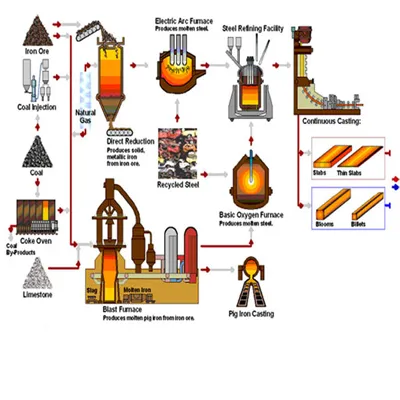
Iron ore is mined, crushed, and processed into concentrate or pellets. It's then smelted in a blast furnace with coke and limestone to produce molten iron, which is further refined into steel through processes like the basic oxygen furnace or electric arc furnace method.
What is mineral processing in mining?
Mineral processing is the set of techniques — including crushing, grinding, magnetic separation, and flotation — used to separate valuable minerals from waste rock and upgrade raw ore into a usable, concentrated product.
What technologies are used in modern iron ore mining?
Modern iron ore mining relies on autonomous trucks and drills, drone-based surveying, AI-driven geological modeling, and automated processing plants to improve efficiency, safety, and environmental performance.
Why is mineral mining important beyond iron ore?
Mineral mining also supplies limestone, manganese, chromium, and other materials needed to produce different grades and types of steel, making it essential to nearly every stage of steel manufacturing.
Final Thoughts
Mining in the steel industry isn't just a supporting act — it's the starting point of everything steel represents in modern life. From the excavators pulling ore out of open pits to the AI systems optimizing processing plants, every innovation in mining and mineral processing technologies directly strengthens the steel supply chain. As demand for steel continues to grow across construction, infrastructure, and manufacturing, the mining industry's ability to innovate and adapt will remain just as important as the steel mills themselves.
 Media Pack Download
 Newsletters
 Industrial Events