How Digital Supply Chain Technology Is Transforming Steel Logistics
Introduction: The Digital Shift in Steel Supply Chains
The global steel business is one that functions at the point of scale, complexity and narrow margins. The steel supply chain, since sourcing of raw materials and planning of production have been to transportation and last-mile delivery, has always been dependent on fragmented systems, manual coordination and decision-making by experience. Nevertheless, the increased customer expectations, shifting demand patterns, sustainability issues, and geopolitical risks are causing steel producers and distributors to reconsider the approach to logistics management.
The steel logistics is being rapidly changed to digital supply chain technology that provides real-time logistics visibility, predictive intelligence, and data-based coordination of the industrial supply chain. A cost center is currently evolving into a competitive, resilient, and growth strategic lever.
Understanding the Steel Supply Chain in a Digital Context
Steel supply chain encompasses various phases, which are mining and acquisition of raw material, primary and secondary steel manufacturing, warehousing, transportation, distribution, and delivery of final product to various end uses (construction, automotive, infrastructure and heavy engineering). Both phases entail great volumes, large shipments, regulatory limitations, and extended lead times.
Digital steel logistics unites these phases and brings them together in linked platforms which allow the data flow to go seamlessly between suppliers, manufacturers, logistics provider, and customers. The stakeholders instead of working in silos have a solid picture of operations that enhance quick response to disruptions and acquisition of better coordination within the industrial supply chain.
Definition: Digital Steel Logistics
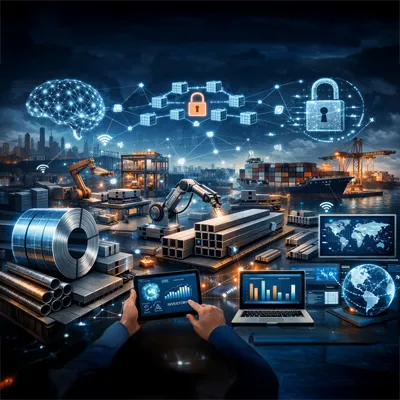
Digital steel logistics is the use of new digital solutions, including cloud computing, artificial intelligence, Internet of Things (IoT), blockchain technology, and analytics to manage, optimize, and automate logistics operations through the steel supply chain. This is aimed at enhancing efficiency, transparency, predictability and cost control within industrial logistics management systems.
The Role of Steel Logistics Technology in Industrial Transformation
The steel logistics technology is no more reserved to simple transportation management systems. The contemporary environment combines manufacturing parameters, accuracy, inventory, demand predictions, and transporter reservations into a single digital environment. These systems enable manufacturers of steel to align the production of the steel with the capacity of transporting the manufactured products, which lessens the bottlenecks and unproductive stock.
The current industrial logistics management systems have allowed the real-time monitoring of coils, billets, plates, and finished steel products through the rail, road, and ocean ways. Such visibility helps reduce the uncertainty, enhance the accuracy of delivery and bolster the customer confidence in a sector where even minutes of delay can stall a complete construction or manufacturing undertaking.
Digital Supply Chain Steel: From Reactive to Predictive Operations
The conventional steel logistics has been reactive in the sense that it responds to delays, shortages or change in demand once they have taken place. Digital supply chain steel platforms modify this strategy to proactive and predictive operations.
The optimization of the steel supply chains can be scaled down to utilize historical data, real-time inputs, and machine learning models. Manufacturers are able to foresee the congestion on ports, forecast transport delays on weather or change in regulations and change in shipment routes or production plans. This predictive feature helps a great deal to minimize operational risk and enhance reliability of the services.
AI-Driven Supply Chain Management in Steel Logistics
The conventional steel logistics has been reactive in the sense that it responds to delays, shortages or change in demand once they have taken place. Digital supply chain steel platforms modify this strategy to proactive and predictive operations.
The optimization of the steel supply chains can be scaled down to utilize historical data, real-time inputs, and machine learning models. Manufacturers are able to foresee the congestion on ports, forecast transport delays on weather or change in regulations and change in shipment routes or production plans. This predictive feature helps a great deal to minimize operational risk and enhance reliability of the services.
Predictive Inventory Systems for Steel Manufacturers
High carrying cost, lack of space, and demand variability are some of the dexterious problems in the steel logistics as inventory management. Advanced analytics are employed in predictive inventory systems to calculate the optimal stock levels by warehouses and distribution centers, in steel manufacturer situations.
Such systems constantly monitor the consumption patterns, lead times, and production plan to suggest replenishment measures. Consequently, the steel manufacturers will be able to minimize surplus stock levels, without any stockouts that may upset the end consumers. Just in time delivery models are also supported by predictive inventory systems and are becoming more and more sought after by automotive and infrastructure customers.
Blockchain for Steel Logistics Transparency and Trust
Openness in the logistics of steel was always a problem, especially when a number of intermediaries were involved, and the shipment was in the cross-border context. The solution to this problem will be blockchain with steel logistics transparency which will enable the provision of a safe, immutable record of transactions and shipment events.
Every transfer of steel material, including dispatch of steel in the mills or its final delivery, may be stored in a blockchain network. This will guarantee integrity of the data, minimise disagreements on timelines of delivery or quantities and improve adherence to regulatory and sustainability demands. To buyers, blockchain will offer verifiable origin, quality certification and carbon footprint details.
Short Table: Digital Technologies and Their Impact on Steel Logistics
| Technology | Application in Steel Logistics | Business Impact |
| AI & Machine Learning | Demand forecasting and route optimization | Reduced costs and improved delivery reliability |
| IoT Sensors | Real-time tracking of steel shipments | Enhanced visibility and reduced losses |
| Blockchain | Secure shipment documentation | Increased transparency and trust |
| Cloud Platforms | Integrated logistics management | Scalable and collaborative operations |
| Advanced Analytics | Performance monitoring and optimization | Data-driven decision-making |
Steel Supply Chain Optimization through Integrated Platforms
Openness in the logistics of steel was always a problem, especially when a number of intermediaries were involved, and the shipment was in the cross-border context. The solution to this problem will be blockchain with steel logistics transparency which will enable the provision of a safe, immutable record of transactions and shipment events.
Every transfer of steel material, including dispatch of steel in the mills or its final delivery, may be stored in a blockchain network. This will guarantee integrity of the data, minimise disagreements on timelines of delivery or quantities and improve adherence to regulatory and sustainability demands. To buyers, blockchain will offer verifiable origin, quality certification and carbon footprint details.
Digital Steel Logistics and Sustainability Goals
The steel industry is under pressure to strategically adopt sustainability due to the regulatory pressure and customer demands. The digital steel logistics is extremely significant to minimize the environmental impact by enhancing transportation routes, empty miles, and load use.
Emission in the steel supply chain is also able to be measured and reported accurately with the use of digital platforms. This information helps sustainability reporting, company companies to achieve the ESG goals, and solidify a relationship with responsible customers.
Q&A: Common Industry Questions on Digital Supply Chain Steel
Another question that is asked is whether only big steel manufacturers are fit to use digital supply chain technology. As a matter of fact, the digital steel logistics can be available to even mid-sized manufacturing and distributing companies with the help of scalable cloud-based platforms. The modular adoption permits the firms to begin with fundamental capabilities and extend with time.
The other issue that is widespread is associated with data security. The contemporary industrial logistics management systems have security infrastructure based on a high-quality cybersecurity framework, encryption, and access control, to safeguard sensitive operational and commercial information.
There is also a question of the return on the investment by the executives. Though there is an initial investment to be made during implementation, the majority of steel companies realize quantifiable benefits in terms of logistics and inventory reduction as well as customer satisfaction within the first year of deployment.
Industry Checklist: Preparing for Digital Transformation in Steel Logistics
The application of digital supply chain technology needs organizational preparedness in order to be adopted successfully. To achieve these goals, steel companies have to evaluate the quality of the data, coordinate cross-functional teams, and identify the performance indicators. It is also important to collaborate with the established technology and logistics vendors in order to provide a smooth integration and change management.
The level of leadership commitment and workforce upskilling is critical in achieving the full potential of AI-driven supply chain management and predictive inventory systems to steel manufacturers.
The Future of Industrial Supply Chain Management in Steel
The autonomous and self-optimizing logistics networks are the future of the industrial supply chain management in the steel industry. Innovations in AI, digital twins and real-time analytics will power steel supply chains to simulate, react and keep on enhancing performance.
With the maturing of digital supply chain steel solutions, logistics will be transformed into a supporting feature rather than a strategic differentiator. The firms that could invest in steel logistics technology at the initial stage will be in a better position to market volatility, fulfil customer expectations and realise sustainable growth.
Conclusion: Digital Supply Chains as a Competitive Advantage
The autonomous and self-optimizing logistics networks are the future of the industrial supply chain management in the steel industry. Innovations in AI, digital twins and real-time analytics will power steel supply chains to simulate, react and keep on enhancing performance.
With the maturing of digital supply chain steel solutions, logistics will be transformed into a supporting feature rather than a strategic differentiator. The firms that could invest in steel logistics technology at the initial stage will be in a better position to market volatility, fulfil customer expectations and realise sustainable growth.
 Media Pack Download
 Newsletters
 Industrial Events