Overcoming Supply Chain Issues in Steel Technology
In the vast realm of modern industries steel technology is one of the key to the strength and development. It covers everything from gigantic buildings – such as the super-skyscrapers and colossal bridges – to complex machinery and simple hand tools. Nonetheless, many members of this crucial sector depend on the supply chain – and it has come under immense pressure over the past few years. The revolutionary production, distribution, and integration of steel products have been affected mainly by global uncertainties, and this has become a headache to the manufacturers and other stakeholders. Why has this robust sector faced such turmoil and what are the ways of getting over these hurdles?
The Fragile Backbone of Steel Technology
This nature makes a steel supply chain appear almost invulnerable when this is never the case. However, concealing this layer are intricate mining and transportation systems, manufacturing and product distribution chains, and consumer markets. All the segments are tightly interconnected and are totally interdependent, meaning that any upset in one link becomes a riot in the chain. The chain of steel right from the extraction of the raw materials to the end products is characterized by a number of dependencies.
The COVID-19 pandemic revealed that this system is quite sensitive and vulnerable. The mining activities were disrupted by sudden lock-downs across the countries, shipping schedules were affected through delays, and lack of workforce affected flow of production. The world market for the steel experienced considerable volatility with some segments increasing sharply while others remained at the same level for long periods. This led to a domino effect of efforts to worsen delays in addition to rising costs. Floundering on its back was the steel industry - and industries that incorporate steel - where innovative solutions were scarce.
Navigating Geopolitical Currents
However, geopolitical concerns are the critical determinant in the steel supply chain apart from pandemics. Trade was wars and sanctions disturb regional cycles with subsequent effects. Reflect on the most recent trade policies set by the large economies; these policies changed buying patterns, making manufacturers source from unknown regions and more expensively. Also, Social instabilities in countries that have rich deposit of the various materials that are needed for manufacturing such as iron ores, coal etc. will disturb the consistency of supply of these materials to the various manufacturing companies.
For instance, the war in Ukraine has changed the situation with steel manufacture and supply in Europe significantly. The conflict severely affected its industries that led to a shutdown of export and import business in Ukraine – an essential exporter of iron ore and steel. The question arises: How can the steel industry protect itself from a very allied fluctuation due to changes in geopolitical sphere?
Technological Gaps and Inefficiencies
On the one hand, there is improved technological feature that has boosted steel production to the next level, but on the other, innovation gaps have remained a thorn in the supply chain efficiency. Currently, there are usually issues with interoperability of the legacy IT systems in many steel mills with lean ‘digital’ ones. However, customers end up not receiving them at the same time, and this case affects inventory control, production planning and order anticipation.
However, today there are a vast number of businesses and players engaged in the steel industry still use basic resources of input/output devices or old software. This lack of real-time monitoring and control hinders performance by introducing blind spots as to what is happening in the supply chain making reaction to supply chain disruptions cumbersome. So why do these inefficiencies continue in an age where analytics, big data and artificial intelligence can make the call? Is it inertia that is killing the corporate dream, or is the cost of shift to the digital model too steep for the second rank participants?
Environmental Pressures: A Double-Edged Sword
The innovative technology will assist the steel industry to alleviate its impact to the environment from the increasing pressure that is being placed by the current world trend towards sustainability. Steelmaking is among the most energy-consuming industries, and with conventional techniques, the industry has been widely blamed for emitting greenhouse gases. Although the efforts put into extra pure and green steel technologies are commendable, the go-government drive creates its own supply chain issues.
For example, green steel is produced where the use of hydrogen instead of coal is in demand. Yet, the development of hydrogen production and distribution network is not very advanced, which results in various constraints in supply chain. Furthermore, it is established that the shift to sustainable processes entails the commitment of a lot of capital, which is often a problem with the various players. What should the industry do to manage the current challenges that require supply chain stability against the future imperative of sustainable supply chains?
The Rise of Regionalization
In addition to these disruptions, there is a general shift among organizations to reconsider the expansive supply chain system. The shift towards sourcing and producing steel closer to the markets has been on the rise as the new trend. It decreases reliance on global supply chain and transport, unburdens the expenses of transport and mitigates the hazards of political unrest.
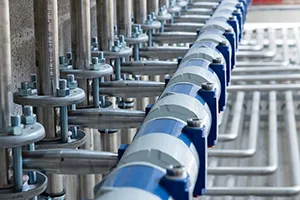
However, integrating regionalization has its advantages but also disadvantages. Setting up new production plants is a time-consuming process and a capital-intensive exercise that calls for professional human resource. Moreover, the localization of supply chains is a source of high costs in production areas that have stringent environmental standards or costly labor. To what extent regionalization can solve the difficulties involved or whether it can just provide an interim solution.
Resilience through Innovation
It is true that a number of measures will have to be put in place in order to construct the necessary durability in the supply chain of steels. One of them is the use of technologies like blockchain. Formerly used as a medium for exchange, blockchain can now improve processes related to increased transparency, fraud detection, and management of transactions. Just think to have a system on which one can see live ship metal, from the mine up to the end consumer. That kind of transparency could redefine the work of the industry.
Another unprecedented innovation is achieving digital twin, which is an imitation of physical systems presented in digital form. When done virtual, companies can experiment with the given supply chain, assess risks and optimize processes. It can help to prevent many problems from happening and reduce the likely effects of any disruptions that do take place. But will these advanced technologies serve as the new best practices or stay as the sweet spot of the pioneering organizations?
Collaboration: The Key to a Stronger Chain
It is nonsensical to think that any company is immune to supply chain issues that are inevitable in today’s complex environment. Inter-sectoral cooperation is highly required – starting from producers of the raw materials up to consumers. Such approach, makes industry players more connected, so that, they can, be able to form a more robust supply chain by sharing data, resources and expertise.
For instance, formation of linkages between players that supply steel and those that offer logistics serve to enhance means of transportation, minimize time and cost.
In the same manner, partnerships with technology vendors can drive change in adoption of new solutions. However, promoting such collaboration presupposes certain trust and preparedness to do away with the traditional vertical view on the organizations. Can the traditionally competitive steel industry adopt this model?
The Role of Policy and Regulation
The stakeholders that have an especially important function to perform for steadying the supply chains of steel include governments and regulatory authorities. The greater support of infrastructure and digitalization, along with implementing the right policies and regulation in support for sustainability concept can give the tools needed for the industry to grow. For example, subsidies used for funding green steel projects or tax incentives geared to organizations portraying interest in advanced digitalization may cause advancements.
However certain form of strict regulation may have a reverse effect of adding on other challenges to the manufacturers. Finding a balance is where it lies. What can policymakers do to ensure that interventions are not barriers to people’s advancement?
A Future of Possibilities
The sector has its unique disadvantage too, but the performance of steel industry demonstrates an extraordinary ability of keeping up with the demands along with the improvement in their production line. The sector is capable of redefining itself starting from the discovery of the Bessemer process up to the discovery of the high-strength alloys. Supply chain challenges are not unique to today’s business world, but are challenging obstacles that can be overcome.
The journey to conquering these hurdles will entail revolutionary approaches top-down team work, and acceptance. There is a great prospect for the development of outlets for growth the industry, be it through integrated technologies, sustainability, regional souring, or others.
As we look to the future, one thing is clear: Changes will therefore define the fate of the steel industry. The question here is not whether these challenges can be met but to what extent and within how much time the industry can meet these challenges. Thus, steel technology will remain one of the leading driving forces in development concerning the world of the future.
 Media Pack Download
 Newsletters
 Industrial Events