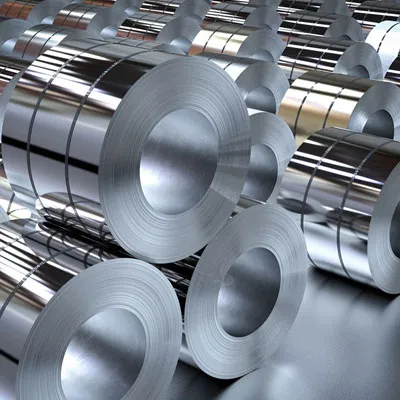
Precision Metal Forming Technologies Driving Modern Steel Manufacturing
Introduction
The steel manufacturing industry has undergone a remarkable transformation over the past two decades, driven largely by advances in precision metal forming technologies. What was once a domain dominated by manual adjustments and mechanical guesswork has evolved into a sophisticated ecosystem of computer-controlled systems capable of producing components with tolerances measured in microns. For steel manufacturers competing in automotive, construction, aerospace, and industrial equipment markets, the ability to deliver consistent, high-quality formed parts at scale is no longer a competitive advantage — it is a baseline requirement for survival.
This shift has been powered by a convergence of engineering disciplines: mechanical design, digital control systems, materials science, and data analytics. Together, they have given rise to a new generation of forming equipment that is faster, more accurate, and more adaptable than anything the industry has seen before. This article explores the core technologies shaping this evolution and explains why precision metal forming has become the backbone of modern steel production.
The Foundation: Understanding Precision Metal Forming
At its core, precision metal forming refers to a family of manufacturing processes that reshape metal stock — typically flat sheet, coil, or bar — into specific geometries without removing material. Unlike machining, which cuts away excess material, forming processes rely on controlled application of force to bend, stretch, or compress metal into a desired shape. This approach preserves material strength, minimizes waste, and is generally far more efficient for high-volume production runs.
What distinguishes today's precision metal forming operations from earlier generations is the level of control now available. Modern equipment integrates real-time monitoring, closed-loop feedback, and adaptive tooling that can compensate for material variation on the fly. The result is a level of dimensional accuracy and repeatability that was simply unattainable with older hydraulic and mechanical systems. For steel manufacturers, this translates directly into fewer rejected parts, reduced secondary processing, and tighter integration with downstream assembly operations.
Roll Forming: Continuous Precision at Scale
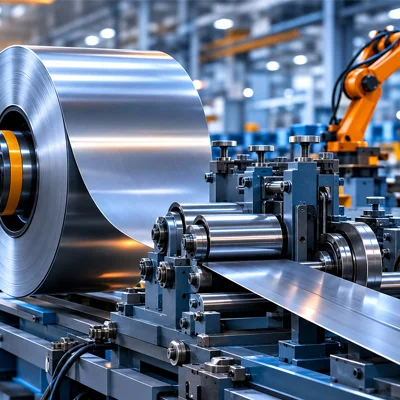
Among the most widely used processes in structural and architectural steel production is roll forming. This technique passes a continuous strip of metal through a series of contoured rollers, each one incrementally bending the material closer to its final cross-sectional profile. Because the process is continuous rather than stroke-based, roll forming is exceptionally well suited to producing long, uniform profiles such as structural channels, roofing panels, framing components, and automotive rails.
The latest roll forming innovations in steel production have focused heavily on flexibility and speed. Quick-change tooling systems now allow manufacturers to switch between profile configurations in a fraction of the time previously required, reducing downtime between production runs. Servo-driven roll stations have also entered the mainstream, replacing traditional mechanical drives with independently controlled motors on each roll station. This allows engineers to fine-tune forming pressure and roll speed at each stage of the process, improving profile accuracy while reducing springback — one of the most persistent challenges in roll forming high-strength steel grades.
Additionally, inline quality control systems using laser measurement and vision inspection are increasingly standard on modern roll forming lines. These systems capture dimensional data in real time, flagging deviations before they propagate through an entire production run. For manufacturers producing thousands of linear feet of formed steel per shift, this kind of continuous verification is essential to maintaining tight tolerances without slowing throughput.
Stamping and Metal Pressing: The Backbone of High-Volume Production
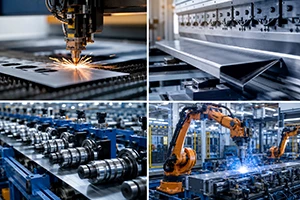
While roll forming excels at continuous profiles, stamping and metal pressing remain the dominant processes for producing discrete, complex-geometry parts — brackets, panels, housings, and structural components used extensively in automotive and appliance manufacturing. Stamping uses a press and die set to cut, bend, or form sheet metal in a single stroke or a coordinated sequence of strokes, making it ideal for high-volume, repeatable production.
Advanced stamping solutions for industrial metal fabrication now incorporate progressive die systems that combine multiple forming operations — piercing, bending, coining, and trimming — into a single continuous strip-feed process. This reduces the need for separate handling steps and significantly increases throughput. Transfer press systems, which move parts between individual stations within a single press, have also become more prevalent for producing larger or more geometrically complex components that require sequential forming stages.
Metal pressing operations have similarly benefited from improvements in die design software, which allows engineers to simulate material flow, predict thinning, and identify potential failure points before a die is ever cut. This simulation-driven approach has dramatically reduced the trial-and-error cycles that once characterized die development, cutting both cost and lead time for new part programs. It has also made it more feasible to work with advanced high-strength steels, which behave differently under stress than conventional mild steel and require more precise control of forming parameters to avoid cracking or excessive springback.
CNC Metal Forming: Programmable Precision
The integration of computer numerical control into forming equipment has arguably had the single greatest impact on precision manufacturing over the past decade. CNC metal forming systems allow operators to program exact bend angles, force profiles, and positioning sequences, then replicate them with extreme consistency across thousands of cycles. This is a marked departure from manually set stops and gauges, which were inherently subject to operator variability and wear over time.
CNC press brakes, for example, now commonly feature multi-axis backgauges that automatically reposition material between bends, along with angle-measurement sensors that detect and correct deviations mid-cycle. This closed-loop correction is particularly valuable when working with coil-fed steel, where material properties can vary subtly from batch to batch. CNC systems can also store and recall part programs instantly, making it practical to run smaller, more customized batches without sacrificing the efficiency associated with high-volume production — a capability increasingly important as manufacturers respond to more fragmented, just-in-time customer demand.
Beyond press brakes, CNC control has extended into tube and pipe forming, punching systems, and multi-axis forming centers capable of producing complex three-dimensional shapes from flat stock in a single automated sequence. This programmability is central to the broader push toward flexible manufacturing, where a single production line can be reconfigured for different part geometries with minimal manual intervention.
Servo Press Technology: Redefining Force Control
Perhaps no innovation has done more to advance high precision forming than servo press technology. Traditional mechanical and hydraulic presses operate with relatively fixed force and velocity profiles determined by flywheel momentum or hydraulic flow rates. Servo presses, by contrast, use electric servo motors to drive the ram, giving engineers full programmable control over slide velocity, position, and force at every point in the stroke.
This level of control opens up forming possibilities that were previously impractical. Manufacturers can program a slow, controlled approach during the initial contact phase, then apply peak force precisely at the point of forming, and finally decelerate smoothly to minimize shock and noise. This capability significantly reduces tool wear, extends die life, and improves part quality — particularly for operations involving deep draws, fine blanking, or forming of advanced high-strength and ultra-high-strength steels that are increasingly used in lightweight automotive structures.
Servo presses also enable multi-motion forming sequences within a single stroke, such as combining a draw and a coin operation without requiring the material to be transferred to a separate station. This consolidation reduces cycle time and floor space requirements while improving dimensional consistency, since the part is never repositioned between operations. Energy efficiency is another significant advantage: servo presses only draw power during the actual forming motion, in contrast to mechanical presses that continuously run a flywheel regardless of production demand.
Bringing It Together: A Systems Approach to Precision
What ultimately defines precision metal forming technologies for steel manufacturers today is not any single machine or process, but the way these systems are integrated into a cohesive production environment. Roll forming lines feed directly into automated cutting and welding stations. Stamping presses are linked to real-time quality databases that track every part back to its raw material coil. CNC controllers communicate with plant-wide manufacturing execution systems, allowing production data to flow seamlessly from the shop floor to engineering and quality teams.
This systems-level integration is what allows modern steel manufacturers to hold tolerances that would have been considered unattainable a generation ago, while simultaneously increasing throughput and reducing scrap rates. It also provides the traceability increasingly demanded by automotive, aerospace, and infrastructure customers, who require documented proof that every formed component meets specification.
Conclusion
Precision metal forming has moved decisively beyond its mechanical origins into a highly instrumented, data-driven discipline. Roll forming innovations have made continuous profile production faster and more adaptable. Advanced stamping and metal pressing solutions have brought simulation-driven design and progressive die efficiency to high-volume fabrication. CNC metal forming has replaced manual variability with programmable repeatability. And servo press technology has redefined what precise, controlled force application can achieve on the shop floor.
For steel manufacturers, investing in these technologies is no longer simply about keeping pace with competitors — it is about meeting the escalating quality, efficiency, and traceability demands of downstream industries. As material science continues to advance and customer specifications grow tighter, the manufacturers who master these precision forming technologies will be the ones best positioned to lead the next phase of industrial steel production.
 Media Pack Download
 Newsletters
 Industrial Events