Steel Finishing Innovations for Enhanced Product Value
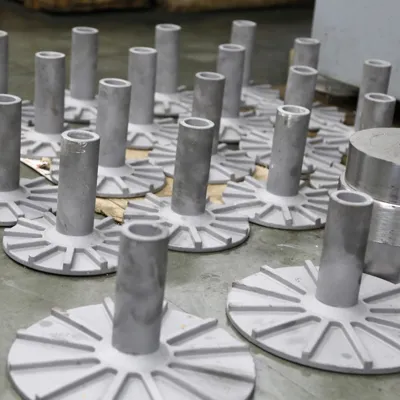
Modern industry has been based on steel since it is used in the construction and manufacturing of infrastructure and vehicles as well as packaging and consumables. However, with the changes in the global markets and increasing competition, firms can no longer be content with the production of functional steel. They desire not only steel which is strong, but more resilient, more attractive, and flexible. It is this need that has given rise to a new wave of steel product innovations where steel finishing and steel surface treatment are given centre stage roles. The industrial sectors are redefining the norms of performance, beauty, and durability by using the latest steel finishing technologies.
The Importance of Steel Finishing in Modern Manufacturing
When individuals hear about steel, they tend to believe that it is a strong and structural material. Nevertheless, it is how it is finished that, very often, predetermines its final price in the marketplace. Steel finishing is not just about making the material look well-polished, it is a process about producing a metal surface that can resist corrosion, and can operate at its stress load in a consistent manner over the years. It is the interface of the environment that durability is challenged and aesthetics determines customer preference.
Enhancing the longevity of steel and its appearance is a competitive requirement in the automotive, aerospace, construction, and consumer appliances industries.
Manufacturers also know that the customer is not purchasing a steel frame or panel, he is purchasing the trust, durability, and image. This is a reason why the steel surface treatment is one of the most important spheres of industrial innovation.
Finishing of steel used to be very dependent on mechanical polish, plating or plain finishes. Although these practices provided short term security, they were in most cases inadequate in aggressive environments. As the world moves towards the need to be more sustainable and more performance oriented, the innovation of steel products is moving towards new technologies of coating steel products and intelligent finishing process.
Among prominent trends is the inclusion of nanotechnology in the exterior treatment of steels. Nanocoatings are developed on a molecular level to offer better corrosion protection, hydrophilicity and even self healing. Industries are opening up opportunities to applications that were previously thought to be in the future by transforming steel surfaces to become more interactive and intelligent.
Indicatively, in the car industry, the development of steel coating is allowing the car manufacturers to make car bodies to withstand the severe weather conditions without impacting on style. Coated steels are applied in roofing and facades in construction where durability and aesthetic are important. Such applications show that the need to have the best steel finishing technologies as the engine behind new steel product improvement is emerging.
Indicatively, in the car industry, the development of steel coating is allowing the car manufacturers to make car bodies to withstand the severe weather conditions without impacting on style. Coated steels are applied in roofing and facades in construction where durability and aesthetic are important. Such applications show that the need to have the best steel finishing technologies as the engine behind new steel product improvement is emerging.
The Role of New Coating Technologies for Steel
Coatings have never been left out in the finishing of steel but nowadays, more advanced coatings are done than ever. Multi-layered systems are implemented on steel-based new technologies with each layer contributing to the protection and performance of the product. An example is zinc-aluminum coatings which offer superior corrosion protection and organic coating which offers aesthetic value.
The greatest improvement is on functional coating. These finishes do not only ensure the security of the steel, but they provide it with additional functions. Coatings on antimicrobials, such as those on steel, are currently being applied to healthcare and food processing industry. Heat resistant coating is changing the horizons of steel in energy and aerospace industries. Both breakthroughs present the ways in which the innovations in steel products are transforming the way industries can do things with this versatile substance.
A simplified table of coating evolution demonstrates the leap in performance:
| Type of Coating | Traditional Role | Modern Enhancements through Steel Product Innovations |
| Galvanization | Basic corrosion resistance | Enhanced adhesion, self-healing nanolayers |
| Organic Paints | Aesthetics | UV resistance, antimicrobial properties |
| Powder Coatings | Protection and color | Environmental sustainability, energy-efficient curing |
| Nanocoatings | Rare in the past | Self-cleaning, hydrophobic, smart responsive surfaces |
This development highlights the importance of the fact that new coating technologies of steel are the focus of the further improvement of steel products.
Smart Finishing Processes: Moving Beyond Traditional Methods
One of the interesting events in the steel sector is the implementation of smart finishing. This would involve digital surveillance, robotization, and AI-based modifications to maintain consistency and accuracy. In customary practices, non-uniformities in the thickness of coating or the smoothness of the surfaces used to have performed performance problems. Finishing plants today have the ability to measure, adjust and optimize in real time with smart technologies.
Consider a production line whereby, the scanning of the steel sheet to detect micro-defects occurs and then the finishing system automatically adjusts to mend any defects. This does not merely mean efficiency but it is transforming quality control. In the case of industries that cannot afford failure, e.g., aerospace or medical equipment, sophisticated steel finishing technologies that have intelligence features cannot be ignored.
Improving Steel Durability and Aesthetics: The Customer’s Perspective
Success is determined at the end of the value chain by the consumer perception. It may be the sparkling skyscraper front, the rust-free bridge or the sleek fridge the real question is: is the steel up to the mark? Here, enhancing the steel durability, as well as its beauty, is not only a technical success but a marketing gain as well.
Durability would assure that the product will be highly reliable throughout decades and saves the cost of maintenance and replacement. Meanwhile aesthetics appeal to human psychology- products that are more attractive are better appreciated even when the difference in functionality is minimal. The combination of the two makes the manufacturers make their products more appealing and in the end, they come up with steel that customers will be ready to pay more.
This combination is specifically what makes steel product innovations so potent. Through rethinking the concept of steel finishing into a value-add process, businesses are transforming the common steel into high-end grade of material that increases profitability.
Innovations in Steel Surface Treatment: Shaping the Future
The history of the steel surface treatment innovations is not a stagnant one; it keeps on developing along with the flow of the technological innovations. There is an increased use of hybrid methods that involve the use of mechanical, chemical, and nanotechnological methods. The surface modifications, such as those done by using plasma, can be done at a microscopic scale on the steel without the added weight or structural integrity.
Moreover, industries are trying out methods that are environmentally friendly. Conventional surfaces methods were usually toxic and used a lot of energy. The industry is today experiencing an upsurge in environment-friendly steel surface treatment procedures, which are in line with sustainability in the world. These innovations enhance not only steel but save the planet because performance and responsibility go hand in hand.
Market Insights: Steel Finishing and Global Demand
The world market of improved steel finishing products is growing at a high rate. The industry estimates that the demand in high-performance finished steel products is increasing at double-digit rates in industries like automotive, construction, packaging, and energy.
A further examination shows that Asia-Pacific is the most growing region as a result of urbanization and industrialization, whereas Europe and North America lay so much emphasis on the development of steel products that are sustainable and eco-friendly. The uniting factor is the need to develop new coating technologies on steel and intelligent finishing processes that will not only lower costs but also increase value.
However, it is also interesting that the preferences of the customers are changing. Buyers have become much concerned about the impact of steel finishing on long-term. Procurement departments are no longer considering price alone but lifecycle durability, sustainability and even recyclability. This is producing enormous opportunities to companies which are leading in innovations in steel surface treatment.
The Future of Steel Product Enhancements
It is expected that in the future, the process of steel products improvement will be not only exciting but also transformative. The role of digitalization will be more significant, and predictive analytics will allow the manufacturers to predict wear and apply paint that suits a particular environment. Consider a situation whereby steel used in bridges constructed on the coastline is pre-treated with its own specific coating that is meant to resist high salt levels.
In addition, additive manufacturing and 3D printing are likely to be combined with steel finishing. This will result in the manufacture of components that are not only bespoke but are also pre-finished with sophisticated finishes thus saving the use of additional steps after production.
Sustainability will also be the future of improvements of steel products. Make way to bio-based finishes, recyclable finishes, low-energy conscious smart finishing processes will be the order of the day as industries are determined to make sure their carbon footprint is minimal. This development makes sure that steel remains topical even in the world where green manufacturing gains more and more importance.
Conclusion: Redefining the Value of Steel
The history of steel is not ended yet. As a matter of fact, it is in its most innovative phase ever. The material is being transformed into much more than a traditional material in terms of steel product innovations, steel finishing and steel surface treatment. Through the adoption of the modern steel finishing technologies, the industries are not only enhancing the durability and beauty of steel, but also re-creating what the customers want of steel.
The future is bright with new coating technologies on steel, emerging smart processes of finishing and the constant development of the steel surface treatment. The future of steel product improvement lies in the combination of science, technology and sustainability to make the products stronger, smarter and more valuable today than ever before.
Steel is not only the backbone of the modern industry anymore, it is turning out to be the polished face of the innovation, strength, and good faith.
 Media Pack Download
 Newsletters
 Industrial Events