Steel Technology Collaboration across Borders: Key Projects to Watch
Steel has grown over the recent past through innovation and cross-border partnerships, as the element that supports the infrastructural development of today’s world. As industries of the world seek to become sustainable, efficient and innovative, the foreign relationships in steel technology are emerging as critical. Based on that it will be possible to identify key works that is a key to the future development of the steel industry and how the international cooperation is contributing to it.
Why Cross-Border Collaboration Matters in Steel Technology
Steel is an internationally mobile good used in construction, automobile industry, wind power and many other sectors. The pressure to produce more food, the need to reduce greenhouse gas emission and the need to enhance efficiency are milestones that require efforts that cannot be provided by any nation or firm alone. Collaborative efforts allow stakeholders to:
• Show your knowledge and materials.
• Availability and uptake of technology should also be taken as opportunities.
• To attain sustainability goals in a shorter time.
• To deal with global problems such as decarbonization.
With industries worldwide striving for sustainability, efficiency, and innovation, cross-border partnerships in steel technology are becoming pivotal. In this article, we’ll explore key projects shaping the future of the steel industry and highlight how global cooperation is fostering progress.
1. Hybrit: Revolutionizing Green Steel Production
Partners: Sweden (SSAB), Finland (LKAB), and Sweden (Vattenfall)
Hybrit is short for Hydrogen Breakthrough Ironmaking Technology and the concept is to start creating fossil-free steel. Unlike other conventional iron making that utilizes blast furnaces as well as employs coal as a reductant, this scheme embraces hydrogen gentle processes in manufacture and has minimal emission of greenhouse gas emissions (GHGs).
Why It’s Important:
• The conventional steel industry contributes to 7%-9% of the world’s CO2 emissions.
• The technology developed by Sweden’s Hybrit can reduce carbon emissions by up to 90% and meet world standards.
Key Developments:
• Volvo was the first recipient of Hybrit’s fossil-free steel in 2021.
• The success of this project has prompted other such projects to be opened in other regions of the world.
2. ArcelorMittal and Nippon Steel’s Advanced Coating Technology
Partners: Luxembourg (ArcelorMittal) and Japan (Nippon Steel)
ArcelorMittal and Nippon steel have partnered in relation to the development of the new and better coating systems as a means of increasing service life and corrosion resistance of steel. This is why this innovation is suitable in regions like automotive or construction where durability is associated with steel.
Why It’s Important:
• The properties of steel are improved to avoid frequent service, which leads to cutting down on cost and resources.
• It enables the use of lightweight steels in automotive construction; driving energy efficiency.
Key Developments:
• Introducing new kind of zinc aluminum magnesium (ZAM) coated steel for car industries.
• More common use in renewable energy industries like wind power, for instance wind generators.
3. Stegra: Scaling Hydrogen-Based Steelmaking
Partners: Sweden (Stegra) and Germany (multiple automotive partners)
Stegra intends to develop its new hydrogen-intensive steel manufacturing facility in northern Sweden, which is to become one of the EU’s largest. The zero-emission steel is at the heart of the project as it targets the automotive and construction sector.
Why It’s Important:
• Responds to the EU climate goals
• Encourages changes towards renewable energy sources in industrial applications.
Key Developments:
• Green steel production target for 2030 is 5 million tons.
• Partnerships with Mercedes Benz and other car manufacturers.
4. POSCO’s Global Research Collaborations
Partners: South Korea (POSCO) and multiple global institutes
Korea’s second largest steel maker POSCO works with research institutes all over the world to improve properties of steels and to emerge new grades of steel alloys. Their projects include high strength, light weight steel for automobile and aerospace industry.

Why It’s Important:
• Suppliers of advanced materials to industries across the world
• Enhances the efficiency in fuel consumption and safety in the transportation business
Key Developments:
• The enhancement of the material beyond which great forces can be withstood or resisted involving the giga-strength steel
• Collaboration with US and European Universities to carry out search for efficient technologies for steel recycling
5. China-Europe Joint Ventures on Circular Steel Economy
Partners: China and European Union (various companies)
China and European nations have partnered to come up with the circular steel economy in order to reduce emissions of steel produced but instead, reuse it. These projects are intended of constructing new closed-loop systems which are sustainable in their nature.
Why It’s Important:
• Minimizes reliance on provide materials and decreases environmental footprint
• Strengthens the global calling for circular economy.
Key Developments:
• Recycling central points established in planning areas
• Development of an artificial intelligence based robot to sort and process steel scrap.
6. India-Japan Collaboration on Energy-Efficient Steel Plants
Partners: India (Tata Steel) and Japan (JFE Steel)
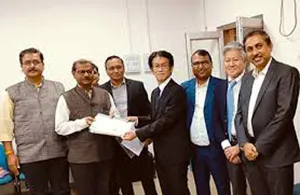
Tata steel and JFE steel have formulated understanding to bring energy efficient steel making technology in India. Their emphasis is on minimization of energy, and emission intensity even as they work to increase supply of steel which is on the rise in the country.
Why It’s Important:
• India represents one of the highest growth rates of steel consumption
• Cost reduction entails energy efficiency to decrease on costs of production as well as shedding off environmental impacts
Key Developments:
• New technologies in blast furnace
• Collection and utilization of waste heat generated from steel plants
7. North America’s Clean Steel Initiatives
Partners: U.S. (multiple companies) and Canada (government and private sector)
Carbon capture and storage (CCS) technology as well as electric arc furnaces (EAFs) have already being adopted by North American companies and governments as ways of try to produce cleaner steel. North American and European projects seek to reduce carbon emissions from steel production without compromising the sector’s cost-efficiency.
Why It’s Important:
• Reduces exposure to fossil fuel in steelmaking
• Fosters a coordinated regional approach for the implementation of climate targets
Key Developments:
• Collaboration between U.S. Steel and Canadian firms on CCS projects.
• Increased adoption of EAFs in both countries.
Future Prospects for Cross-Border Steel Technology Collaboration
The projects described in the article above demonstrated only some of the global initiatives that are changing the steel-industry. As the industry faces mounting pressure to innovate and decarbonize, we can expect to see:
1. Increased Role of Artificial Intelligence: In the manufacturing environment, AI is expected to improve production, quality and utilization of energy in the facilities.
2. Greater Use of Renewable Energy: There will be a more significant contribution of wind and solar and hydropower as the source for electricity of steel plants.
3. Expansion of Hydrogen-Based Technologies: This foreseeability of hydrogen as a clean energy source shall advance more investment in green steel projects.
4. Collaborative Policy Frameworks: As different countries’ governments collaborate to fund cross border initiatives they will also set out to agree on common standards.
Conclusion
The steel industry is poised at the dawn of a new era in terms of integration for steel manufacturers or companies producing steel products across their countries’ borders. Such ventures as Hybrit, H2 Green Steel, and India-Japan joint plants demonstrate synergies when common information and assets are combined to create new breakthroughs. When nations and organizations form alliances, they do not only solve the problems of today but also invest into sustainable tomorrow.
Thus, by focusing on these successful projects, we get information on the changes in innovative solutions that form one of the most important industries globally. The story of steel technology cooperation is clear, the only way forward is to work together towards the common goal of a clean environment.
 Media Pack Download
 Newsletters
 Industrial Events