The 10 large steel producers Moving On.
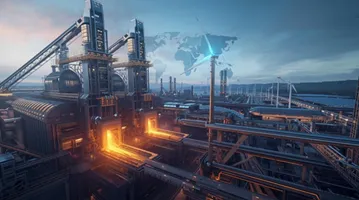
Steel has allowed the industry to expand in the past hundred years, and it has assisted in building, automobiles, energy and infrastructure of the world. The steel business in the entire world is moving into a transitional stage in 2025 and the demands of capacity, technology change and sustainability have arisen. The paper is an analysis of the 10 best steel producing countries in terms of their potential production, green efforts, technology and future of steel.
China: The World Steel Maker.
China is the steel industry player and thus, has the capacity to manufacture more than 1 billion tons of steel every year and this is more than half of the world steel output. It has big base of production which consists of old-fashioned blast furnace and new electric arc furnace with products that are domestic and export oriented.
Sustainability & Innovation: Chinese manufacturers are highly investing in the production trends of green steel that involve hydrogen reduction trial, carbon capture technologies, and energy efficient furnace. Other technologies that the mills are adopting in order to achieve sustainable steel production include incorporation of biomass energy, smart running of the processes to reduce the emissions and enhance their efficiency.
Global Influence: The correlation between the Chinese production of steel and the steel demand perspective of the world is direct which provides the materials to the infrastructure projects, high-rise buildings and automobile industries of the world. The example of other countries is that it has been at the forefront in terms of volume and sustainability because of its innovation orientation.
India: Sizzling Development and Modernization.
India is the second largest steel producer which produces more than 120 million tons of steel each year. Urbanization, an increase in infrastructure and an increase in the automotive industry contribute to this increase in production.
Capacity & Techniques: Indian mills are rapidly being brought into modernization and sustainable technology which is applied in manufacture of steel incorporate use of electric arc furnace and high rate of scrap recycling. These upgrades will make sure that the organization is effective, since it will consume less energy and also produce less emissions.
Innovation & Green Practices: As India tries to cope with the growing climate requirements, it is also considering ways of manufacturing low carbon steel through testing with hydrogen and process digitalization. Smart predictive maintenance and AI regulated furnace can be used to assist mills to produce as much as possible with the least of the downtimes.
Future Outlook: India is approximated to be one of the major steel contributors in the world with the increasing exports to Southeast Asia and Africa which constitute the world steel supply chain.
Japan: Quality and environmentally conscious.
Japan is never lagging behind in production of steel and its production is more than 90 million tons per annum. This is high strength high quality steel that is also applied to the automobile industry, construction and machinery industries.
Production & Techniques: The control systems that are highly specific, blast furnace that uses low energy and the large-scale scrap recycling program are some of the innovations introduced in the Japanese mills of the steel making industry.
Sustainability Initiatives: The green steel production trends that are being pursued by Japan seek to reduce the quantity of hydrogen reducing and low-emission furnaces and include renewable energy. Such a move will minimize the environmental footprint and at the same time produce quality output.
Global Role: Japanese steel is still able to face challenges of the world regarding specialized and sustainable steel which aids infrastructural and industrial growth in the world.
United States: Efficiency and Technological Leadership
U.S. is also a major producer of steel and its manufacture is in the excess of 90 million tons annually. The industry balances the product processes of the modern and low carbon steel against the domestic consumption as well as exports.
Capacity & Innovation: The U.S. mills have been enjoying the electric arc furnace and digital surveillance so as to achieve maximum production, lessen the consumption of energy and as well as the emission. The other technology that is extensively employed to facilitate efficiency is predictive maintenance that is blemished with automation and assistance by AI.
Sustainability Practices: The American steel producers unites the renewable and carbon captures sources. These new technologies of sustainable steel make U.S. the leader in sustainable steel production.
Future Outlook: Unless the U.S. changes its position and becomes one of the major steel-producing countries in 2025, because the number of infrastructure investments will only continue to grow, and the popularity of the green technologies will rise.
Russia: With Modernization in the Book.
Russia possesses more than 70 million tons of steel which is produced every year but combines the old method of high-capacity blast furnace and the new ones.
Technological Advancements: The mills are new technologies adopted in the steel making industry like automation of the steel making processes, use of computers to check and store use of energy in the furnaces to facilitate production and limit emission.
Sustainability: As part of its efforts to keep abreast with the global environmental trend, there are low carbon steel production processes that are currently being tested in some of the Russian plants and these include the waste heat recovery and carbon capture systems.
Global Influence: Russia is also one of the chief markets of export and this is also one of the largest steel makers in the world.
The South Korea: Innovation and High-Value Production.
South Korea is a steel manufacturer whose production is around 70 million tons every year with majority of the steel produced being of high strength, specialty steel that is used in the shipbuilding and automobile industries.
Production Techniques: The South Korean mills are computerized with steelmaking and electric arc furnaces based on the IoT and energy efficiency. More often, recycling and principles of the circle economy are also used in efforts to lessen the reliance on the raw materials.
Green Initiatives: The manufacturers are frantically testing the fads of green steel production, e.g. the hydrogen reduction and the introduction of renewable energy technologies, which do not affect the level of production.
Future Outlook: The South Korea will have a tremendous opportunity in the global arena, with the amalgamation of quality production of steel, in addition to the environmentally-friendly programs.
7. Germany: Green Steel Leader in Europe.
Germany is the greatest steel manufacturer in Europe and the steel manufactured every year is over 40 million tons. The country has been putting emphasis on quality and green steel that meets the EU climate policies.
Innovation & Sustainability: German mills are based on low carbon steel technology of production, renewable energy and circular economy. Automation and AI-assisted operations help to optimize operations.
Impact: Germany proves that the sustainable technologies of steel production can be combined with the significant amount of output, and it may serve as an example to other countries and even Europe.
8. Turkey: Upcoming Industry Leader.
Turkey has grown rapidly in the steel sector whereby it manufactures over 35 million tons annually. The country is a combination of modern mills and successful investments to suit the growing domestic and export demand.
Tech & Sustainability: The producers introduce innovations in the steelmaking industry, and they are guided by the tendencies of green steel production such as using efficient furnaces and creating recycling.
Future Outlook: With the growth of exports and also the increase in capacity, Turkey is emerging an important exporter in the supply chains of steel around the world.
9. Brazil: Advantage of Renewable Energy.
Brazil is also a giant manufacturer of steel with an annual production of over 30 million tons of steel through the rich iron ore and the hydro power.
Production Techniques: Brazilian mills rely on the idea of a sustainable steel production technologies and low-emission technologies in order to reduce the adverse impact on the environment. Scrap recycling and use of electric arc furnace is on the rise.
Innovation & Sustainability: Brazil is trying new technologies of making low carbon steel and smart energy management to adapt to the trends of sustainability in the global world.
Global Role: Brazil has continued to supply the international markets of steel and also has to stimulate the environmentally friendly production.
10. Italy: Integrity and Contemporary Sustainability.
Italy is a major manufacturer of approximately 25 million tons annually that specializes in high quality of steel that is utilized in construction, automobiles and industries.
Tech & Innovation: Italian mills also embrace the trends in producing green steel, recycling and innovations in the steelmaking industry to stay competitive.
Sustainability: The measures have included energy efficiency, carbon control and the circular production model, among others, to enable Italy to be an efficient steel hub in Europe.
Significant Future of Steel Trends:
Green Steel 3 and Decarbonization: The hydrogen reduction, carbon capture, and incorporation of renewable energy are some of the international projects.
Digitalization. Smart Manufacturing: IoT, AI and predictive maintenance are more efficient and help to save energy.
Recycling and Alternative Materials : Scrap steel, alloys, composite materials, reduce the consumption of virgin ore and reduce the emissions.
Growth Capacities & Emerging Markets globe: The manufacturing of such nations like India, Turkey and Brazil is increasing and developed nations are shifting their focus towards modernization.
Competitiveness Sustainability: Low carbon steel production and sustainable steel making technologies have an advantage of production that will create a competitive edge in the market.
Challenges that afflict Steel Makers.
Despite this, the industry is faced with:
- High cost of incorporating green technology.
- The issue of energy supply and raw material.
- Regulatory compliance and pricing of carbon.
- Demand and sustainability strategies.
- The foreign competition and the changes at the market.
Conclusion
The 10 biggest steelmakers that are shaping the future, aka China, India, Japan, the U.S., Russia, South Korea, Germany, Turkey, Brazil, and Italy can demonstrate that the contemporary steelmaking is not so much about the quantity.
Countries that are embracing the green steel production patterns, low carbon steel production technologies, and steelmaking industry innovations are creating a cleaner, smarter, and a more sustainable world steel industry.
Steel will survive into the future by incorporating production sustainability and innovation to make to world demand in a responsible way.
 Media Pack Download
 Newsletters
 Industrial Events