Introduction: The Strategic Importance of Furnace Selection in Modern Steelmaking
The world steel market is experiencing structural change brought about by decarbonization requirements, unstable raw material supplies, fluctuation of energy prices and the rapid development of steel-making technologies. The key point in this change is a crucial choice among producers, it is the decision between the electric arc furnace and the blast furnace model.
The blast furnace vs. electric arc furnace argument has ceased to be an issue of choice regarding which one to operate. It has become an element of capital allocation in the long-term, sustainability performance, supply chain robustness, and market positioning. As steel manufacturers consider the option of modernization, it is important that they know the distinction between the electric arc furnace and blast furnace in the manufacturing process of steel in the context of strategic planning and competitive differentiation.
This in-depth comparison examines the process of making steel, financial aspects, efficiency and effectiveness in their operations, impact on the environment, and scalability in the long term of both systems within the B2B industrial setting.
Overview of the Steel Manufacturing Process
The historical paths of steelmaking are two. The former is the integrated one with the blast furnace, and the latter is the electric arc furnace-based one, which is commonly linked with scrap recycling and flexible production pattern.
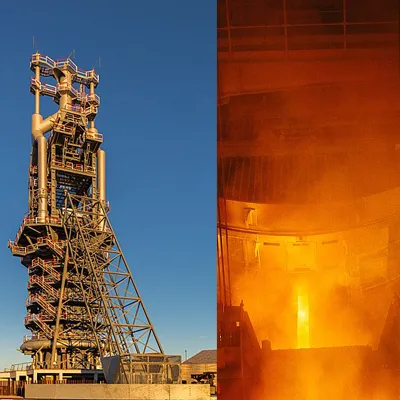
In the production of blast furnace steel, the charge to be fed into a tall shaft furnace includes iron ore, coke, and limestone. The iron ore is smelted to produce molten pig iron using chemicals at very high temperatures. This hot metal is refined by means of a simple oxygen furnace to make steel.
Electric arc furnace production, conversely, mainly melts scrap steel or direct reduced iron by means of electrical energy produced by large currents of arcs between graphite electrodes and the metal charge. The furnace can be run on demand and changed depending on the demand conditions.
The two are pillars of the global steel production technology though they are very different in terms of capital intensity, environmental impact, and operational flexibility.
The Blast Furnace Model: Integrated Steel Production
The blast furnace is a symbol of the traditional support of mass steel production. It is still leading in areas where iron ore deposits are large and where integrated steel complexes are realized.
The production of blast furnace steel is very dependent on iron ore, coking coal turned into coke and fluxes. The chemical reducing operation produces huge quantities of carbon dioxide as a result of coke burning and is thus carbon-intensive.
Although the blast furnace route could be associated with environmental issues, this process has a number of strengths. It guarantees continuous mass production, integrated upstream and downstreams and high productivity of flat and structural steel segments.
The system however must be in continual operation. The process of closing and opening a blast furnace is technical and costly, which restricts the flexibility to react to the variability of the demand.
The Electric Arc Furnace Model: Flexible and Scrap-Based Production
The electric arc furnace has become a highly developed form of steel production technology especially popular in areas where there is a particular focus on high levels of recycling and reduced carbon intensity.
The production of steel in electric arc furnaces starts with scrap steel which is enhanced with direct reduced iron when necessary. Electrical power produces arcs which produce intense heat and this melts the metallic charge.
The electric arc furnace has the benefit of being turned off and on depending on the production requirement unlike the blast furnace. This operational flexibility allows the producers to adjust in a short period to the changes in the market and electricity prices.
The electric arc furnace has become the backbone of the green steel plans on the international level as the emissions become more regulated.
Electric Arc Furnace vs. Blast Furnace: Core Technological Differences
The distinction between electric arc furnace and blast furnace in the production of steel also requires one to look at the basic operations principles.
The blast furnace depends on the chemical reduction with the help of carbon as a reductant. The electric arc furnace involves the use of electrical power to melt previously reduced metallic materials.
A blast furnace is a continuous process unit which is a part of big chain of production. Electric arc furnace is batch operated and has a modular scaling.
The blast furnace is materials-driven whereas the electric arc furnace is energy-driven, in terms of technology. This differentiation defines the cost bases, emission patterns and supply chain interdependences.
Electric Arc Furnace vs. Blast Furnace Cost Comparison
The main consideration on furnace selection is capital expenditure. The blast furnace complexes take great initial capital since they are complex and include coke ovens, sinter plants, and basic oxygen furnaces.
The initial capital outlay is reduced in installations of electric arc furnace. These include less complex infrastructure, reduced building schedules and expansion modules.
The prices of operations vary according to the region. The production of blast furnace steel is price sensitive to the price of coking coal and iron ore. The production of electric arc furnace steel is very sensitive to the availability of scrap and the price of electricity.
The operations of the electric arc furnace have lower total costs of production in areas that are characterized by good supply of scrap and favorable rates of electricity. On the other hand, in regions that have low cost iron ore and coal and high cost of electricity, the economics of blast furnace can be competitive.
The volatile price of energy gradually affects the price competition between an electric arc furnace and a blast furnace, particularly in the market that is moving towards the renewable energy grid.
Electric Arc Furnace and Blast Furnace Efficiency Comparison
Efficiency evaluation is not restricted to energy use but is also in terms of productivity, yield, and material use.
Blast furnaces are very efficient in mass production of steel since they are continuous, and they have large volumes of throughput. They are chemically optimized to large scale integrated plants.
The use of electric arc furnace has a high rate of material efficiency in terms of scrap recycling. The current electric arc furnace technology has energy recovery systems, electrode control, and automated charging systems, which increase productivity.
Comparing the metrics used to compare the efficiency of the electric arc furnace and the blast furnace, it becomes clear that blast furnaces are more efficient in the steady bulk production, whereas electric arc furnaces are more adaptive and have a better resource circularity.
Environmental Performance and Decarbonization Strategy
The carbon emission has been made a marker in the assessment of steel production technology.
Production of blast furnace steel produces a lot of carbon dioxide as a result of coal burning and chemical reduction. Decarbonization plans are either carbon capture or hydrogen reduction, which will need large sums of money to achieve.
During the production of electric arc furnace steel, much less carbon is emitted when the furnace is fed on renewable electricity and has high scrap content. This makes the electric arc furnace a key-enabling factor of low-carbon steel projects.
In nations such as those with a carbon pricing system, or a system of buying and selling emission credits, the electric arc furnace vs blast furnace comparison will continue to be more inclined towards electrification strategies.
Supply Chain and Raw Material Considerations
Stability in operations in the long term is affected by security of raw materials.
The operations of the blast furnace rely on the availability of the supply chains of iron ore and the availability of metallurgical coal. The cost of production may be greatly impacted by dislocation of mining production or the trade limitations.
The operators of electric arc furnace are reliant on the availability of scraps and the reliability of the energy infrastructure.
The increasing competition in the scrap of high quality has brought with it the volatility of price in certain markets.
Blast furnace systems could still prevail in the emerging markets that have small scrap pools. In the developed economies where the recycling environment is fully developed, the production of the electric arc furnace steel is growing very fast.
Workforce, Automation, and Digitalization
Optimization of the modern manufacturing process of steel is becoming more and more dependent on digital technologies.
Complexes of blast furnaces usually incorporate state-of-the-art process control systems, predictive maintenance systems, and central command systems.
The electric arc furnace systems have the advantage of automation of regulation of electrode, optimization of charge, and real time metallurgical analysis. Since they have a batch-based structure, it is easier to implement AI-driven analytics in them.
Both systems are developing in Industry 4.0 patterns though the operations of electric arc furnace may evolve quicker and easier because the infrastructure is minimized, and it has a modular design.
Market Segmentation and Product Quality
The range of the products and the ability to produce quality also form part of the electric arc furnace vs. blast furnace comparison.
Traditionally, manufacturing of blasts furnace steel is the best in the production of high grade flat products, which are used in automobiles and heavy industries.
The historical background of electric arc furnace steel production was in long products, including rebar and structural sections. Nevertheless, the progress in refining technologies have greatly enhanced consistency in quality because now the electric arc furnace is able to compete in high value segments.
With the ever changing steel productions technology, the difference between the two routes is narrowing down.
Regional Trends and Industry Outlook
In other markets such as the United States, electric arc furnace technology is the leader in steel production as there is plenty of scrap and electricity markets are friendly.
Conversely, the nations that are strong in mining iron ore have high capacity of blast furnace.
The policy on climate all over the world is increasing the transition to electrified steel making. Cross breeds such as direct reduced iron with electric arc furnace are becoming transitional.
The debate on electric arc furnace vs blast furnace is becoming chained in the roadmaps of the long term sustainability rather than focusing on profitability in the short term.
Frequently Asked Strategic Questions
What is the primary difference between electric arc furnace and blast furnace in steel manufacturing?
The fundamental difference is in the input of the raw material and the source of energy. Blast furnace is a chemical process that reduces iron ore with the help of coke, and electric arc furnace is a process when scrap steel is melted with the help of electrical energy.
Which system offers better cost efficiency?
The comparison between the electric arc furnace and the blast furnace is based on the price of electricity in the region, scrap, and the raw material. It is related to the location as economic viability is not universal.
Which is more sustainable?
The processing of metals using electric arc furnace in most occasions has less carbon intensity especially when it uses renewable electricity.
Can both technologies coexist?
Yes. A significant number of steel manufacturers worldwide use hybrid models in order to spread the risk, as well as to respond to the changing regulatory environment.
Strategic Conclusion for B2B Decision Makers
Electric arc furnace vs. the blast furnace comparison is not just a technical assessment. It is a business decision which defines the cost structure, environmental compliance, supply chain toughness and competitive advantage in the long term.
Production of blast furnace steel still provides scale, reliability and volume in high quantities to integrated producers. The emergence of increasing environmental pressures and capital intensity challenges are however leading to re-thinking.
The production of electric arc furnace steel is flexible, has fewer emissions, can be easily scaled in modules, and fits the principles of a circular economy. With the technology of steel production and the development of renewable energy infrastructure, it is projected that the electric arc furnace is a key indicator of green steel development.
To the B2B stakeholders, such as the plant managers, the procurement heads, the sustainability bodies, and the investors, the choice between these technologies should be based on the availability of resources in the region, the regulatory frameworks, the market placement, and the decarbonization targets.
In conclusion, likely trends in the future of the steel manufacturing process would be a convergence in technology, digital optimization, and environmental friendly innovation. Compared to the present, organizations that critically evaluate the comparison between the electric arc furnace and the blast furnace today will be in a better position to spearhead the steel economy tomorrow.
 Media Pack Download
 Newsletters
 Industrial Events