Innovations in Steel Manufacturing: Advancing Efficiency and Quality
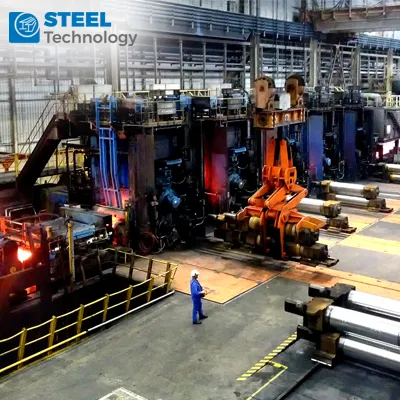
For many decades steel constituted the bulk of industrial processes and structures upon which infrastructures, transportation and most manufacturing processes depended on. However, the steel industry is yet to post remarkable Improvements in efficiency, environmental aspect, and quality. With regard to these problems, profound changes in steel production processes have taken place providing developments for steel usage. These innovations apart from increasing organizational performance will also increase the quality of steels produced.
1. Advanced High-Strength Steels (AHSS)
The change in steel production is perhaps one of the revolutionary event that has taken place in the steel manufacturing industry in the recent past. AHSS is supposed to be stronger and more ductile than the conventional steel. These steels are especially useful in auto manufacture where weight of vehicles must be reduced without jeopardizing the safety of vehicles. AHSS contributes to more lightweight, stronger vehicular structures; and hence enhanced fuel efficiency and minimum emission.
2. Electric Arc Furnace (EAF) Technology
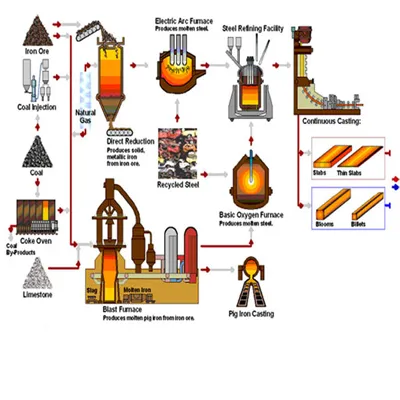
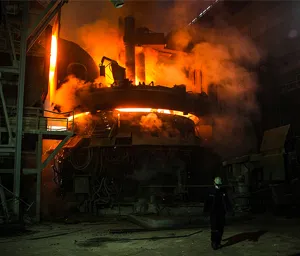
Established steelmaking techniques that include the blast furnace route are highly energy consuming and result in high carbon footprint. The Steel industry has received a new face through the use of EAF technology since it is a sustainable system. EAFs employ electricity to melt scrap steel meaning that the utilization of raw materials is very minimal and greenhouse gas emissions are the lowest. It also is more flexible in production, because, for example, an EAF can be easily brought on-line or shut down depending upon need.
3. Continuous Casting
Another of the advancements that have scaled great changes to the practice of steel making is the concept of continuous casting. Here rolling stock materials such as billet, bloom or slab is produced from molten steel and preparing for further rolling in the finishing mills. This method saves time in heating and cooling since it avoids several cycle at the production line thus cutting on energy required for the process. Continuous casting also contributes positively to the quality of the final steel product through reduction of defects like porosity and segregation among others.
4. Automation and Robotics
The use of automation mechanisms and robotics in the manufacture of steel has also been improved because they help in improving the accuracy in production.
Current applications of robots include operations like welding, cutting and material transportation operations which previously required human labor and were quite often associated with high possibilities of human error. Computerized systems can also keep track and managing production processes in real-time in order to maintain favorable environment or minimize losses. Therefore, the manufacturers can get more enhanced steel products that have less tendency to vary and this is accomplished with less cost.
5. Digitalization and Industry 4.0
It is happening in the steel industry where the shift in adopting digitalisation and Industry 4. I was able to recognize 0 principles that could be applied to make it efficient as well as enhance the output done. Some of the smart technologies which enable manufacturing systems include, Predictive maintenance systems and digital twins to check individual equipment health and performance. Industry 4. 0 also incorporate big data and AI where production data is obtained and analyzed to determine trends and make appropriate decision on how to enhance the process.
| Also Read: The Future of Steel Manufacturing: Trends and Emerging Technologies |
6. 3D Printing with Steel
Another advancement which is being utilized in the production of steel is the use of additive manufacturing or 3D printing as it allows the designers to create parts with complex geometric shapes which cannot be made through the traditional techniques. The advantage of this technology is that, it can designed in a flex manner, it reduces wastage of materials and that it can take a short time to produce parts and components. Applications in aerospace and medical equipment industries show that 3-D printed steel parts offer the opportunity to produce lightweighted high-strength parts with little scrap material.
7. Environmental Innovations
Since the steel industry is serious on sustainability, several environmental innovations have been made in the recent past. One of them is in the production of steel where hydrogen can act as a reducing agent and this will considerably cut emissions of carbon. In addition, improved efficiency in the recycling processes is enabling the recycling companies to use more recycled scrap steel in manufacturing than virgin material. These are particular innovations are especially important for steel manufacturers that would like to fit into the global climate change agenda and minimize on adverse effects on the environment.
8. Enhanced Quality Control
It is of outmost importance in steel production and advancement in recent technology has made it possible to produce the steel with the right mechanical properties.
In the production processes, using ultrasonic testing and magnetic particle inspection, manufacturers are able to identify defects at its earliest phase. On the same note, value added processes like controlled rolling and heat treatments guarantees that steel products for various purposes meet various stringent specifications such as construction and automotive industries.
9. Alloy Development
Another production frontier that is being explored in the production process of steel is in the use of new steel alloys; this is an area of production that is typified by growth in efficiency as well as improved quality of products. By addition of alloying elements for example; chromium, nickel, and molybdenum the steel manufacturers are able to get improved qualities like corrosion resistance, increased hardness and resistance to wear. They are especially useful in high performance applications, where metals are usually expected to perform under extreme conditions for instance in the oil and gas sector.
Conclusion
The developments in steel production processes are key to progress in the usability and overall quality that the industry has to offer for the society. Right from adoption of new more superior high strength material to automation, information technologies and environment friendly approaches, the steel industry is changing. Many of these developments do not only improve properties of steel products and their life, but also advance sustainability of the manufacturing process. With further development of the construction industry in progress, steel is set to remain as an essential material for the construction of the future world.
 Media Pack Download
 Newsletters
 Industrial Events