Rolling Mill Defects, Process Control, and Quality Improvement in Steel Manufacturing
Introduction
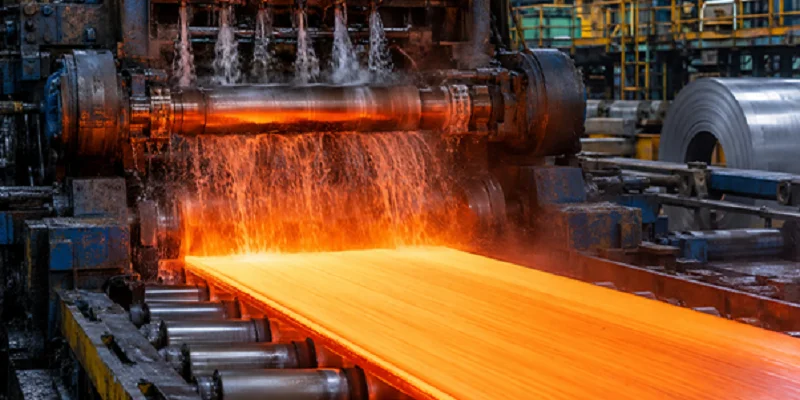
Steel rolling is one of the most critical stages in modern metal manufacturing, transforming hot or cold billets, slabs, and blooms into usable sheets, plates, bars, and structural sections. Yet even the most advanced rolling mills are vulnerable to rolling mill defects that compromise product integrity, increase scrap rates, and damage customer trust. Understanding rolling defects, implementing robust process control, and applying proven rolling process optimization techniques are essential for any steel producer aiming to stay competitive.
This article breaks down the most common surface defects and internal flaws found in rolled steel, explains their root causes, and outlines actionable strategies for how to improve steel quality in rolling mills. Whether you're a quality engineer, plant manager, or metallurgist, this resource is designed to answer the questions you're actually searching for.
What Are Rolling Mill Defects?
Rolling mill defects are irregularities that occur during the hot or cold rolling process, affecting the dimensional accuracy, surface finish, or internal soundness of steel products. These defects can originate from the raw material itself, the rolling equipment, temperature inconsistencies, or operator error. Left unaddressed, they lead to costly rework, customer rejections, and even safety risks in structural applications.
Defects are generally classified into three categories:
- Surface defects — visible flaws on the outer layer of the steel
- Internal/structural defects — hidden flaws within the metal's microstructure
- Dimensional/shape defects — deviations from specified thickness, width, or flatness
Common Rolling Mill Defects and Their Causes
1. Scale Pits and Surface Scale
Scale pits appear as shallow, irregular depressions on the steel surface, caused by oxide scale that gets rolled into the surface during hot rolling. This typically results from inadequate descaling before the material enters the roll stand or inconsistent furnace temperatures that promote excessive oxide formation.
2. Cracks and Edge Cracking
Edge cracks form along the strip or plate edges due to poor slab quality, excessive reduction per pass, or uneven temperature distribution across the width of the material. Center cracks (or "alligatoring") can occur when internal porosity or segregation from the casting stage is exposed during heavy deformation.
3. Laminations
Laminations are internal separations within the steel, often traced back to non-metallic inclusions, gas porosity, or shrinkage cavities from the continuous casting process. These defects are particularly dangerous because they may not be visible externally but severely weaken the material's mechanical properties.
4. Roll Marks and Roller Scratches
Roll marks are periodic surface indentations caused by damaged, worn, or improperly maintained work rolls. Scratches often result from debris trapped between the roll and strip, or misalignment in the roll gap.
5. Wavy Edges and Poor Flatness
Flatness defects — including wavy edges, center buckle, and edge buckle — stem from uneven roll gap profiles, incorrect roll crown, or inconsistent tension control across the strip width. These are among the most frequent complaints in cold rolling operations.
6. Blisters
Blisters form when trapped gas or moisture expands during heating, creating a raised bubble beneath the surface that ruptures during rolling. This is often linked to poor slab conditioning or contaminated raw material.
7. Alligatoring
This severe defect splits the rolled product along its centerline like an alligator's mouth, usually due to inhomogeneous deformation caused by poor billet quality or excessive reduction ratios in a single pass.
8. Chatter Marks
Chatter marks are repetitive surface ripples caused by vibration in the mill stand, often linked to worn bearings, unbalanced rolls, or resonance at certain rolling speeds.
Why Process Control Matters in Steel Rolling
Process control is the backbone of consistent, defect-free steel production. Without tight control over temperature, roll force, speed, and tension, even a well-designed mill will produce inconsistent output. Effective process control systems typically include:
- Real-time temperature monitoring using pyrometers at multiple mill stages to ensure uniform thermal profiles
- Automatic Gauge Control (AGC) systems that adjust roll gap in real time based on load cell and thickness gauge feedback
- Tension control systems to prevent buckling, wrinkling, or breakage during strip travel
- Roll force and torque monitoring to detect early signs of roll wear or misalignment
- Statistical Process Control (SPC) to track defect trends over time and flag deviations before they become chronic
Modern mills increasingly integrate Industry 4.0 technologies — machine vision systems, AI-based defect detection, and predictive maintenance sensors — into their process control architecture, allowing for near-instant identification of surface anomalies before they propagate downstream.
Steel Quality Control: A Systematic Approach
Steel quality control isn't a single checkpoint; it's a continuous process spanning raw material inspection, in-process monitoring, and final product testing. A robust quality control framework includes:
- Incoming material inspection — verifying chemical composition, slab surface condition, and internal soundness via ultrasonic testing
- In-process surface inspection — using automated optical scanning systems to detect scale, cracks, or roll marks in real time
- Dimensional verification — laser and X-ray gauges to confirm thickness, width, and flatness tolerances
- Mechanical property testing — tensile, hardness, and impact testing to confirm the rolled product meets specification
- Root cause analysis (RCA) — systematically investigating recurring defects to trace them back to their originating process step
Companies that treat quality control as a data-driven, closed-loop system — rather than a final inspection gate — consistently report fewer customer complaints and lower scrap rates.
How to Improve Steel Quality in Rolling Mills
Improving steel quality requires a combination of equipment maintenance, process discipline, and workforce training. Here are the most effective strategies:
1. Upgrade Descaling Systems
High-pressure water descaling before each rolling pass significantly reduces scale-related surface defects. Ensuring nozzle pressure and coverage are regularly calibrated is essential.
2. Maintain Roll Surface Condition
Regular roll grinding, inspection for wear patterns, and timely roll changes prevent roll marks, chatter, and uneven gauge.
3. Optimize Reduction Schedules
Distributing deformation evenly across multiple passes — rather than forcing excessive reduction in a single pass — reduces the risk of cracking and alligatoring.
4. Improve Slab and Billet Quality
Since many rolling defects originate upstream, tightening quality control at the casting stage (reducing porosity, inclusions, and segregation) has a direct downstream impact on rolled product quality.
5. Implement Real-Time Defect Detection
AI-powered surface inspection cameras can detect defects at rolling speed, enabling immediate corrective action rather than discovering issues after a full coil has been produced.
6. Standardize Operator Procedures
Human error remains a major contributor to rolling defects. Standard operating procedures, combined with operator training on defect recognition, reduce variability caused by inconsistent practices.
7. Invest in Predictive Maintenance
Vibration analysis and bearing temperature monitoring can predict roll stand failures before they cause chatter marks or catastrophic breakdowns.
Best Practices for Rolling Process Optimization and Defect Reduction
Rolling process optimization ties together equipment, process control, and quality management into a unified continuous-improvement strategy. Leading steel producers follow these best practices:
- Establish a defect database that logs every defect type, location, and suspected cause to identify patterns ov er time
- Use Six Sigma and Lean methodologies to systematically eliminate variability in temperature, speed, and tension
- Conduct regular Failure Mode and Effects Analysis (FMEA) on the rolling line to proactively identify risk points
- Benchmark roll change intervals against actual wear data rather than fixed schedules
- Integrate digital twins to simulate rolling parameters before physical trials, reducing trial-and-error defect generation
- Foster cross-functional collaboration between casting, rolling, and quality teams, since many defects have multi-stage origins
- Set measurable KPIs — such as defect rate per ton, first-pass yield, and customer complaint rate — and review them monthly
Frequently Asked Questions
What causes the most common rolling mill defects?
The majority of rolling mill defects stem from three sources: raw material quality (inclusions, porosity, segregation), equipment condition (worn rolls, misalignment, poor descaling), and process parameter inconsistency (uneven temperature, incorrect reduction schedules, tension imbalance).
How can surface defects in rolled steel be detected early?
Automated optical and laser-based inspection systems installed along the mill line can detect surface defects in real time, allowing operators to halt or adjust the process before an entire coil or batch is affected.
What is the difference between surface defects and internal defects?
Surface defects, such as scale pits, scratches, and roll marks, are visible on the exterior of the steel. Internal defects, such as laminations and porosity, are hidden within the material and typically require ultrasonic or radiographic testing to detect.
Why is process control critical for steel quality?
Process control ensures that temperature, roll force, speed, and tension remain within tight tolerances throughout production. Without it, even minor fluctuations can cascade into significant defects, inconsistent mechanical properties, and increased scrap.
What is the fastest way to reduce rolling mill defects?
Combining real-time defect detection technology with disciplined process control and regular equipment maintenance delivers the fastest and most sustainable reduction in defect rates, compared to relying on end-of-line inspection alone.
Conclusion
Minimizing rolling defects and maximizing steel quality requires a holistic approach that spans raw material inspection, real-time process control, rigorous steel quality control protocols, and continuous rolling process optimization. By understanding the root causes of common rolling mill defects — from scale pits and edge cracking to laminations and chatter marks — manufacturers can implement targeted, data-driven improvements that reduce scrap, improve customer satisfaction, and strengthen competitive position in the global steel market.
Steel producers who treat quality as an integrated system rather than a final checkpoint consistently outperform competitors on yield, cost, and reputation — proving that in rolling mill operations, prevention is always more valuable than correction.
 Media Pack Download
 Newsletters
 Industrial Events