Challenges and Solutions in High-Temperature Steel Applications
Use of high-temperature steel is crucial in many fields including power and aerospace, and automotive industries. But employing steel in such conditions is not without some difficulties as will be discussed below. This article addresses these issues, and discusses possible solutions in clear, layman’s terms.
Understanding High-Temperature Steel Applications
Special attention is given to high-temperature capability and mechanical and thermal stresses. Such steels are widely used in turbine engines and in the parts used in boilers and where high temperature is arising. The usefulness of steel in high temperature applications is crucial in power, plant machinery, and structure engineering.
Challenges in High-Temperature Steel Applications
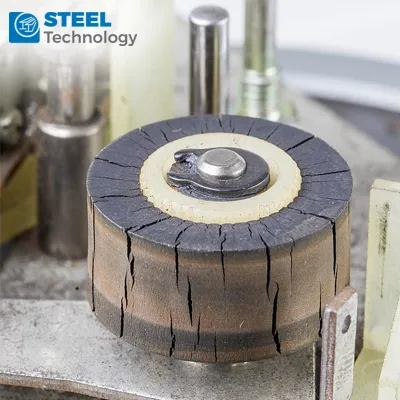
1. Thermal Fatigue: The thermal fatigue is the most common problem when it comes espousing mechanical structures and components in aerospace vehicles. Highway steel’s capacity like any other steel is to expand and contract when it is subjected to varying temperatures. Such a fluctuating cycle over and over again will lead cracks and failure of the material used. The risk is perhaps greatest in components that contain fluids that expand under high temperature, say gas turbines.
2. Oxidation: Higher temperatures make steel more vulnerable to oxidation, therefore it reacts rapidly to the elements. This means that the steel can act as a setting for the actions of oxygen, which, in other words, can be seen to form rust and deteriorate the material. Oxidation erodes the steel and thus puts great doubt on the sturdiness of the structure and its lifetime.
3. Creep: Other high temperature affecting factors include creep. To subdivide it, it covers the kinds of strain that accrue in materials, especially steel that are under constant stress for a long time. At high temperatures even the low stress could cause such deformation which could be dangerous for whole component and its efficiency.
4. Mechanical Properties: It is apparent that high temperatures may influence the engineering characteristics of steel. For instance, the steel may degrade its strength and stiffness and hence has the tendency to fail easily. This shift can be especially damaging in those areas that are critical where high performance and high reliability is necessary.
Solutions to High-Temperature Steel Challenges
a. Material Selection: Proper selection of high-temperature steel type is critical in the safeguard of structures and infrastructures. In general, engineers should use alloy steels that are include some such as chromium, molybdenum, and nickel. It is worth to affirm that these additives increase the level of oxidation resistance and increase strength at high temperature. Superalloys which are used in the high-stress application are also possible and can be obtained.
b. Protective Coatings: These findings reveal that the use of protective agent coating might be effective in lowering oxidation. Some forms of coating include thermal barrier or thermal sprayed layers, ceramic coatings that protect equipment from high temperatures or corrosion. These coatings are used to preserve the underlying steel and hence increase its service life.
c. Design Improvements: Thermal fatigue and creep problems may be prevented or lessened by engineers in the design of the parts or other elements. For instance, where profits are higher, heavier thicknesses used will means that more material is available to withstand the stresses. Further, the usage of cooling systems can be participated in order to achieve better thermal control and prevent the thermal cycling.
d. Regular Maintenance and Inspection: This is an advantage of having a master’s plan because the minor problems are known in advance before developing into the major ones. Pit inspections: Ultrasonic inspection or progressive scanning thermography can detect early signs of cracks and other early signs of degradation that need swapping.
e. Innovative Alloys: This research is likely to go on providing solutions to new alloys that suit application at high temperatures. For example, the new materials being considered by scientists include titanium and ceramic composites because these materials have better properties at high temperatures than conventional steel. All these innovations may be a development of more conducive and reliable systems.
Conclusion
High-temperature steel has its use in several applications, although they present numerous complications. Aspects like thermal fatigue, oxidation and creep are crucial when it comes to reliability and safety of components into the operation condition. The issues of high-temperature conditions can be solved by proper material selection, application of suitable coatings, and enhancement of design and maintenance patterns so that engineering to tackle these difficulties and hence utilize the steel in the right manner. It will therefore be the subject of ongoing research and development to improve the capabilities of the steels in such demanding applications to improve safety and efficiency of such system.
 Media Pack Download
 Newsletters
 Industrial Events