Molten Oxide Electrolysis: The Next Breakthrough in Carbon-Free Steel
Introduction: Why the Steel Industry Needs a Radical Shift
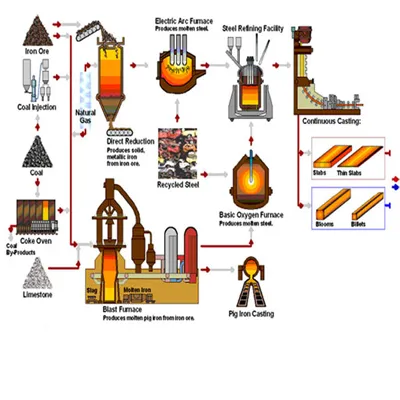
Modern civilization is built on steel, with its use in the construction industry, the automotive manufacturing industry, energy, and infrastructure, as well as defense. Nevertheless, one of the biggest industrial sources of carbon emission in the world is traditional steelmaking. Traditional blast furnace-basic oxygen furnace pathways are largely dependent on coal and coke and produce close to two tons of CO 2 per ton of steel. With the increased regulatory pressure combined with the increased demands by customers to have low-carbon materials, the steelmakers are seeking to find a radical solution to sustainable production.
Molten oxide electrolysis has been recognized as an extremely promising direction to carbon-free steel, among the new directions in green steel development, as it has attracted considerable attention. Molten oxide electrolysis in contrast to incremental efficiency upgrades or transitional fuel switching provide a radically new strategy regarding ironmaking the reduction process is entirely carbon free. This paper discusses the principle of molten oxide electrolysis steel process technology, why it is important, its comparison with hydrogen-based steelmaking, and its implementation would impact the future of carbon-free steel manufacturing.
Understanding Molten Oxide Electrolysis in Steelmaking
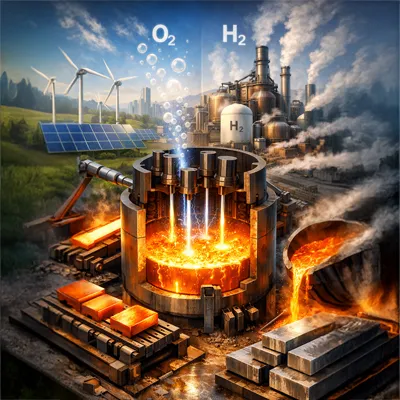
An electrochemical conversion called molten oxide electrolysis, also known as MOE, is used to produce liquid iron by directly reducing iron oxides without the use of carbon-based reductants through the use of electricity. The procedure is carried out at very high temperatures normally over 1,600°C, in which iron ore is dissolved in a molten oxide electrolyte. As the electric current goes through the system, the oxygen ions move towards the anode and are emitted in the form of pure oxygen gas whereas the molten iron concentrates at the cathode.
| Definition Box: Molten Oxide Electrolysis |
| High-temperature electrochemical process is molten oxide electrolysis, which uses electricity to convert metal oxides to pure metals with oxygen and no carbon dioxide as the byproduct. |
This is how the carbon-free steel production technology at the lowest level of steel making is achieved. The process does not produce any direct carbon emissions because no coal, coke, or natural gas is needed to accomplish the reduction of iron.
How Molten Oxide Electrolysis Can Reduce Steel Emissions
The emissions in the traditional steelmaking are mostly produced in the iron making stage, during which carbon is combined with oxygen in the iron ore to form molten iron and carbon dioxide. Molten oxide electrolysis substitutes this chemical reduction by electrical, and thus, eliminates carbon in the equation.
Molten oxide electrolysis can also cut carbon emissions in steel by as much as 100 percent during the ironmaking process when it is operated using renewable electricity. Lifecycle emissions are also significantly reduced compared to blast furnace or direct reduced iron paths even when using low-carbon grid power. This makes MOE one of the most promising green steel substitutes to hydrogen, especially in the areas where renewable power generation is developing at an accelerated pace.
Steel Manufacturing Innovation beyond Incremental Change
Contrary to energy efficiency retrofit or partial fuel replacement, molten oxide electrolysis is a real steel making innovation. It alters the fundamental chemistry of steel manufacturing instead of streamlining a system that is highly carbon-intensive in nature.
The process also facilitates the direct production of liquid iron that can be introduced into the existing steel making units like electric arc furnaces or casting systems. Such compatibility eases the requirement of a full redesign of downstream processes, and MOE is more industrial integration friendly.
Further, the byproduct of the molten oxide electrolysis is oxygen that can be used commercially in industry, medicine, and metallurgy. This secondary output has the potential of enhancing the overall economics and resources use in a plant.
Comparison of MOE vs. Hydrogen Steelmaking Technologies
Hydrogen-based steelmaking has become one of the decarbonizing directions, especially by hydrogen direct reduction of iron. Molten oxide electrolysis, though hydrogen technology is promising, is radically different in terms of its value proposition.
| Aspect | Molten Oxide Electrolysis | Hydrogen Steelmaking |
| Primary energy input | Electricity | Hydrogen + electricity |
| Carbon emissions | Zero at point of production | Near-zero if green hydrogen is used |
| Operating temperature | Very high | Moderate |
| Infrastructure dependency | Electrical grid and refractory systems | Hydrogen production, storage, and transport |
| Oxygen byproduct | Yes | No |
| Scalability challenges | Materials durability | Hydrogen availability and cost |
The two technologies of MOE and hydrogen steelmaking have been compared to show that molten oxide electrolysis does not have the logistics, storage, and safety complexities associated with hydrogen. It, however, comes with its own technical challenges especially the materials which can withstand extreme temperatures and corrosive molten oxides during the extended periods of operation.
Green Steel Alternatives to Hydrogen: Why MOE Matters
Although hydrogen has gained much interest as a decarbonization fuel, the same is not applicable everywhere. The production of green hydrogen is energy-intensive in terms of renewable electricity and water resources and infrastructure. Conversely, molten oxide electrolysis avoids the step of producing hydrogen to be used as an intermediate and instead uses the applied electricity, which could lead to higher energy efficiency at large scale.
MOE can provide a more direct route to carbon-free steel to other regions with high renewable power but little hydrogen infrastructure. It is also a way of diversifying the technology pathways of green steel and no longer depends on one decarbonization strategy which enhances the resilience of the steel industry.
Technology Readiness and Industrial Scale Challenges
Even with the promise, molten oxide electrolysis steel process technology is in the process of coming out of its pilot-scale tests and into full-scale commercial use. The greatest technical challenges are stability of electrodes, life of refractory materials and system efficiency when operating constantly.
Electrodes should be chemically inert and yet be able to conduct electricity over very high or very low temperatures, and this demands the ability of materials science to explore new materials. It also consumes a lot of capital and takes a long time to be vindicated to scale the process to millions of tons of steel produced annually.
However, the current studies and collaboration between the steel manufacturers, clean-tech start-ups, and research schools are speeding up development. The economic feasibility of MOE will possibly increase due to the increased learning curves and reducing renewable electricity costs.
Economic and Strategic Implications for Steel Producers
Molten oxide electrolysis is a strategic and technological choice as far as B2B is concerned. There can be regulatory incentives, carbon credits and higher prices of carbon-free steel to early adopters in other industries like the automotive, construction and renewable energy infrastructure.
In the long-run, MOE may limit the risk on volatile fossil fuel markets and carbon pricing mechanisms. Through non-dependence on coal and natural gas production chains to manufacture steel, manufacturers become more secure in terms of energy and predictable costs.
Regulatory and Policy Alignment
The governments all over the world are initiating standards of stricter emissions, border carbon adjustment systems and sustainability reports. Recent technology of carbon-free production of steel like molten oxide electrolysis is in line with these regulatory trends.
The provision of policy assistance through subsidies on clean energy, incentives on industrial electrification, and research will be important in quickening the commercialization process. Early investing regions could have a competitive edge in the world low carbon steel market due to their early investments in MOE infrastructure.
The Future of Carbon-Free Steel Production with Molten Oxide Electrolysis
In the future, the future of carbon-free production of steel through molten oxide electrolysis relies on further technological improvement and the development of ecosystem. Large scale adoption will require integration of renewable sources of energy, sophisticated power management systems and digital process control.
Demand of carbon-free steel will probably increase as steel customers are becoming more focused on sustainability in their purchasing decisions.
The molten oxide electrolysis can transform into a regular production route rather than a breakthrough technology in the next 20 years, redefining the competitive landscape of the entire steel industry worldwide.
Industry FAQ: Molten Oxide Electrolysis Explained
Is molten oxide electrolysis commercially available today?
Its technology is in high pilot and demonstration stages and is likely to be commercialized once issues of materials durability and scale-up are solved.
Can MOE replace blast furnaces entirely?
Eventually, instead of a blast furnace, molten oxide electrolysis may become used in primary ironmaking, at least in areas that place deep decarbonization as a higher priority.
How does MOE impact steel quality?
Molten iron is obtained in high purity through the process and can be alloyed and processed through conventional steel making methods without loss of quality.
Is MOE suitable for all steel grades?
Yes, molten oxide electrolysis may also be used as a base iron feedstock to a large variety of steel grades when the products are subjected to a process of subsequent refining.
Conclusion: A Defining Moment for Green Steel Technology
Molten oxide electrolysis is an ambitious breakthrough in the innovation of steel-making. It removes carbon in ironmaking and provides a plausible way to create steel with no carbon whatsoever at industrial scale. Although the issues still exist, the possibility of the technology to change the emissions profiles, energy dependencies, and competitive dynamics cannot be ignored.
During the shift to sustainability in the steel sector, molten oxide electrolysis is both an option, and it is a cornerstone of the future of green steel.
 Media Pack Download
 Newsletters
 Industrial Events