Electric Arc Furnaces and Scrap Steel: Moving towards the Low-Carbon Steelmaking.
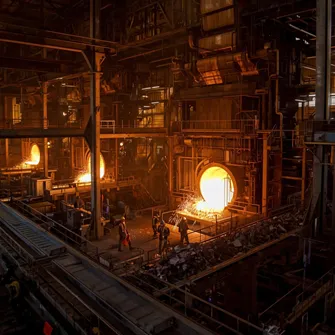
The world steel industry has been experiencing pressure to cut down the emission of greenhouse gases and still ensure that the production efficiency and its capacity to meet the increasing demand. The sector has been traditionally served by blast furnace (BF) operations that have been based on iron ore and coke smelting, but is currently experiencing a paradigm shift of switching to electric arc furnace steel production and massive utilization of scrap steel. This change is accompanied by advances in digitalization and sustainable processes, making the low carbon steel production possible, and complying with the global environmental standards, as well as with the future-proof tendencies on the market.
This paper will examine the trend of recycled steel production, technology of establishing electric arc furnace (EAF) steel plants, policy and economic forces, technological advancement, and the realities of the industry. It also explores the future prospects of green steel transition strategies in the world with the highlight on how digitization in steel industry operations is improving efficiency, traceability, and sustainability.
1. Knowing Electric Arc Furnaces and Scrap Steel.
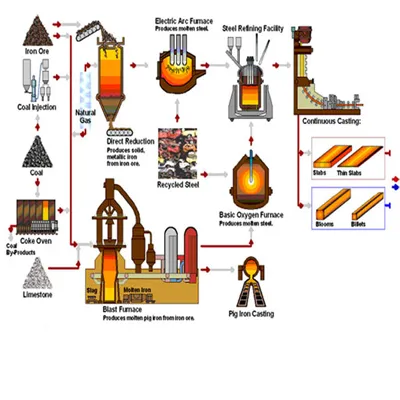
Electric arc furnaces are an innovation as compared to the conventional blast furnace. Where BFs process iron ore at extremely high temperatures by smelting the ore using coke, EAFs process predominantly the scrap steel, which is melted by electric arcs in EAFs. This is a much more efficient way of cutting down on the CO 2 emissions and provides more production scales which are flexible and modular.
The important benefits of EAF technology in steel plants are:
- Reduced carbon emissions per ton of steel produced which is part of low carbon steel initiative.
- Less dependency on iron ore and coke, no fluctuations in the price of inputs.
- Elasticity to increase or decrease production which is best suited to the varying demand in the market.
The increasing supply of scrap metal steel industry development in the world has also made EAFs a more appealing investment particularly in areas that have high infrastructural recycling. The history of such a country as the United States, Germany and Japan is a good illustration: these nations now have a well-developed scrap collection and processing system that allows supplying EAF production based on scrap steel indefinitely.
2. International Tendencies in the Scrap Steel and EAF adoption.
EAFs have become ubiquitous and the scrap steel is now being used in high numbers, both regulated by government and encouraged by economic incentives. Since EAFs produce about 60% of the steel production capacity in Europe and North America, and rising adoption in the Asian region due to government incentives to adopt green steel, it is estimated that EAFs are generating more and more green steel (Beardsley-Wilson 2017).
Key trends include:
- 2025-2030, more steel is needed in the world as recycled due to construction, automotive, and infrastructure projects.
- AI and IoT to track digital steel processes and improve the quality control and predictive maintenance.
- International scrap steel trade grows allowing limited domestic scrap countries to become EAF technology users.
This tendency is directly connected with the increase of sustainability demands according to which green steel production is starting to become a market differentiator among corporate purchasers and investors.
3. Economic and Policy Drivers
Some of the economic and policy forces that are leading to the change to EAF and scrap steel include:
Carbon and Emission Regulations: Over the fact that numerous countries now impose carbon or an emissions trading system, which promotes low carbon steel production.
Subsidies and Incentives: Governments give subsidies on EAF plants, inclusion of renewable energy and recycling.
Market Demand In the world, consumers are now showing preference to green steel systems and manufacturers have no other choice than to invest on sustainable processes.
Energy Costs: Access to low-cost clean power takes the first place in EAF adoption; the uptake of renewable energy helps to ensure the sustainability of further credibility.
These drivers indicate that not only is EAF technology in steel plant a cost-effective and an environmentally conscious choice, but it is strategic as well as far as long term goals in the industry is concerned.
4. Innovation Technology EAF and Scrap Steel.
The scrap steel production is also becoming efficient and of high quality due to technological advancements:
- Automation and AI: The AI-based system is capable of maximizing arc energy, managing the chemistry of the bath, and predicting the maintenance needs, which will lead to throughput growth and a decrease in operational interruptions.
- Digitalization of steel industry: IoT senses watch the quality of scrap, furnace work, energy, and it is possible to conduct changes and make decisions in real-time and depending on the data.
- Energy Recovery: New EAFs have waste heat recovery systems to reduce the total energy consumption.
Finally, the newer design of electrode and better furnace geometry are more energy efficient and reduce electrode wear.
These inventions are to ensure that the benefits of scrap steel utilization of EAF are derived to the extreme, to reduce the cost and environmental implication.
5. Case Study: The shift to a product-to-scrap manufacturing.
Due to a good case in point, a medium-sized steel producer that rearranged his blast furnace activity to become a hybrid EAF. The mill has attained:
- CO 2 emission is 35 percent of 1 ton of steel.
- 12 percent decrease in energy consumption by using AI-controlled furnace functions.
- heavy and medium steel, of lower impurity, reaching the foreign standards.
This demonstrates the fact that the digitalization process can be employed to increase green steel initiatives and that demonstrates that operational excellence and sustainability can be realized in tandem.
6. Table: EAF vs. Blast Furnace Steel Production.
| Parameter | Blast Furnace (BF) | Electric Arc Furnace (EAF) | Improvement / Benefit |
| Feedstock | Iron ore + coke | Scrap steel (primary) | 60–70% reduction in raw material costs |
| Carbon Emissions | High (2.0 tons CO₂/ton steel) | Low (0.4–0.7 tons CO₂/ton steel) | Cut of 65–80% of emission. |
| Energy Source | Fossil fuels | Electricity (grid or renewable) | Flexible and greener energy use. |
| Flexibility of Production | Low | High | Responsive to demand |
| Installation and Operating System | Capital-intensive | Moderate | Lessened first cost as well as O&M. |
This table states out the significance of EAF technology in steel plants to the movement of low carbon steel.
7. Challenges and Risks
Despite the existence of the above advantages, issues are associated with the use of EAF and scrap steel:Scrap Quality: Variability in scrap composition can affect steel quality.
- Scrap Quality: Scrap may change its composition and this may affect steel.
- Electrical Dependency: EAFs require stable electricity and in other instances, it is also expensive; integration of renewable energy is still a challenge in most regions.
- Investment Cost: a move in EAF is an issue that needs investment and training though not as costly as a new BF.
- Supply Chain Limitations: Sufficient supply of scrap is highly essential especially in the fast emerging markets.
- Digital Skills Gap: Skills transformation is necessary, and employees have to be trained to use AI and IoT systems.
With the risks addressed, the mills will be in a position to enjoy maximum benefits of using scrap steel in the EAF production.
8. Future Outlook
Green steel transition and digital steel innovation are becoming more the future of steelmaking. Analysts predict:
- By 2030, EAF can probably contribute more than 50 percent to the world steel production.
- Recycled steel production trends will persist and increase as the urban scrap collection and industrial scrap recovery increases.
- AI and machine learning, predictive analytics, and other digital technologies will become a standard of scrap-based steel plants.
- Countries that have good electricity infrastructures and have developed recycling systems (e.g., Europe, USA, Japan) will be in the lead.
- The emerging markets will eventually incorporate the use of EAFs as a policy incentive and infrastructure will be enhanced.
The integration of these technologies will put steelmakers in a position to satisfy global demand of recycled steel 2025-2030 and competitive benefits in an increasingly market-oriented ESG conscious environment.
9. Conclusion
The steel sector is experiencing a radical change. By adopting the use of electric arc furnace steel production and on the use of scrap steel, manufactures can produce large quantities of reduced carbon emission and energy level. This change combined with digitalization of operations in steel industries, predictive maintenance, and optimization of processes controlled by the AI allows low carbon steel of large scale.
Investment in the EAF in steel plants, combined with effective recycling plans, is not any longer a choice, but a necessity in terms of competitiveness, compliance with the regulations, and long-term sustainability. The early adopters of steelmakers will enjoy the benefits of operational efficiency, preference of green steel in the market, and pioneer position in a fast changing world market.
 Media Pack Download
 Newsletters
 Industrial Events