Smart Metallurgical Plants: IoT and Real-Time Analytics Transforming Metal Production
Introduction
The metallurgy is one of the many pillars of the modern civilization, which is undergoing a radical change. The introduction of IoT in the metal production process and analytics in metallurgy in real time is converting smart metallurgical plants into the embodiment of efficiency and innovation. Such improvements cannot be characterized only as incremental improvements; it is a paradigm shift of the manufacturing ecosystem to a more intelligent, responsive, and sustainable one.
The Rise of Smart Metallurgical Plants
The major part of this transformation is the idea of smart metallurgical plants. These facilities, unlike the traditional ones, make use of the networks of interconnected devices and systems that are used to monitor, control, and optimize all aspects of the production process. Such interrelatedness is available due to the Internet of Things (IoT), which allows communication among machines, sensors, and control systems to take place smoothly.
IoT in Metal Production: A Game Changer
Introduction of IoT into metal production has transformed the mode of data collection, analysis, and use. The sensors that are placed along the production line monitor the real-time data on temperature, pressure, chemical makeup and performance of the equipment. Such information is further sent to centralized platforms where more sophisticated analytics applications handle and process such information, giving insight into actionable information to operators.
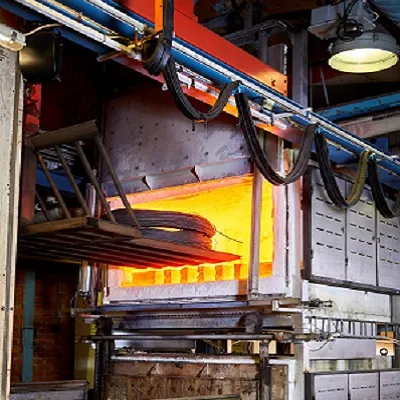
Seeing the example of the steel processing company, the IoT sensor could be used to monitor differences in the temperature of the furnace or the changes in the properties of the material as well as make the necessary adjustments on the spot to preserve the quality of the product and to save energy. Such an amount of real time monitoring and control has not been achievable in the past in traditional set ups.
Real-Time Analytics: The Brain behind Smart Plants
As the sensory input is given by IoT, real-time analytics in metallurgy is the brain that processes the information. Using sophisticated algorithms and machine learning models, these analytics platforms are capable of forecasting a failure, increasing resource allocation, and product quality.
Predictive Maintenance: Anticipating Issues Before They Arise
The possibility to introduce predictive maintenance in metallurgy can be listed among the most important advantages of real-time analytics. Through historical and real time data, these systems can predict failures of equipment before they are prone to failure hence it is possible to take an intervention at the right time. This proactive strategy reduces the downtime and also lowers the maintenance lifecycle of the important machinery resulting in significant cost savings.
Enhancing Operational Efficiency
In addition, real-time analytics allow optimization of the production processes in the long run. Based on these systems, the inefficiency, the weak areas and the areas that are to be improved in the production process can be detected through the analysis of streams of data at the various phases. It is a feedback loop, which will make the operations dynamic and responsive to the dynamic conditions.
Industry 4.0: The foundation of Digital Transformation
The combination of IoT, real-time analytics, and automation is also one of the attributes of Industry 4.0 in the metallurgy industry. The fourth industrial revolution is defined by the combination of digital, physical, and biological systems such that smart factories become more autonomous and efficient as well as flexible.
Data-Driven Metal Manufacturing
The fundamental idea behind Industry 4.0 is the use of data to produce metal. The large volumes of data that are produced as a result of the IoT devices are exploited to make informed choices that lead to efficacy and creativity. It is based on data that, in the optimization of supply chains or to make a product unique in real-time, intelligent metallurgical plants are built.
Digital Transformation in Metal Manufacturing
Digital transformation in metal manufacturing is not only about the installation of new technologies, but also about a culture change in organizations. The skills to understand and take actions based on the data insights need to be developed in the employees, and the management should ensure that the environment promotes the ability to learn constantly and evolve.
The Future of Smart Metallurgy Plants
In the future, the future of smart metallurgy plants is dynamic and exciting. These plants are going to become even smarter, more autonomous, and sustainable as technologies are evolving.
Integration of Advanced Technologies
The capabilities of smart metallurgical plants are going to be improved even further due to the emerging technologies of artificial intelligence, blockchain, 5G connectivity. One of the features of Industry 4.0 in the metallurgy industry is the convergence of IoT, real-time analytics, and automation.
Sustainability and Circular Economy
Sustainability shall be one of the key issues as well. The data will be used to reduce wastage, minimize the use of energy, and maximise on resources through smart plants. The principles of the cyclic economy will be factored into the production process, which will be used to break down recycling the materials and re-using the same.
Enhanced Collaboration and Customization
In addition, intelligent metallurgy plants will allow having more collaboration within the value chain. This will enable the suppliers, manufactures and the customers to have real-time data and this will create transparency and trust. This collaboration will allow customizing the products to the needs of particular customers enhancing the customer satisfaction and loyalty.
Conclusion
The introduction of intelligent metallurgical plants, which operate on the IoT in the metal production process and real-time analytics in the metallurgy process, is a new phase in the manufacture of metals. Such technologies are not merely enhancing the processes, they are transforming what can be done regarding efficiency, quality and sustainability. Since the industry continues to adopt Industry 4.0 in the metallurgy sector, its innovation and growth opportunities are boundless.
In this fluid environment, it is no longer about the need to exploit these technologies, but how fast they can be absorbed to remain competitive in a world that is becoming more digital and more data-driven.
Market Insights: The Impact of Smart Metallurgical Plants
| Aspect | Traditional Plants | Smart Metallurgical Plants |
| Data Utilization | Minimal, manual analysis | Real-time, automated analytics |
| Maintenance Approach | Reactive | Predictive |
| Energy Efficiency | Standardized processes | Optimized based on real-time data |
| Product Customization | Limited | Highly flexible and responsive |
| Supply Chain Integration | Disjointed | Seamless and transparent |
| Sustainability Practices | Basic compliance | Integrated circular economy principles |
The given comparison emphasizes the revolutionary nature of intelligent metallurgical plants. The metallurgy industry will be able to reach new heights of efficiency, quality, and sustainability by adopting the principles of IoT, real-time analytics, and Industry 4.0.
Future Outlook
The process of smart metallurgy plants full potential realization has a future. With changing technologies and the need to adjust to the changes in the industries, the future of metal production will be determined by the continued introduction of advanced digital solutions. The ultimate success is in the willingness to innovate, cooperate and improve.
To conclude, smart, data-driven, and interconnected, that is how the future of metallurgy will be. Using the capabilities of IoT and real-time analytics, the industry will be able to overcome the challenges of the contemporary production and become a leader of the world economy.
 Media Pack Download
 Newsletters
 Industrial Events