Strategic Forecasting: How Steel Leaders Are Planning for 2026
The steel industry in the modern turbulent international economy can no longer afford short-term projections. Rather, the strongest firms are now planning to the 2026 mark with an outlook of long-term sustainability, technological revolution, and geopolitical forces that are driving the metal market as well as the metal industry in general. The main question which everyone wonders about is the one which is both easy and also complicated to answer and that is how do you strategize on the future when the environment, trade, technology and the needs of the consumers are changing at a very fast pace?
The solution is strategic planning of steel and metal markets- a practice that is an integration of predictive analytics, scenario creation, and international understandings of action-oriented strategies. In such a manner, steel leaders are repositioning themselves to take a new shape in the manner of industrial steel production planning as well as seizing future growth prospects in the metal industry.
The Changing Landscape of the Steel Industry
The steel sector is a sector that has always been a catalyst for industrial development, driving the infrastructure, construction, automotive, energy, and a list of other industries is endless. But in the next few years, it is especially important. Due to the dominance of sustainability, supply chain disruptions, and the increase in input costs, the steel executives are reconsidering their business models.
Exploring the metal market in depth, it is possible to observe that the consumption trends are moving around geographically. The rising economies are contributing to the rising trends in metal demand, whereas the developed countries are focusing on the industrial metals that are more green and sustainable. This transformation preconditions the steel market forecast 2026, according to which the challenges and opportunities will be predicted based on how the business will cope with them.
Steel Market Forecast 2026: What Lies Ahead?
When we discuss the steel market forecast 2026, it is not only about making a prediction, but we are attempting to interpret an international narrative. The amount of industrial metals demanded will grow continuously, but which areas will grow will be determined by the factors.
To illustrate, Asia-Pacific still leads in the demand trend of metals, much attributed to the booms of construction and industrial growth. In the meantime, low-carbon steel is becoming a more important concern in Europe and North America as the policies regarding the environment become stricter. This deviation necessitates keen planning of industrial steel production, which meets the cost competitiveness and sustainability.
Interestingly, firms are not merely posing the question of how they can predict the steel market trends, but also how they can use such forecasts to create resiliency. The use of scenario modelling is taking over strategic planning in the steel and metal markets so that companies are able to rapidly shift strategies in case of a sudden increase in the prices of raw materials or alteration of the regulatory framework.
Industrial Metals and the Sustainability Imperative
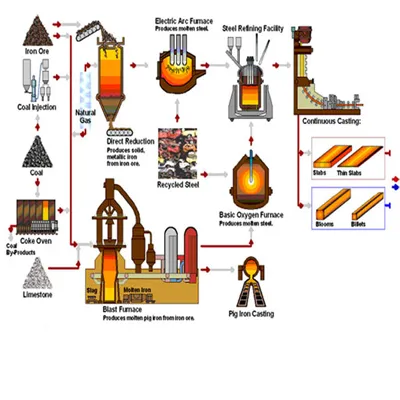
Sustainability is one of the issues that cannot be excluded in the modern context of the metal industry. This is redefining the future of industrial metals because of the carbon-neutral ambitions as well as stricter environmental regulations. With the steel industry, it would mean the implementation of technology like hydrogen-based steelmaking, carbon capture, and recycling.
Customers are increasingly affecting the metal market with their expectations. Large auto and construction industries are currently requiring sustainable materials, and this has compelled the steel manufacturers to reconsider their production. This further complicates the industrial steel production planning, whereby the leaders must weigh sustainability and profitability.
How to Forecast Steel Market Trends: Methods That Matter
The most urgent question that the executives want to know is how to predict the right trends in the steel market during these uncertain times. Old-fashioned models through historical data can no longer be adequate. Rather, firms are taking advantage of:
- Predictive analytics that use AI to retrieve real-time data concerning trade flows, commodity exchanges, and policy announcements.
- Forecasting based on scenarios under which leaders are asked to trial the reaction of the metal market to shocks, including tariff increases, currency variations, or energy prices.
- Joint prediction techniques where the steelmakers consult stakeholders throughout the metal industry, including the miners as well as the end-users, to optimize demand forecasts.
It is not just to predict the future but to act on the insights to conduct proactive strategic planning of steel and metal markets.
Future Growth Opportunities in the Metal Industry
Uncertainty may be the order of the day, but there is no denying the existence of future growth opportunities in the metal industry. There are the most remarkable ones:
- The developing countries are witnessing growth in infrastructure, and this is driving the consumption of steel.
- Green energy projects refer to large endeavours that involve the use of steel in large volumes, such as wind turbines and solar farms.
- Mobility innovation with electric cars and the need for lighter and stronger materials.
- Recycled industrial metals are becoming part of the mainstream and circular economy efforts.
Steel leaders are keeping pace with such opportunities in the planning of their steel production in the industry, and they are not going to be left behind by the wave of demand. The capacity to seize such future growth opportunities within the metal business lies in the capacity to anticipate the trends in the steel market and take decisive actions.
Market Insights: Regional Perspectives on Steel Market Forecast 2026
| Region | Key Drivers in Steel Market Forecast 2026 | Challenges in Metal Industry | Strategic Planning Priorities |
| Asia-Pacific | Urbanization, infrastructure, exports | Overcapacity, environmental pressures | Diversify export markets, invest in green tech |
| Europe | Low-carbon steel demand, automation | Energy costs, regulatory strictness | Invest in hydrogen steelmaking, automation |
| North America | Infrastructure renewal, EV sector | Import reliance, labor shortages | Strengthen domestic supply chains, recycling |
| Middle East | Construction, oil-to-gas diversification | Volatility in energy markets | Build regional hubs, secure raw materials |
| Africa | Industrialization, resource abundance | Political instability, logistics | Partner with global firms, enhance trade |
This table explains why the steel market forecast 2026 cannot be a one-size-fits-all all. The differences in the regions imply that steel and metal market strategic planning should be very specific.
Industrial Steel Production Planning: Balancing Flexibility and Efficiency
The choice made in the real world of industrial steel production planning is to balance between efficiency and adaptability. The long-term decisions of capacity growth are significant, but so is the capability of increasing or reducing the scale of actions in case the demand for metals changes rapidly.
Production planning in the steel industry is being changed through digital tools. Predictive maintenance, supply chain transparency, and smart sensors can all help steelmakers reduce downtime and react swiftly to changes in the metal market. The future is in the companies that incorporate these digital capabilities in their strategy planning in the steel and metal markets.
Curiosity Corner: Could Steel Become the New Green Gold?
There is an inquisitive question that has started to circulate in the metal industry: whether steel can be the new green gold? The decarbonization market trend implies that steelmakers who are adept at producing low-carbon steel will be able to set a higher price on the metal market. Consider the case when eco-certified steel is as precious as standard industrial products such as oil or copper.
Such an interesting prospect is remaking the future growth prospects in the metal industry. The customers are ready to pay a little more for sustainability, and the governments are giving incentives. In the case of steel industry leaders, this implies that the next few years will be much more than volume- it will be value creation.
Strategic Planning for Steel and Metal Markets: Lessons from Leaders
In the discussion of strategic planning of steel and metal markets, it can be observed that the foremost companies use both foresight and flexibility. They do not just work based on the steel market outlook 2026, but they are planning for various contingent eventualities.
Some of the important lessons learned are investing in greener technology through research and development, cross-border consolidations to stabilize the supply chain, and new digital platforms to promote transparency. These leaders realize that industrial steel production planning is not merely operational - it is strategic as it is forming the brand name and future profitability.
Conclusion: Building the Road to 2026
The path to 2026 will be challenging for all the players in the steel industry due to the flexibility required. The metal market is changing, determined by the trend of demand for metals, the sustainability needs, and regional forces. Those who learn to predict the trends in the steel market and use the information decisively and proactively with futuristic approaches will succeed.
The way to go, as per businesses that want to enjoy future growth opportunities in the metal industry, is to ensure that technology, sustainability, and global awareness are integrated in their core strategy. Even the best leaders understand that the planning of steel and metal markets is not about the expectation of a single outcome - it is about the readiness to explore different possibilities and succeed in each of them.
The steel market forecast 2026 is not only a bunch of forecasts it is a call to action. Steel leaders are not just sitting back and waiting till tomorrow comes but they are creating it, a plan at a time, an innovation at a time, and a strategic move at a time.
 Media Pack Download
 Newsletters
 Industrial Events