Waste Heat Recovery and Energy Efficiency in Steel Plants
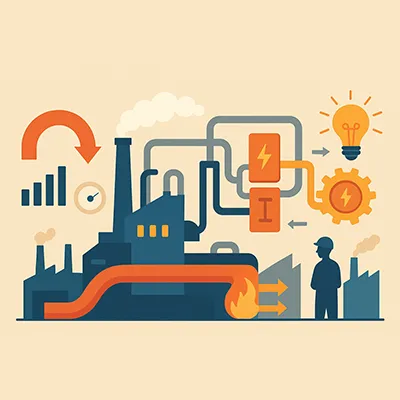
The steel industry in the world is under constant stress of trying to reduce emissions, decrease costs of operation, and increase productivity. But there is one issue that is pivotal to all plant managers and operations heads, and this is how steel plants can be energy competitive without affecting the quality of production. The solution more and more tends to be the two strong levers: waste heat recovery and steel energy efficiency.
With the intricate nature of the steelmaking business, with each furnace cycle having a direct effect on the bottom line, the rising emphasis on energy efficiency when making steel is transforming the way companies look at modernization. On the continents, steel mills are reconsidering their heat flows, exhaust patterns, and furnace efficiencies. This change has led to a move towards waste heat recovery in steel mills, where the plants now capture and reuse the lost thermal energy that was hitherto neglected.
The Energy-Intensive Reality of Steelmaking
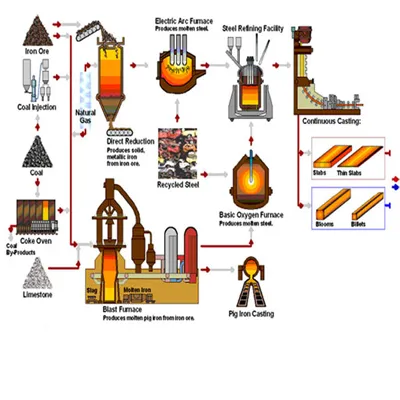
Steel is among the energy-intensive industries in the world. Since blast furnaces and basic oxygen furnaces, and later electric arc furnaces, and finally reheating units, all of these processes entail enormous thermal loads. This is why the energy efficiency of steel is not only an environmental necessity, but it is a business imperative.
Part of this energy- unusual amounts, 20-30 percent- escapes into the atmosphere as waste heat. In the absence of waste heat recovery, this will be a loss of economics coupled with a higher environmental cost. Consequently, the urge towards the emission of emissions in the steel plants cannot be divided into the capturing and reusing of the heat that is already present in the system.
This brings a very important question: Why burn the heat and convert it into nothing, when it can serve to energize whole parts of a steel plant?
Where Does Waste Heat Go in a Steel Mill?
Sinter machine exhaust, coke oven exhaust, reheating furnace exhaust, and converter exhaust have escape paths of huge size, characterized by massive exhaust stacks. Historically, steel mills considered this as an inevitable by-product of the manufacturing. However, emerging knowledge reveals that waste heat recovery systems at the steel mills could convert this waste to useful energy streams.
A great number of the contemporary facilities incorporating cutting-edge technologies to recover the waste heat in steel plants ensure the substantial decrease in fuel usage, a decrease in carbon footprints, and the ability to maintain the energy supply even at peak loads. This is the base of strong steel plant optimization policies, which will allow mills to convert the heat losses into strategic resources.
Why Waste Heat Recovery is becoming a Competitive Advantage
The steel industry is also moving towards active energy management and not reactive energy management. Waste heat recovery is an essential aspect of the optimization of steel plants.
Plants that have strategies of reducing energy use and emissions in steel production are enjoying quantifiable gains. Among them, three stand out:
- Lower fuel use in reheating and pre-heating stages
- Reduction of overall CO₂ emissions
- Creation of secondary power generation streams
Such a combination enhances the entire industrial energy-saving initiative and makes steel manufacturers at the forefront of the sustainability rating in the world.
At some point, the question is no longer whether we should adopt waste heat recovery. But "How soon can we put it through the whole plant?
Exploring Categories of Waste Heat in Steel Plants
The waste heat in a steel mill is usually in two forms, namely, high-temperature and low-temperature. Furnaces and kilns release the high-temperature heat, and cooling systems, as well as off-gas treatment lines, release the low-temperature heat.
The significance of this is that cost-effective methods of energy optimization to be applied to the modern steel mills will have to target both types. Various methods are used to convert heat to useful power, steam, hot water, or pre-heated air; these are recuperators, regenerators, heat exchangers, organic Rankine cycle units, and waste heat boilers.
Steelmakers can save much energy by cleverly converting this heat to make this process more circular and resource efficient by making operations circular and resource efficient.
A Mid-Article Snapshot: Where Steel Mills Waste the Most Energy
An example of a basic comparison table to show the typical sources of waste heat and the potential of waste heat recovery systems in steel mills is given below:
| Steelmaking Section | Typical Temperature | Energy Loss Type | WHR Potential |
| Blast Furnace Gas | 200–350°C | Off-gas exhaust | High |
| Coke Oven | 300–800°C | Raw gas cooling | Very High |
| Sinter Plant | 250–450°C | Flue gas | High |
| Reheating Furnace | 1000°C+ | Flue exhaust | Very High |
| Electric Arc Furnace | 800–1500°C | Off-gas | Very High |
These observations explain the reason why modern technologies of waste heat recovery in steel mills are emerging as inevitable investments for any steel company that aims at remaining competitive in the long run.
How Waste Heat Recovery Drives Steel Energy Efficiency
When properly incorporated, the waste heat recovery can be a direct source of energy saving in the industries. It enables the steel plants to minimize fuel reliance, reduce operation costs, and stabilize the thermal cycles. This stability improves the quality of steel so that there is uniformity in the rolling, forming, and casting.
Moreover, the direct effect of steel energy efficiency is the effect on the emission profiles. This is essential when the world learns to get stricter in regulations concerning emission reduction in steel plants.
Energy efficiency in steel production is not a compliance or end in itself but an avenue to operational excellence, and this is beginning to dawn on the industry.
The Rise of Advanced WHR Technologies
Advanced technologies in steel plants in terms of waste heat recovery are one of the most revolutionary changes in steel manufacturing. These are the ORC-based power generation, state-of-the-art ceramic regenerators, state-of-the-art heat exchangers, and AI-enabled heat flow prediction.
The tools make the optimization of steel plants at a scale never seen before possible. Plants equipped with AI and real-time sensors can map energy leakage, estimate thermal loss, and dynamically adjustment of furnace cycles. This forms an endless cycle of cost-efficient energy-saving methods for steel mills in the present day.
Such progressive control systems are useful in lowering the energy bill and achieving the long-term energy saving objectives of industries.
Energy Efficiency and Sustainability: A Shared Journey
Steelmakers have ceased being just producers, yet they have become strategic energy managers. The process of steel energy efficiency is intrinsically linked to the process of sustainability. With businesses pledging net-zero, energy consumption, and emission reduction measures in steel production has become a business requirement.
Numerous popular steel plants across the globe have been noted to achieve significant drops in the emission levels in the double digits following the adoption of integrated WHR and energy-saving strategies. The practical outcomes confirm the significance of using the combination of thermal management, process automation, and waste heat recovery systems in steel mills.
How Can Steel Plants Start the Optimization Journey?
The way to high energy efficiency in the production of steel starts with a measurement of the heat flows. The sophisticated thermal audits indicate concealed energy pockets, which are overlooked by traditional audits. This is supplemented with the measurement of furnace efficiencies, heat distribution, off-gassing temperatures, and boiler performance.
The steel plants that use phased steel plant optimization measures usually start with high-temperature heat recovery and slowly progress to low-temperature streams. This is a gradual strategy that guarantees the realization of energy benefits at a regulated capital cost.
With the confidence of the factories, they are moving on to more sophisticated advanced technologies of waste heat recovery in steel facilities, like WHR-based captive power units, turbine-based generation, and hybrid heat storage systems.
Cost-Effective Optimization: The Modern Steel Mill’s Priority
Cost-effective energy optimization methods of the present-day steel mills are needed in a world where the cost of energy keeps varying at unpredictable times. To continue to be affordable, most plants are currently relying on modular WHR units, retrofittable economizers, and intelligent furnace controls.
The beauty of the WHR technology is that it scales well. Modular units can be adopted in even smaller or mid-sized steel mills to match their size. This renders industrial energy saving available to every section of the steel sector.
Together with digitalization, WHR enables plants to take an energy efficiency boundary in steel production, enhancing the predictability of operations as well as their sustainability.
What the Future Holds for Steel Plant Energy Innovation
The following decade will be the age of steelmakers that adopt the digital platform of WHR, artificial intelligence optimization, and the production cycle that is electrified, according to current trends in the industry. There will also be the development of hybrid furnaces, hydrogen heating, and the next generation exhaust treatment.
These developments will continue to hasten the strategies to reduce energy use and emissions during steel production, which affects the world's steel prices, export competitiveness, and environmental compliance. Steel mills that today install waste heat recovery systems in steel mills are tomorrow's leaders in steel mills producing low-carbon steel.
Conclusion: The New Steel Competitiveness Formula
It looks like the steel industry is headed in a direction where the recovery of waste heat, and the steel energy efficiency are becoming a mandatory part of the competitive growth. The transition is inevitable, whether fuelled by cost savings or emission mandates, or operational excellence.
Any steel plant pursuing the deployment of the state-of-the-art technologies of waste heat recovery in steel plants, integrated with the smarter automation and cost-efficient energy optimization methods in modern steel mills, becomes operationally visible and benefits in terms of sustainability.
In the end, the mills that ask "How can we optimize energy end-to-end?" rather than "How much energy did we consume?" will define the future of global steel manufacturing.
 Media Pack Download
 Newsletters
 Industrial Events